 flip
flipEscabeche de pescado (Fish in Escabeche)
Escabeche de pescado (Fish in Escabeche)
Why this dish? Preservation was the obsession of every sailor of the time. Escabeche, inherited from the Arabic al-sikbâj of al-Andalus, allowed fried fish to be kept in a vinegar-and-spice bath for several days without spoiling — precious during stopovers and layovers near the coasts of Palos or the islands.
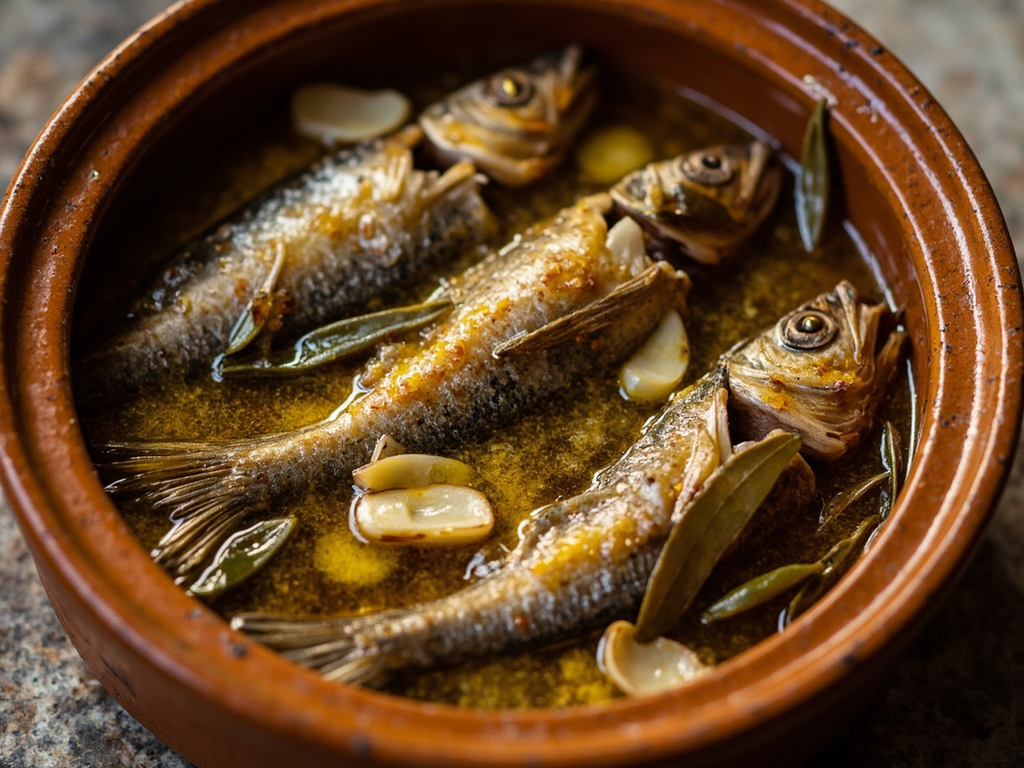
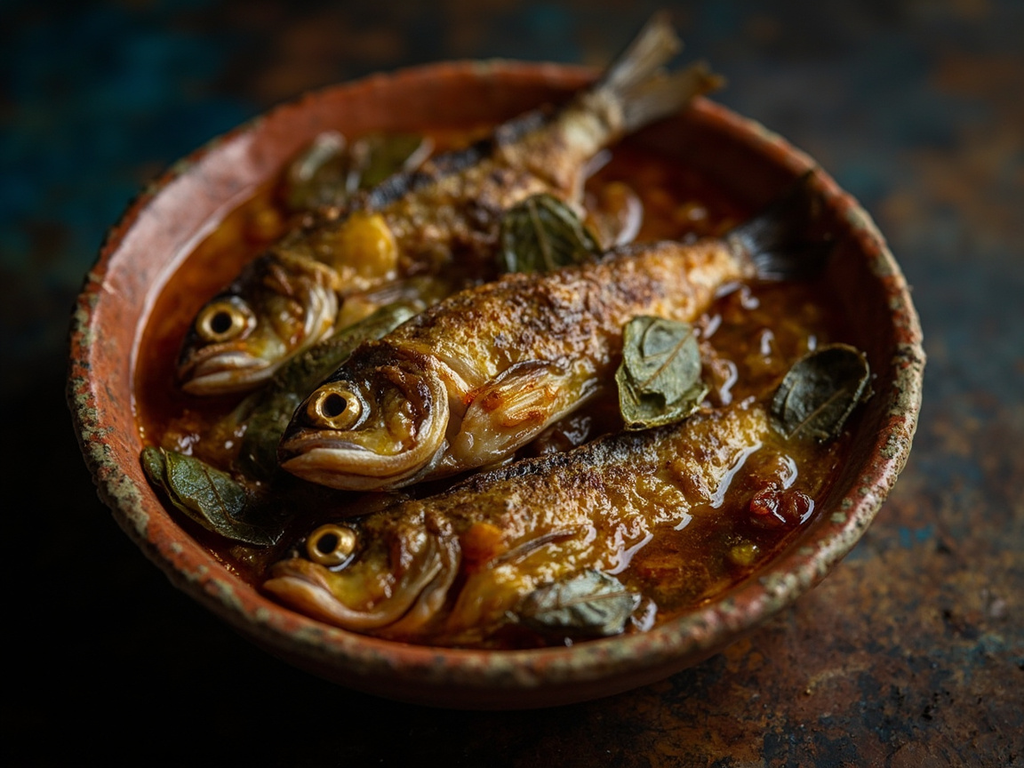
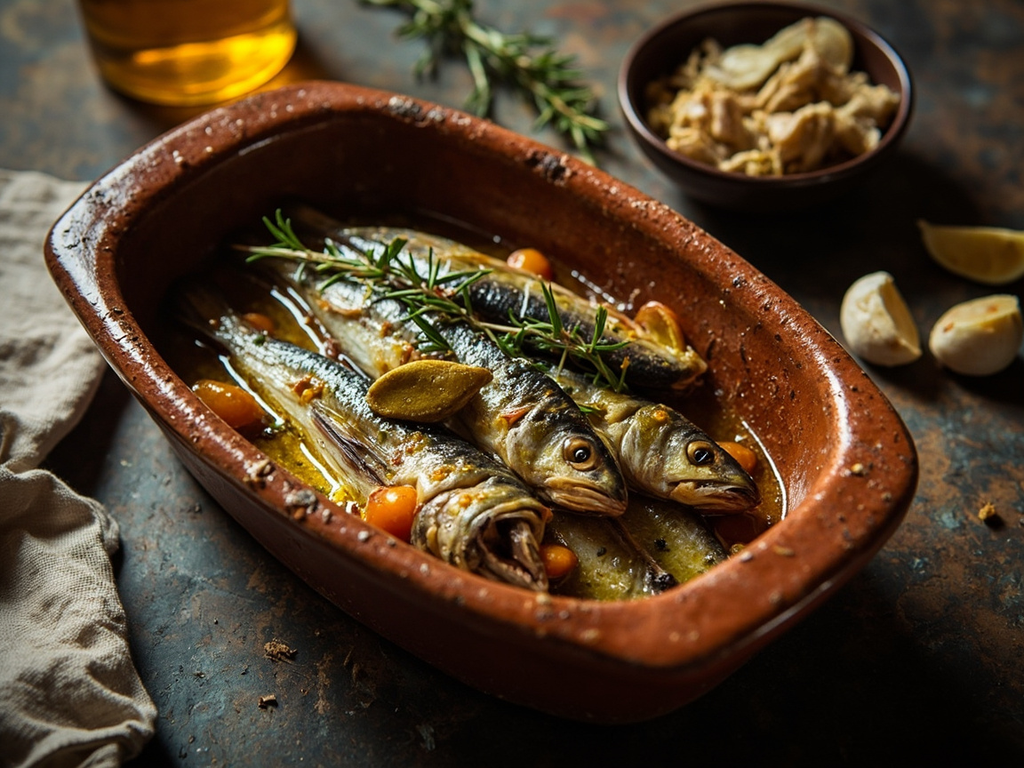
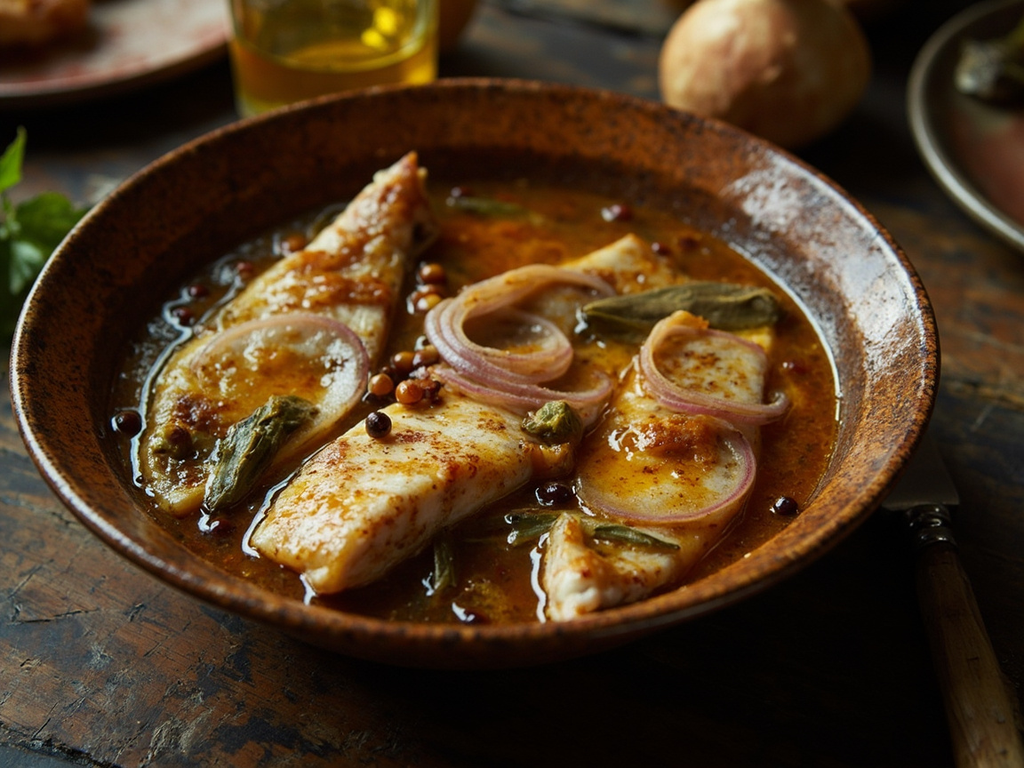
Fish first fried in olive oil, then submerged in a warm bath of vinegar, onion, garlic, and mild spices. The acidity of the vinegar halts putrefaction: the dish even improves after a day or two. Sharp, fragrant, it is the savory preserve of the Mediterranean world.
Here is a secret we hold from the masters of al-Andalus: to keep fish when salt runs short, first fry it in good oil, then lay it in a bath of vinegar with onion, garlic, and your spices. Thus it keeps several days and, I swear to you, it becomes better the next day than the first evening. At anchor near the islands, it was a blessing to bite into that lively, tangy flesh after so much dry biscuit. Eat it cold; that is how it is most honest.
- •Fish (sardine, horse mackerel, mackerel) — according to the catch (base)
- •Olive oil — for frying (cooking)
- •Wine vinegar — generous (preservation agent and acidity)
- •Onion — sliced (aromatic)
- •Garlic — several cloves (aromatic)
- •Bay leaves and peppercorns — to taste (spices)
- •Saffron or cumin — a pinch (color and perfume)
Escabeche de pescado (Fish in Escabeche)
Fish first fried in olive oil, then submerged in a warm bath of vinegar, onion, garlic, and mild spices. The acidity of the vinegar halts putrefaction: the dish even improves after a day or two. Sharp, fragrant, it is the savory preserve of the Mediterranean world.
Why this dish? Preservation was the obsession of every sailor of the time. Escabeche, inherited from the Arabic al-sikbâj of al-Andalus, allowed fried fish to be kept in a vinegar-and-spice bath for several days without spoiling — precious during stopovers and layovers near the coasts of Palos or the islands.
Here is a secret we hold from the masters of al-Andalus: to keep fish when salt runs short, first fry it in good oil, then lay it in a bath of vinegar with onion, garlic, and your spices. Thus it keeps several days and, I swear to you, it becomes better the next day than the first evening. At anchor near the islands, it was a blessing to bite into that lively, tangy flesh after so much dry biscuit. Eat it cold; that is how it is most honest.
Ingredients (period version)
- Fish (sardine, horse mackerel, mackerel) — according to the catch (base)
- Olive oil — for frying (cooking)
- Wine vinegar — generous (preservation agent and acidity)
- Onion — sliced (aromatic)
- Garlic — several cloves (aromatic)
- Bay leaves and peppercorns — to taste (spices)
- Saffron or cumin — a pinch (color and perfume)
Ingredients
- Mackerel or sardine fillets — 600 g (base)
- Olive oil — 150 ml (cooking and bath)
- Wine vinegar — 100 ml (acidity and preservation)
- Onion — 2, sliced (aromatic)
- Garlic — 4 cloves (aromatic)
- Bay leaves — 2 (spice)
- Peppercorns — 1 tsp (spice)
- Ground cumin — ½ tsp (perfume)
- Flour — for coating (frying)
Method
- Lightly salt the fish fillets, dust with flour, and fry in hot olive oil until golden. Set aside in a shallow dish.
- In the same oil, sweat the sliced onion and garlic until tender.
- Add the bay leaves, peppercorns, and cumin, then pour in the vinegar. Let simmer for 5 minutes to soften the acidity.
- Pour this warm bath over the fish, covering it completely.
- Let cool, then refrigerate for at least 12 hours (ideally 24) before serving.
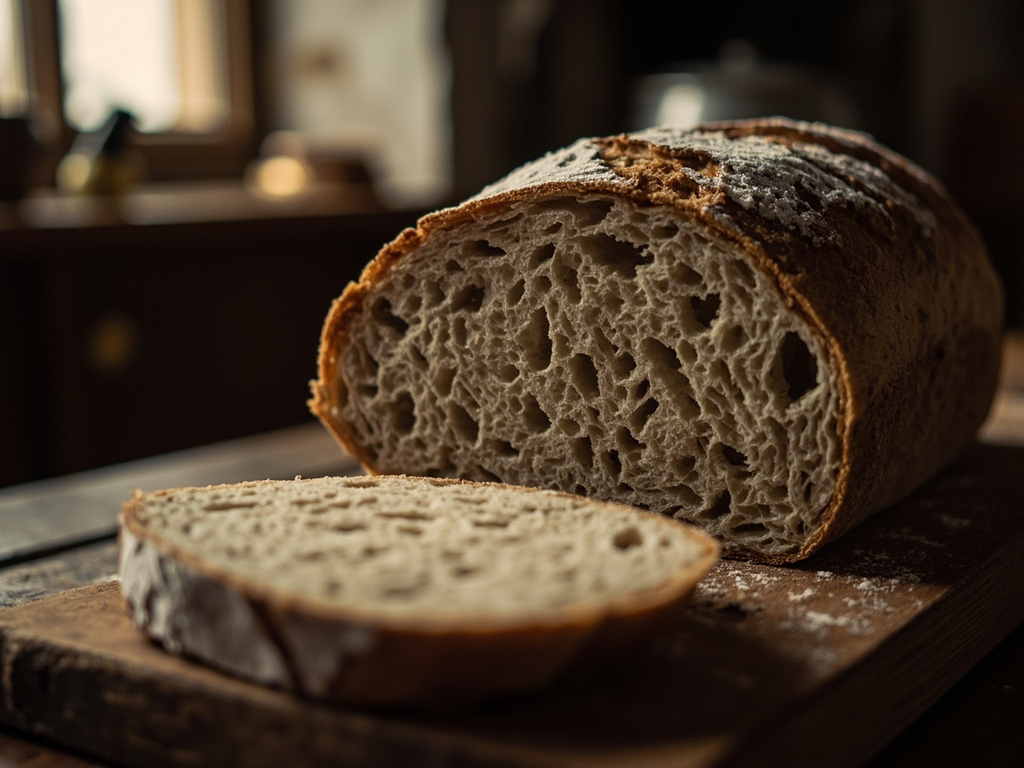
- Serve cold, with bread or sea biscuit dipped in the marinade.
How it was made : Escabeche directly descends from al-sikbâj, a sweet-and-sour stew of Arab-Andalusian cuisine transmitted to medieval Spain. Before refrigeration, the combination of frying and an acid bath was a recognized preservation method, allowing fish to keep several days in temperate climates. Sailors appreciated it for breaking the monotony of salt meats.
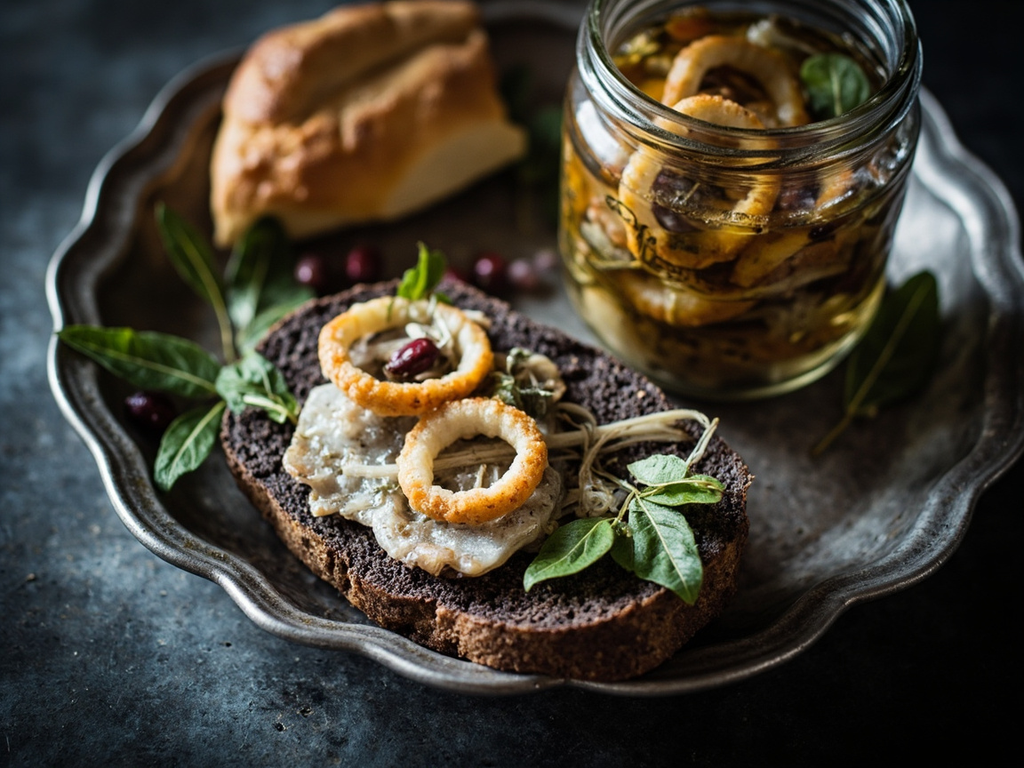
The contemporary twist : Served on a slice of grilled bread rubbed with garlic as a "navigator's tapa," with a strip of bitter orange zest — the citrus fruit the Spanish already cultivated.
Sources : Anonymous Andalusian manuscript of the 13th century (Fudālat al-jiwān, tradition of al-sikbâj) · Ruperto de Nola, Libro de Cozina (c. 1520)
Christopher Columbus · Charactorium