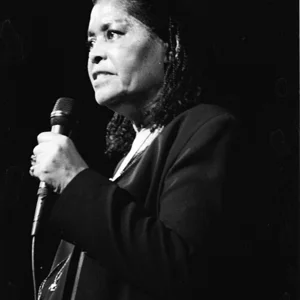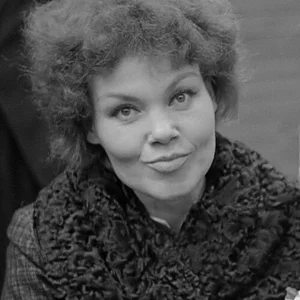

Cleo Laine is a British jazz singer and actress, famous for her deep timbre and an exceptional vocal range of more than three octaves. The lifelong companion of saxophonist and bandleader John Dankworth, she became one of the major figures of 20th-century British vocal jazz.
Cleo Laine(1927 — 2025)
Cleo Laine
Royaume-Uni
6 min read
Frequently asked questions
Key Facts
- Born on 28 October 1927 in Southall, on the outskirts of London
- Marries musician and bandleader John Dankworth in 1958, forming a lasting artistic duo with him
- Wins a Grammy Award in 1986 (Best Jazz Vocal Performance, Female) for the live album 'Cleo at Carnegie', the first British singer to be honoured in this category
- Made a Dame Commander of the Order of the British Empire (DBE) in 1997
- Dies on 24 February 2024 at the age of 96
Works & Achievements
Album on which she sings Shakespeare's words set to music by John Dankworth, showcasing her blend of poetry and jazz.
Musical in which she plays Julie at the Adelphi Theatre, confirming her dual talent as singer and actress.
Recording of an extremely difficult atonal classical work, proving the breadth of her repertoire beyond jazz.
Song based on the theme from the film The Deer Hunter, which became one of her hits on the British charts.
Live album of her concert at Carnegie Hall, which earned her the Grammy Award for Best Jazz Vocal Album, Female.
Broadway musical in which she plays the Princess Puffer, a role that earned her a Tony Award nomination.
Anecdotes
Cleo Laine wasn't really named Cleo: born Clementine Dinah Bullock, she received her stage name in 1951 when she joined the orchestra of saxophonist John Dankworth, the Dankworth Seven. The musicians held a little contest to find her a name, and that is how “Cleo Laine” was chosen.
Her voice spanned more than three octaves, which is exceptional for a singer: she could descend into deep lows worthy of a man and then leap up to crystalline highs. That dark timbre and that range made her one of the most recognizable voices in vocal jazz.
Cleo Laine holds a unique distinction: she is the only singer to have been nominated for Grammy Awards in three different categories — jazz, popular music, and classical music. She finally won the Grammy for Best Female Jazz Vocal Album in 1986 for her concert at Carnegie Hall.
In February 2010, her husband John Dankworth died on the very morning of a major concert held to celebrate the 40th anniversary of their venue, The Stables. Cleo and their children decided the show would go on regardless; she only announced John's passing at the very end of the concert, before a devastated audience.
Curious about every kind of repertoire, Cleo Laine did not confine herself to jazz: in 1974 she recorded Arnold Schoenberg's *Pierrot lunaire*, an atonal classical work renowned as extremely difficult, proving she could move from a jazz standard to the art music of the 20th century.
Primary Sources
In her memoir, Cleo Laine recounts her childhood in the London suburb of Southall, the daughter of a Jamaican father and an English mother, and her decisive encounter with John Dankworth, which transformed her life as an artist.
A guest on the famous BBC programme, the singer talks about the records she would take to a desert island and looks back on her career, her musical partnership with Dankworth, and her love of songs blending jazz and poetry.
The official Grammy Awards list honours “Cleo at Carnegie: The 10th Anniversary Concert” as Best Jazz Vocal Performance, Female, cementing the British singer's reputation on the American stage.
Key Places
Suburb in west London where Cleo Laine was born in 1927, to a Jamaican father and an English mother.
Concert venue and music school she founded with John Dankworth in 1970, near Milton Keynes. It was the centre of their artistic life and their place of residence.
Prestigious American venue where her concerts from 1973 onward launched her international career and produced the award-winning album “Cleo at Carnegie.”
Theatre in London's theatre district where she shone in musicals such as “Show Boat,” revealing her talent as an actress.
Typical Objects

An essential tool for bringing out the nuances of her voice, which spanned more than three octaves, from a low whisper to a high-pitched cry. She used it in clubs as well as in large venues like Carnegie Hall.

The format for her many vocal jazz albums recorded from the 1950s onward. The famous “Cleo at Carnegie” earned her a Grammy Award.
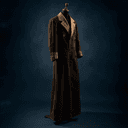
An elegant stage outfit worn during her recitals and international tours. Her style was part of her image as a grande dame of jazz.
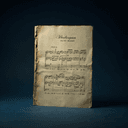
Music sheets of the songs composed by John Dankworth from Shakespeare's texts. They symbolize her taste for the marriage of poetry and jazz.
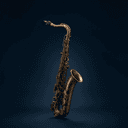
The instrument of her husband, a bandleader and composer, with whom she formed an inseparable musical duo for more than fifty years.

A trophy won in 1986 for her concert at Carnegie Hall, a symbol of her recognition in the United States.

A decoration received from the Queen in 1997, which gave her the title of “Dame Cleo Laine.” It honored her contribution to British music.
School Curriculum
Vocabulary & Tags
Key Vocabulary
Tags
Daily Life
Morning
While on tour, Cleo Laine would get up late, since her concerts ended late at night. Her morning began with tea and careful vocal exercises to protect her precious voice, which spanned more than three octaves.
Afternoon
The afternoon was devoted to rehearsals with John Dankworth's orchestra, to recording sessions in the studio, or to sound checks in the hall where she would perform that evening. She would go over her scores and choose her programme.
Evening
The evening belonged to the stage: jazz recitals, musicals, or concerts at The Stables, their very own venue. She loved chatting with the audience between songs.
Food
Like many singers, she watched what she ate to protect her voice, avoiding foods that irritate the throat before a concert. At home, she enjoyed simple, homely British cooking.
Clothing
On stage, she wore elegant evening gowns that reinforced her image as a grande dame of jazz. In private, at Wavendon, she opted for casual country clothes.
Housing
She lived with John Dankworth in a large house in the English countryside at Wavendon, next door to The Stables, the concert hall they had founded and which was at the heart of their lives.