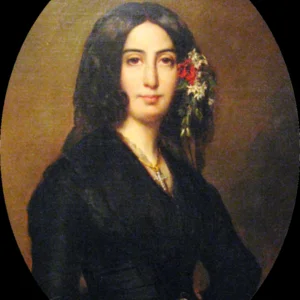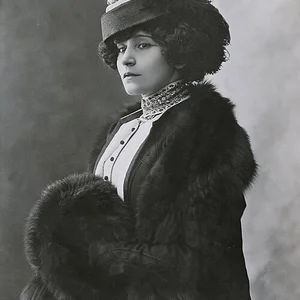

French novelist, playwright, and journalist (1873–1954), Colette is a towering figure of twentieth-century French literature. A prolific author, she explores themes of sensibility, nature, and female freedom through poetic, sensory prose.
Frequently asked questions
Famous Quotes
« The tendrils of the vine taught me more wisdom than books.»
« True wealth lies in knowing how to enjoy little.»
Key Facts
- 1873: Born in Saint-Sauveur-en-Puisaye (Yonne)
- 1900: Publication of Claudine at School, her first literary success
- 1907: Stage debut and recognition as a dramatist
- 1944: Elected to the Académie Goncourt, the first woman to receive this distinction
- 1954: Died in Paris; given a state funeral, the first French woman to be accorded this honor
Works & Achievements
First novel in the Claudine series, published under the name Willy. This story of a mischievous young girl in a rural setting was an immediate popular success and launched a true Claudine craze.
Autobiographical novel about a divorced woman who earns her living in music hall. A pioneering work on female independence and the freedom of romantic choice.
Novel exploring the love affair between Léa, an aging courtesan, and the young Chéri. A masterpiece of psychological subtlety, praised by Proust and Gide.
A collection of childhood memories set in Burgundy, celebrating the maternal figure of Sido and the happiness of a youth spent close to nature.
A literary portrait of her mother, Sido, considered one of her finest texts. A vibrant tribute to a free-spirited woman, passionate about nature and life.
A short novel in which a young newlywed prefers his cat Saha to his wife. A subtle exploration of jealousy and the bond between humans and animals.
A novella recounting the coming-of-age of a young girl raised to become a courtesan. Adapted for the screen in 1958, the film won nine Academy Awards.
Anecdotes
Colette published her first novels, the Claudine series, under the sole name of her first husband Willy (Henry Gauthier-Villars), who claimed authorship of them. It was only after their separation that she was able to reclaim recognition for her work, becoming a symbol of the struggle of women artists to be credited for their creations.
After her divorce from Willy, Colette took to the stages of Parisian music halls, dancing and performing in sometimes scandalous pantomimes. In 1907, at the Moulin Rouge, she exchanged a kiss on stage with the Marquise de Belbeuf, causing a genuine uproar in the audience and a scandal in the press.
During the First World War, Colette reinvented herself as a war correspondent. She even joined her second husband Henry de Jouvenel near the front, defying restrictions to bear witness to the reality of combat. She also converted the arcades of the Palais-Royal into a makeshift hospital to care for the wounded.
In 1948, Colette was nominated for the Nobel Prize in Literature by the Académie Goncourt. Although she did not receive it, she became in 1949 the first woman elected president of that prestigious academy, a position she held until her death.
Upon her death in 1954, the Catholic Church denied her a religious funeral due to her two divorces. The French Republic then offered her a state funeral — a first for a woman in France. Thousands of Parisians filed past her coffin, which was laid out in the Cour d'Honneur of the Palais-Royal.
Primary Sources
My mother let them talk and did not answer. But she looked over her glasses, around her, at the garden, with an air of happy complicity.
Sido, my mother, could not see a flower without touching it, nor a child without caressing it, nor a fruit without biting into it. She was lavish with everything she possessed.
These pleasures that are called, so lightly, physical… Only the animal is pure.
I write still, because it is the only thing I know how to do a little better each day, and also because I cannot move from this divan where arthritis keeps me nailed.
Key Places
Colette's birthplace in Burgundy, where she spent a happy childhood with her mother Sido. The family home is now a museum dedicated to the writer.
Colette lived in an apartment overlooking the gardens of the Palais-Royal from 1927 until her death in 1954. It was there that she wrote her last works from her famous daybed.
Famous Parisian cabaret where Colette performed as a mime and dancer between 1906 and 1911, drawing both admiration and scandal.
Colette's holiday home in Saint-Tropez, acquired in 1926. There she found Mediterranean inspiration for several of her works, celebrating the light and nature of Provence.
Colette's burial place following her state funeral in 1954. Her grave remains a place of pilgrimage for her admirers.
Typical Objects

Colette wrote exclusively on blue letter paper, a habit she kept throughout her life that became her trademark as a writer.

Often working at night or from her daybed, Colette wrote by the soft light of a desk lamp, creating the intimate atmosphere suited to her sensory style of writing.

Colette was a passionate cat lover. She always kept them close and devoted many pages to them, notably in La Chatte and Dialogues de bêtes.

In 1932, Colette opened a beauty institute in Paris where she sold her own cosmetic products, reflecting her taste for body care and the senses.

In her later years, immobilized by arthritis, Colette wrote from a daybed set up near the window of her Palais-Royal apartment, which she called her raft.

Colette collected glass paperweights, particularly crystal balls, to which she devoted fine descriptions in her later writings.
School Curriculum
Vocabulary & Tags
Key Vocabulary
Daily Life
Morning
Colette woke up late, a habit formed during her music-hall years. She had a simple breakfast in bed or on her daybed, often in the company of her cats. She would begin writing in the morning, on her blue paper, settled comfortably with a blanket over her knees.
Afternoon
In the afternoons, Colette received visitors in her apartment at the Palais-Royal or strolled through the gardens when her health allowed. She maintained an extensive correspondence with her writer friends, actresses, and journalists. She also enjoyed watching passersby from her window.
Evening
In the evenings, Colette frequented literary salons and Parisian restaurants with her close friends. In her youth, she spent her evenings on music-hall stages. Later, when confined to her apartment, she read, wrote, and entertained intimates over a simple meal.
Food
Colette was a self-proclaimed food lover, deeply attached to the Burgundian cuisine of her childhood. She enjoyed simple, flavorful dishes: goat cheeses, garden fruits, Burgundy wine. She devoted many pages to gastronomy and celebrated local produce in her writings.
Clothing
In her youth, Colette adopted provocative outfits: short hair, trousers, masculine suits. On the music-hall stage, she wore light tunics and bodysuits. Later, she favored loose, comfortable dresses, shawls, and sandals, always with a natural and nonconformist elegance.
Housing
Colette lived in many Parisian residences before settling at 9, rue de Beaujolais, on the first floor of the Palais-Royal, in 1927. Her apartment, filled with books, trinkets, and crystal paperweights, overlooked the gardens. In summer, she stayed at her house in Saint-Tropez, La Treille Muscate.
Historical Timeline
Period Vocabulary
Visual Style
Un style visuel Art Nouveau sensuel et intimiste, mêlant les intérieurs parisiens feutrés aux paysages champêtres de Bourgogne, dans des tons chauds et veloutés.
Sound Ambience
L'atmosphère sonore intime de l'appartement de Colette au Palais-Royal : le ronronnement d'un chat, le grattement de la plume, et les bruits feutrés des jardins parisiens filtrant par la fenêtre.
Liens externes & ressources
Références
Œuvres
Claudine à l'école
1900
La Vagabonde
1910
La Maison de Claudine
1922
La Chatte
1933