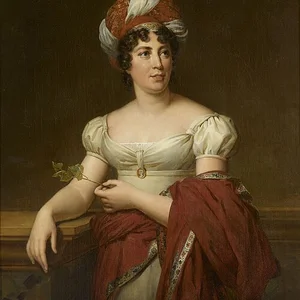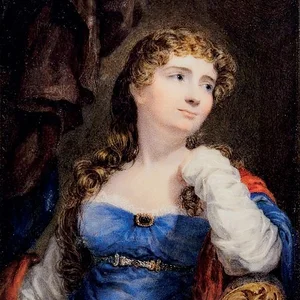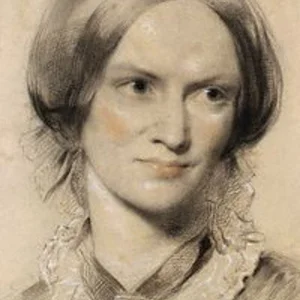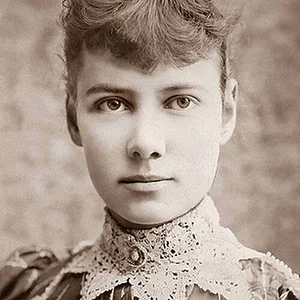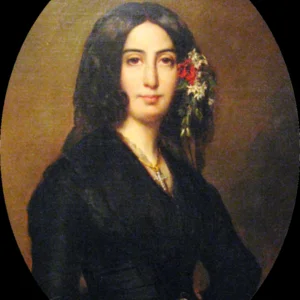

A French novelist of the 19th century, George Sand (1804-1876) was one of the most prolific and innovative writers of her era. A champion of individual freedom and equal rights, she left a lasting mark on Romantic literature through her social novels and a life that openly defied the conventions of her time.
George Sand(1804 — 1876)
George Sand
France
7 min read
Frequently asked questions
Famous Quotes
« True beauty is goodness.»
« There is but one religion, that of conscience.»
« Nothing is as beautiful as seeing someone who knows what they want.»
Key Facts
- 1832: publication of 'Indiana', her first major novel, which denounces forced marriage and defends women's rights
- 1839: publication of 'Spiridion', a philosophical novel exploring religious and moral questions
- 1846: publication of 'The Devil's Pool' (La Mare au Diable), a pastoral novel idealizing rural life
- 1852: publication of 'Little Fadette' (La Petite Fadette), a rural novel celebrating nature and innocent love
- 1872: publication of 'Nanon', her final major novel, reaffirming her commitment to humanist values
Works & Achievements
First novel published under the name George Sand. The story of a woman trapped in an unhappy marriage, this book is a plea for female freedom.
A philosophical and passionate novel that caused scandal for its frank treatment of female desire and spiritual quest.
A pastoral novel that idealizes peasant life in the Berry region. This simple and poetic tale has become a classic of French literature studied in schools.
A pastoral novel telling the story of a foundling taken in by a miller's wife. Marcel Proust made it a central childhood memory in In Search of Lost Time.
The third installment in the Berry pastoral novels, the story of twin brothers and a marginalized young girl who emancipates herself through intelligence and courage.
An autobiography in twenty volumes, a major document on the condition of women and intellectual life in the 19th century.
An autobiographical novel inspired by her tumultuous relationship with Alfred de Musset in Venice in 1833–1834.
A vast novel of adventure and initiation centered on a Bohemian opera singer. Considered one of Sand's masterpieces for its scope and richness.
Anecdotes
George Sand chose a male pseudonym to publish freely in a literary world dominated by men. Her real name was Amantine Aurore Lucile Dupin de Francueil, and she adopted this pen name in 1832 with her first solo novel Indiana.
She regularly wore men's clothing — trousers, frock coats, and hats — which caused a scandal in 1830s Paris. She had obtained an official cross-dressing permit, required at the time, justified on economic grounds: men's clothing was more durable and less expensive.
George Sand and Frédéric Chopin lived a passionate relationship for nearly nine years, from 1838 to 1847. They spent a famous winter in Majorca, at the Valldemossa Charterhouse, where Chopin composed some of his most beautiful preludes while Sand was writing A Winter in Majorca.
At Nohant, her estate in Berry, George Sand organized elaborate puppet shows in a small theatre she had built. She made the sets and costumes herself, and her friends — Delacroix, Flaubert, Dumas fils — would come to attend these performances.
Victor Hugo said of her that she was "the greatest woman of her century". Upon her death in 1876, Flaubert wept, declaring: "One had to know her as I knew her to understand all that was feminine in this great man."
Primary Sources
She was not accustomed to complaining, for no one had ever pitied her; she suffered in silence, and that very silence made her stronger against pain.
My life is yours, all of you who read me; what I have felt, you have felt; what I have suffered, you have suffered. My story is everyone's story.
I prefer to believe that humanity is moving, even while stumbling, toward a better future. That is my faith, and I have no wish to be cured of it.
Nature was so beautiful, so grand, so serene, that it seemed impossible for the wickedness of men to find any place there.
Key Places
Family home in the Berry region where Sand spent most of her life. This place was a hub of artistic creation where Chopin, Delacroix, Liszt, Balzac, and Flaubert would gather.
Sand lived in several Parisian apartments, notably at 19 quai Malaquais. Paris was the centre of her literary, political, and social life.
Monastery where Sand and Chopin spent the winter of 1838–1839. This experience inspired her account A Winter in Majorca.
Small town in the Berry region close to Nohant, a provincial setting that inspired many of her pastoral novels such as The Devil's Pool and François le Champi.
Village in the Creuse valley where Sand owned a small country house. She found inspiration there for her descriptions of Berry landscapes.
Typical Objects

Sand's daily writing instruments; she would sometimes write twenty pages a night. She was known for her rigorous and regular writing discipline.

George Sand openly smoked a pipe and cigars, a habit considered highly improper for a woman in the 19th century.

Men's clothing that Sand wore to move freely around Paris. This cross-dressing also allowed her to access the floor stalls of theaters, which were off-limits to women.

Sand owned a collection of articulated puppets that she manipulated herself in her private theater. Her son Maurice carved them and she sewed their costumes.

Passionate about natural sciences, Sand regularly gathered plants in the Berry countryside and assembled detailed herbariums.

Sand wrote on blue-colored paper, a habit she kept for much of her life. Her blue manuscripts have become a hallmark of her work.
School Curriculum
Vocabulary & Tags
Key Vocabulary
Tags
Mouvement
Concept
Daily Life
Morning
George Sand rose late, often around noon, as she wrote for much of the night. Her morning began with a coffee and reading through her voluminous correspondence. She would then take a bath and dress simply for the day.
Afternoon
In the afternoon, Sand would stroll through the Berry countryside, gathering herbs and observing nature. She received visitors in the drawing room at Nohant, where conversations turned on literature, politics, and the arts. She sometimes played with her granddaughters in the garden.
Evening
In the evening, after dinner taken with her guests, Sand organized entertainments: puppet shows, readings aloud, or music. She would then retire to her study around midnight and write until dawn, regularly producing around twenty pages a night.
Food
Sand appreciated the simple cuisine of Berry: stews, potato pancakes, goat cheeses, and homemade preserves. She drank coffee in large quantities to sustain her nights of writing. Her table at Nohant was generous but unpretentious, combining produce from the kitchen garden with peasant recipes.
Clothing
In Paris, Sand wore men's clothing — trousers, waistcoats, frock coats, and boots — to move about freely and at lower cost. At Nohant, she dressed more simply, in a work smock and skirt. She rejected corsets and crinolines, preferring comfort over fashion.
Housing
The estate of Nohant, inherited from her grandmother, was a large bourgeois house surrounded by a park and farmland. Sand had arranged within it a study, a small puppet theatre, and a painting studio for her son Maurice. The house was a permanent haven for artists, friends, and family.
Historical Timeline
Period Vocabulary
Visual Style
Un style visuel romantique mêlant les intérieurs chaleureux du domaine de Nohant aux paysages bucoliques du Berry, dans des tons terreux et dorés rappelant la peinture de Delacroix.
Sound Ambience
L'ambiance sonore du domaine de Nohant mêle la musique de Chopin au piano, le calme de la campagne berrichonne et l'animation des soirées artistiques que Sand organisait pour ses illustres invités.
Liens externes & ressources
Références
Œuvres
La Mare au Diable
1846
François le Champi
1848
La Petite Fadette
1849
Histoire de ma vie
1855
Elle et Lui
1859