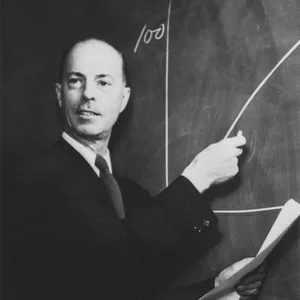

Colin MacLeod is an Australian researcher in cognitive psychology. He is recognized for his work on attention, memory, and cognitive control, in particular the study of attentional biases linked to anxiety.
Colin MacLeod
Colin MacLeod
5 min read
Frequently asked questions
Key Facts
- Australian researcher specializing in cognitive psychology (late 20th - 21st century)
- Work on selective attention and attentional biases
- Contributions to the study of the links between attention and anxiety
- Research on memory and cognitive control
Works & Achievements
Foundational study that introduces the dot-probe task and experimentally demonstrates the attentional bias of anxious people toward threat.
A synthesizing work that became a reference for understanding how emotional disorders distort attention, memory and interpretation.
Research program that turns the measurement of attentional bias into a training method aimed at reducing vulnerability to anxiety.
An institution bringing researchers together around the cognitive mechanisms of anxiety and depression.
A landmark review arguing for a causal link between cognitive biases and emotions, and assessing the therapeutic avenues.
Anecdotes
In 1986, together with Andrew Mathews and Philip Tata, Colin MacLeod published a study that became famous: using a test in which a dot appears on the screen (the “probe”), he showed that anxious people automatically direct their gaze toward threatening words. This marked the birth of the measurement of “attentional bias.”
MacLeod helped turn a simple observation into a therapeutic tool: if anxiety drives us to fixate on danger, can attention be trained to turn away from it? This idea gave rise to “cognitive bias modification” (CBM) programs, tested on computers like a kind of mental training.
Based at the University of Western Australia in Perth, he co-founded there a research center dedicated to emotion and cognition, bringing together researchers who study how anxiety and depression alter the way we perceive the world.
Much of his research rests on milliseconds: the reactions measured in his tasks play out within a few hundred thousandths of a second, too fast for the person being tested to be aware of them. It is this speed that reveals the hidden automatic processes of attention.
Primary Sources
The article establishes that anxious patients selectively orient their attention toward threatening stimuli, unlike non-anxious subjects: it is the first experimental demonstration of attentional bias using the dot-probe task.
A landmark book that synthesizes the research showing that emotional disorders are accompanied by systematic biases in the attention, memory, and interpretation of information.
The authors review methods aimed at retraining attention and interpretation in order to reduce anxiety, arguing for a causal link between cognitive biases and emotional vulnerability.
Key Places
MacLeod's main workplace, where he conducts his research on attention, anxiety, and cognitive biases.
A coastal city in western Australia that is the focus of his academic activity.
The British anxiety research community where he forged his foundational collaborations of the 1980s, notably with Andrew Mathews.
The country where this researcher works, a recognized hub of contemporary experimental cognitive psychology.
Typical Objects

A computer workstation that displays words or images at precise intervals and records reaction times to the thousandth of a second.

A device that follows eye movement to determine where and for how long a person fixates on a threatening or neutral stimulus.

An experimental protocol in which a dot replaces one of two displayed words; response speed reveals which word attention was already turned toward.

A button controller that lets the participant respond quickly, eliminating the delay introduced by an ordinary keyboard.

Peer-reviewed publications through which results are disseminated, criticized, and reproduced by the community.
School Curriculum
Vocabulary & Tags
Key Vocabulary
Daily Life
Morning
A university researcher's morning blends preparing experiments, analyzing data on the computer, and reading recent papers. It is often the time set aside for focused work and writing.
Afternoon
The afternoon is devoted to supervising PhD students, team meetings, and running participants through the experimental tasks carried out in the laboratory.
Evening
The evening may be taken up with proofreading manuscripts, corresponding with colleagues in other countries, and preparing classes or lectures.
Food
As in contemporary academic life, the diet is ordinary and urban: meals eaten on campus or at home, with coffee ever-present during long analysis sessions.
Clothing
The relaxed professional attire typical of academia: a shirt or jacket for conferences, simple clothing day to day.
Housing
Urban housing in a modern Australian city, close to the university campus where his laboratory is located.
Historical Timeline
Period Vocabulary
Liens externes & ressources
Références
Œuvres
« Attentional bias in emotional disorders » (avec A. Mathews et P. Tata)
1986
« Cognitive Psychology and Emotional Disorders » (coauteur)
1988
Développement de la modification des biais cognitifs (CBM)
années 2000
Co-fondation d'un centre de recherche sur l'émotion et la cognition à Perth
années 2000
« Cognitive bias modification approaches to anxiety » (Annual Review of Clinical Psychology)
2012