
Alan Shepard was the first American to travel in space, on May 5, 1961, during the suborbital flight of Freedom 7. A Navy pilot turned NASA astronaut, he also walked on the Moon in 1971 during the Apollo 14 mission.
Alan Shepard(1923 — 1998)
Alan Shepard
États-Unis
8 min read
Frequently asked questions
Famous Quotes
« Please, dear God, don't let me foul up.»
« It's a very sobering feeling to be up in space and realize that one's safety factor was determined by the lowest bidder on a government contract.»
Key Facts
- May 5, 1961: first American suborbital spaceflight aboard Freedom 7 (Mercury program)
- 1961: flight lasting 15 minutes and 22 seconds, reaching a maximum altitude of 187 km
- 1963–1969: grounded for medical reasons (inner ear condition)
- January 31 – February 9, 1971: commands the Apollo 14 mission and walks on the Moon
- Becomes one of the 12 men to have walked on the Moon; plays golf on the lunar surface
Works & Achievements
The first American spaceflight, a suborbital flight lasting 15 minutes and 22 seconds that reached an altitude of 187 km. This achievement partially answered the challenge posed by Gagarin and demonstrated the United States' ability to send a man into space.
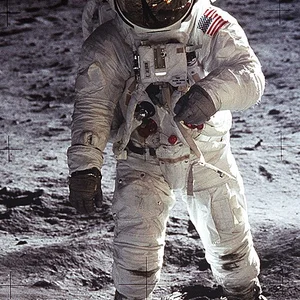
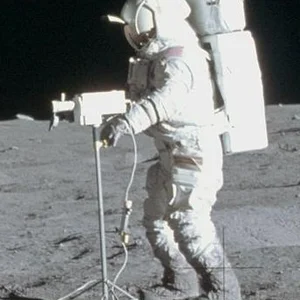
The third crewed lunar landing in history, during which Shepard commanded the crew and conducted two moonwalks in the Fra Mauro highlands, collecting geological samples of significant scientific value.
During his years of medical grounding, Shepard oversaw the selection and training of dozens of astronauts, playing a key role in preparing the Gemini and Apollo missions that led to the Moon landing.
A book co-written with Deke Slayton in which Shepard recounts the behind-the-scenes story of the race to the Moon, from the selection of the Mercury Seven through the Apollo missions, offering a firsthand account of this historic period.
Anecdotes
On May 5, 1961, Alan Shepard waited more than four hours lying in his tiny Freedom 7 capsule on the launch pad, due to persistent fog and then technical problems. Running out of patience, he reportedly radioed the engineers to ask permission to urinate in his spacesuit, which they reluctantly granted. This very human detail, which became famous, perfectly illustrates the spartan conditions of the early space missions.
In 1963, Shepard was diagnosed with Ménière's disease, an inner ear disorder causing dizziness and ringing in the ears. Grounded for six long years, he became head of the astronaut office, supervising his colleagues while unable to fly himself. He refused to accept this situation and, after a secret surgery in 1969, managed to regain his medical clearance and have himself reinstated on the active astronaut roster.
During the Apollo 14 mission in February 1971, Alan Shepard made a gesture that went down in history: he had hidden a golf club head inside his spacesuit, which he attached to a lunar sample collection tool to hit two balls on the surface of the Moon. He declared that the second one had gone “miles and miles and miles” across the lunar void. This playful act — the first sport ever played on the Moon — captures the pioneering and light-hearted spirit of the Apollo astronauts.
At 47 years old, Alan Shepard was the oldest astronaut to walk on the Moon during Apollo 14. He was also one of the only members of the Mercury Seven — the seven first American astronauts selected in 1959 — to have reached the lunar surface. Ten years separated his historic Freedom 7 flight from his walk through the Fra Mauro highlands, a personal journey that, on its own, embodies the entire epic of the American space program.
Primary Sources
SHEPARD: Ah, Roger. Liftoff, and the clock has started. [...] This is Freedom 7. The fuel is go. 1.2 g. Cabin at 14 psi. Oxygen is go.
The crew performed two EVAs totaling 9 hours 23 minutes on the lunar surface. Commander Shepard and Lunar Module Pilot Mitchell collected 42.28 kilograms of lunar samples in the Fra Mauro highlands.
Alan Shepard testified before Congress upon his return from Freedom 7, describing the experience of weightlessness and the view of Earth from space, and underscoring the strategic importance of the space program for the United States in the face of the Soviet Union.
We had trained for years, spent billions of dollars, and now I was finally on my way. I felt the rocket ignite beneath me and thought: we are doing this. America is going to space.
Key Places
Alan Shepard's hometown, where he grew up in a New England family. There he developed his passion for aviation and technology from an early age.
The launch site from which Freedom 7 lifted off on May 5, 1961. Shepard spent weeks there training and waiting for favorable conditions before his historic flight.
NASA headquarters where Shepard worked as an astronaut and then as Chief of the Astronaut Office. He oversaw the selection and training of his colleagues during the years he was grounded from flight.
The lunar highland region where the Apollo 14 mission landed in February 1971. Shepard and Mitchell collected 42 kg of lunar soil samples there during two extravehicular excursions.
The elite military institution where Shepard earned his degree in 1944. This training allowed him to become a Navy pilot and, ultimately, one of the most celebrated astronauts in American history.
Liens externes & ressources
Références
Œuvres
Vol spatial Freedom 7 (Mercury-Redstone 3)
5 mai 1961
Mission Apollo 14 (commandant)
31 janvier – 9 février 1971
Direction du bureau des astronautes de la NASA
1963–1969
Moon Shot : The Inside Story of America's Race to the Moon
1994