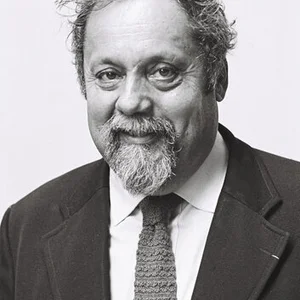

A French doctor and biologist, Alain Bombard crossed the Atlantic in 1952 aboard an inflatable dinghy without provisions or water, to prove that a castaway could survive at sea. Having become a popular hero, he also served as a Member of the European Parliament and Secretary of State for the Environment.
Alain Bombard(1924 — 2005)
Alain Bombard
France
6 min read
Frequently asked questions
Famous Quotes
« Castaways, I cry out to you: it is not the sea that kills you, it is fear.»
Key Facts
- Born on 27 October 1924 in Paris, died on 19 July 2005 in Toulon
- In 1952, crosses the Atlantic alone in 65 days aboard the inflatable dinghy L'Hérétique, with no provisions
- Feeds on raw fish and plankton and drinks small amounts of seawater to prove that survival is possible
- Publishes his account Naufragé volontaire (The Bombard Story) in 1953, an international success
- Becomes a Member of the European Parliament (1981), then briefly Secretary of State for the Environment (1981)
Works & Achievements
His founding feat: 65 days alone on an inflatable dinghy, with no food or fresh water on board, to prove that shipwreck survivors could stay alive.
The account of his adventure, a worldwide bestseller translated into many languages, which made him famous and spread his ideas about survival at sea.
Following his demonstration, maritime authorities improved the contents of survival rafts (fishing gear, instructions), saving lives.
Elected to the European Parliament, he championed the protection of the environment and the oceans, extending his commitment as a scientist.
A brief government post that cemented his stature as a public figure committed to nature and the sea.
Anecdotes
Alain Bombard named his small inflatable dinghy "L'Hérétique" (The Heretic), a Zodiac barely 4.65 metres long. The name was a challenge: it meant that his ideas about survival at sea went against everything the doctors of his time believed — they took him for a madman.
During his crossing of the Atlantic in 1952, Bombard ate only what the sea gave him: raw fish caught with a harpoon, plankton gathered in a small net, and he drank the liquid he pressed from the flesh of the fish along with rainwater. He even swallowed small amounts of seawater — a very dangerous practice that doctors warn against today.
The idea came to him after a disaster: as a junior doctor at the hospital in Boulogne-sur-Mer in 1951, he watched dozens of shipwrecked fishermen die. He became convinced that many castaways die not of hunger or thirst, but of fear and discouragement, sometimes within just a few hours.
After 65 days alone at sea, Bombard reached Barbados on 23 December 1952, having lost more than 20 kilos but still alive. His book recounting the adventure became a worldwide success and forced maritime authorities to better equip life rafts.
Near the end of the voyage, he came across a British cargo ship, the Arakaka, and agreed to climb aboard for a few moments to take stock and eat a meal. His detractors used this to cast doubt on his achievement, but Bombard set off again at once, sailing solo all the way to the West Indies.
Primary Sources
Shipwrecked victims, my brothers, I know it was not the sea that killed you, it was not hunger, it was not thirst... lulled by the dismal sound of the waves, you died of fear.
In it, Bombard explains in detail how he fed on raw fish, pressed their flesh to drink the juice, and gathered plankton with a net to provide his body with essential vitamins.
Day after day, Bombard recorded his weight, his water ration, his fish catches, and his morale, turning his voyage into a genuine scientific experiment on survival at sea.
Key Places
Birthplace of Alain Bombard, where he was born in 1924.
Port in northern France where, as a young medical intern, he was deeply shaken by the death of shipwrecked fishermen in 1951 — the origin of his life's calling.
Center of oceanographic research where Bombard prepared and studied his plan for surviving at sea.
Port in the Canary Islands from which he set off alone, on 19 October 1952, for the great Atlantic crossing.
Caribbean island he reached on 23 December 1952 after 65 days at sea, proving that a castaway could survive.
Town in the Var department where Alain Bombard died in 2005.
Typical Objects

The Zodiac-brand inflatable dinghy, 4.65 metres long, aboard which Bombard crossed the Atlantic. Its name reflected his challenge to the conventional wisdom of medicine.

A small fish spear with which Bombard caught fish, his main source of food and liquid during the crossing.

A very fine-mesh net dragged behind the dinghy to gather plankton, which he ate for its vitamins, particularly to fight scurvy.

A device used to crush the flesh of fish in order to extract their juice, which Bombard drank to hydrate himself without fresh water.

A navigation instrument for measuring the height of the sun to calculate one's position: Bombard used it to fix his location each day.

A journal in which he recorded his weight, his catches and his physical condition, turning his adventure into a documented medical experiment.

Trained as a doctor, Bombard carried what he needed to treat and examine himself, for he was both the guinea pig and the scientist of his own experiment.
School Curriculum
Vocabulary & Tags
Key Vocabulary
Daily Life
Morning
Aboard L'Hérétique, the morning began by hauling in the plankton net and casting a line to catch the first fish. Bombard immediately recorded their weight and condition in his notebook, for he was his own scientific guinea pig.
Afternoon
In the afternoon, he took a sextant fix to check his position and watched the heading of his dinghy as it was pushed along by the trade winds. He also had to bail out the seawater and repair whatever could be mended under a crushing sun.
Evening
In the evening, exhausted, he shielded himself from the cold and the damp, struggling above all against the loneliness and discouragement that he regarded as the castaway's number one enemy. He made every effort to keep his spirits up and to write.
Food
His diet was that of a castaway: raw fish caught with a harpoon, plankton gathered with a net, and to drink, the juice pressed from the flesh of fish, rainwater and, for short stretches, a little seawater — a point hotly disputed by doctors.
Clothing
He wore sailor's clothes that were permanently soaked by the sea spray, which damaged his skin. As a doctor and a public figure on land, he instead donned the sober attire of the 1950s.
Housing
For 65 days, his “home” was the bottom of an inflatable dinghy less than five meters long, with no real shelter. On land, he led the life of a doctor and then of a twentieth-century French politician.
Historical Timeline
Period Vocabulary
Liens externes & ressources
Références
Œuvres
Traversée de l'Atlantique sur L'Hérétique
1952
Naufragé volontaire
1953
Réforme de l'équipement des radeaux de sauvetage
années 1950-1960
Mandat de député européen
1981-1994
Secrétaire d'État à l'Environnement
1981