 flip
flipAlfajores de Maicena Rellenos de Dulce de Leche (Cornstarch Cookies with Milk Caramel)
Alfajores de Maicena Rellenos de Dulce de Leche (Cornstarch Cookies with Milk Caramel)
Why this dish? Dulce de leche is explicitly among Cristina's sweets, and the alfajor de maicena is THE treat of the Argentine merienda, the afternoon snack taken with mate. It is the simple, popular daily pleasure of all Argentina.
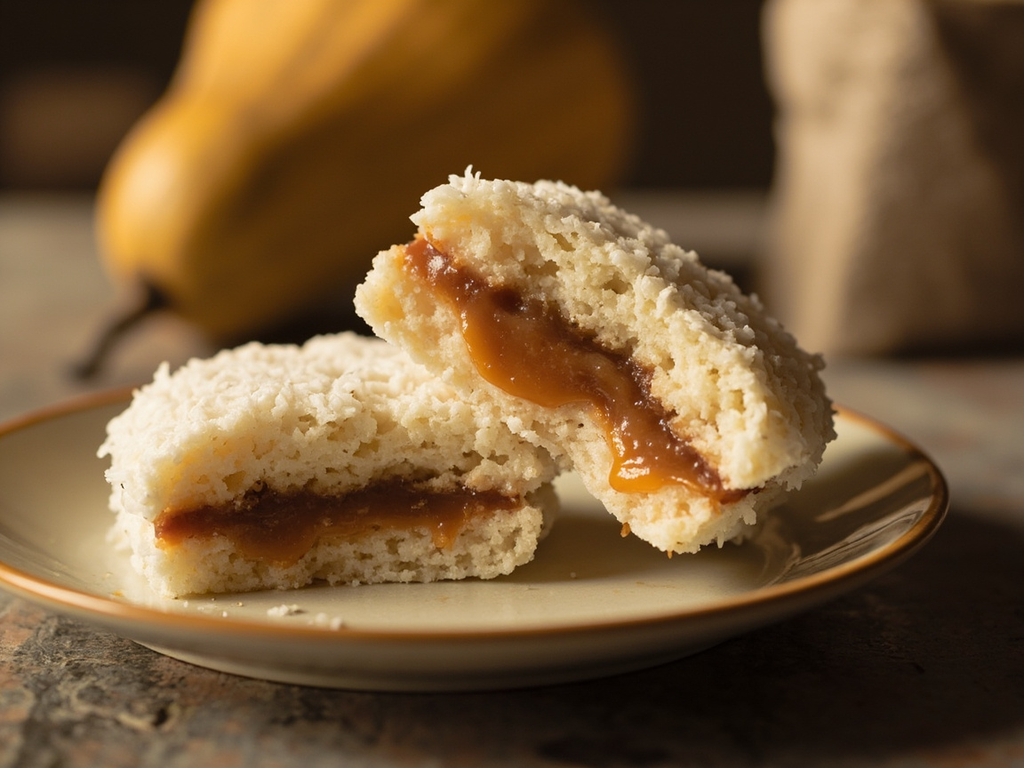
Two very tender cornstarch cookies (maizena), sandwiched with a generous layer of dulce de leche, then rolled on the edges in shredded coconut. It melts in the mouth, soft and comforting.
El dulce de leche es nuestro, que no nos lo discutan — the milk caramel is ours, Argentines, and no one will take it away from us. These alfajorcitos de maicena, I've known them forever: the dough must crumble, melt on the tongue, almost too fragile to hold. We glue them two by two with a good spoonful of dulce, and roll the edge in coconut. A bitter mate in one hand, an alfajor in the other: that's the merienda, the sweetest moment of the day.
- •Cornstarch (maizena) — twice the weight of flour (melt-in-the-mouth texture)
- •Wheat flour — a little (binder)
- •Butter and egg yolks — generously (richness)
- •Dulce de leche (milk caramel) — as much as you like (filling)
- •Shredded coconut — for rolling the edges (finish)
Alfajores de Maicena Rellenos de Dulce de Leche (Cornstarch Cookies with Milk Caramel)
Two very tender cornstarch cookies (maizena), sandwiched with a generous layer of dulce de leche, then rolled on the edges in shredded coconut. It melts in the mouth, soft and comforting.
Why this dish? Dulce de leche is explicitly among Cristina's sweets, and the alfajor de maicena is THE treat of the Argentine merienda, the afternoon snack taken with mate. It is the simple, popular daily pleasure of all Argentina.
El dulce de leche es nuestro, que no nos lo discutan — the milk caramel is ours, Argentines, and no one will take it away from us. These alfajorcitos de maicena, I've known them forever: the dough must crumble, melt on the tongue, almost too fragile to hold. We glue them two by two with a good spoonful of dulce, and roll the edge in coconut. A bitter mate in one hand, an alfajor in the other: that's the merienda, the sweetest moment of the day.
Ingredients (period version)
- Cornstarch (maizena) — twice the weight of flour (melt-in-the-mouth texture)
- Wheat flour — a little (binder)
- Butter and egg yolks — generously (richness)
- Dulce de leche (milk caramel) — as much as you like (filling)
- Shredded coconut — for rolling the edges (finish)
Ingredients
- Cornstarch — 200 g (texture)
- Wheat flour — 150 g (binder)
- Softened butter — 100 g (richness)
- Sugar — 75 g (sweetness)
- Egg yolks — 3 (binder and softness)
- Baking powder — 1 tsp (lightness)
- Lemon zest — 1 (flavor)
- Dulce de leche (thick, repostero type) — 250 g (filling)
- Shredded coconut — 50 g (finish)
Method
- Beat the softened butter with sugar, add egg yolks and lemon zest.
- Incorporate sifted cornstarch, flour, and baking powder to form a soft dough; do not overwork.
- Roll out the dough to 5 mm and cut out discs of 4–5 cm.
- Bake at 170 °C for 10–12 minutes: the cookies should remain pale, barely golden underneath.
- Let cool completely (they are very fragile when hot).
- Sandwich two by two with a good spoonful of dulce de leche, then roll the edges in shredded coconut.
How it was made : The alfajor descends from an Arab-Andalusian pastry brought by the Spanish, transformed in South America. The maicena (cornstarch) version, light and crumbly, became a classic of the Argentine and Uruguayan merienda in the 20th century, inseparable from dulce de leche, itself obtained by slowly reducing sweetened milk.
The contemporary twist : Half of the alfajor can be dipped in melted dark chocolate for a more festive 'alfajor de chocolate' version — but coconut remains the great popular classic.
Cristina Kirchner · Charactorium