 flip
flipRhea's Stone — Sesame and Honey Flatbread Swaddled
Rhea's Stone — Sesame and Honey Flatbread Swaddled
Why this dish? To save Zeus, Rhea handed Cronus a stone wrapped in swaddling clothes; the Titan swallowed it, thinking he was devouring his son. This compact sesame and honey flatbread, tightly rolled and 'swaddled,' evokes that deceptive stone — dense and durable, it keeps for a long time like travel provisions.
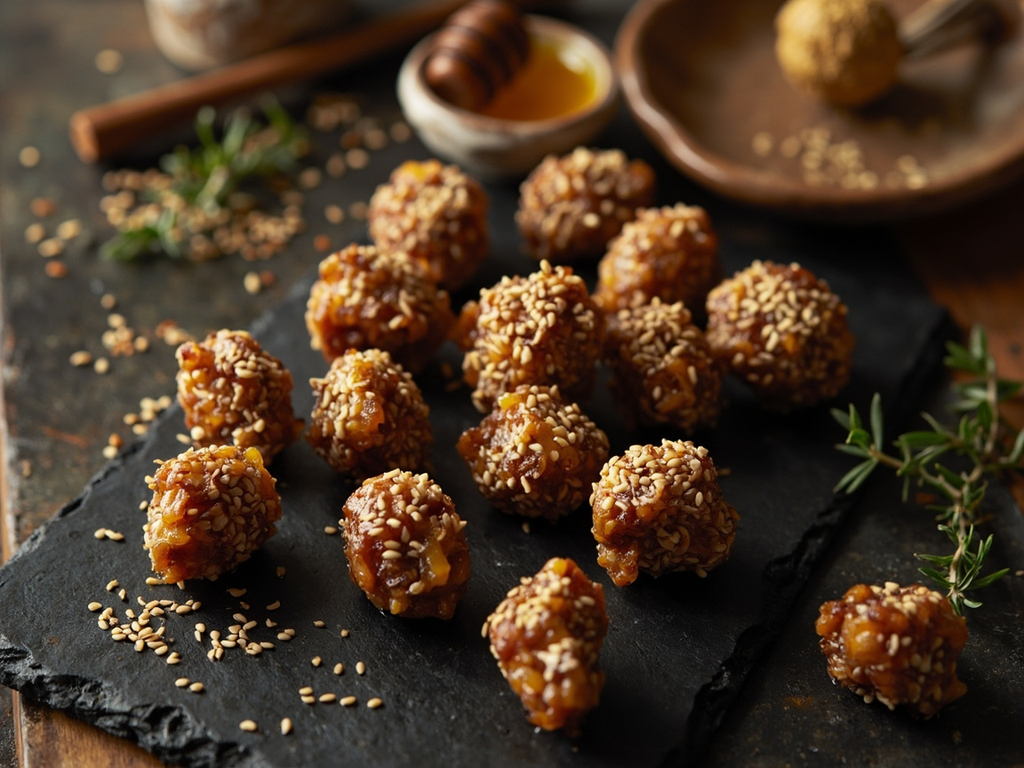
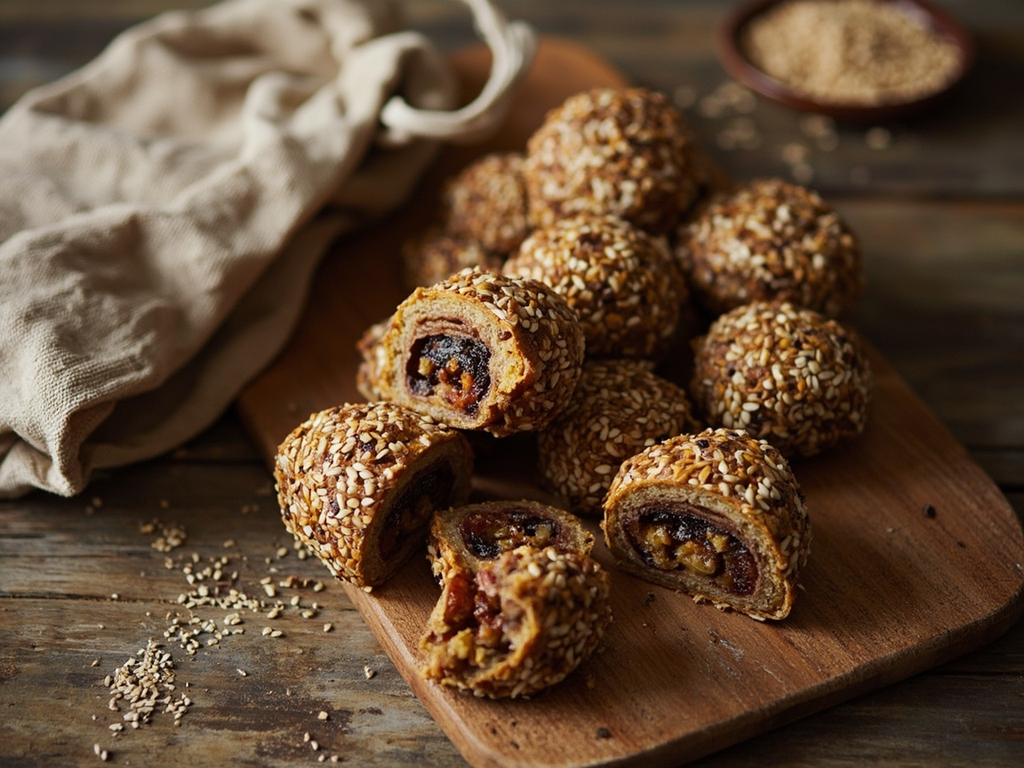
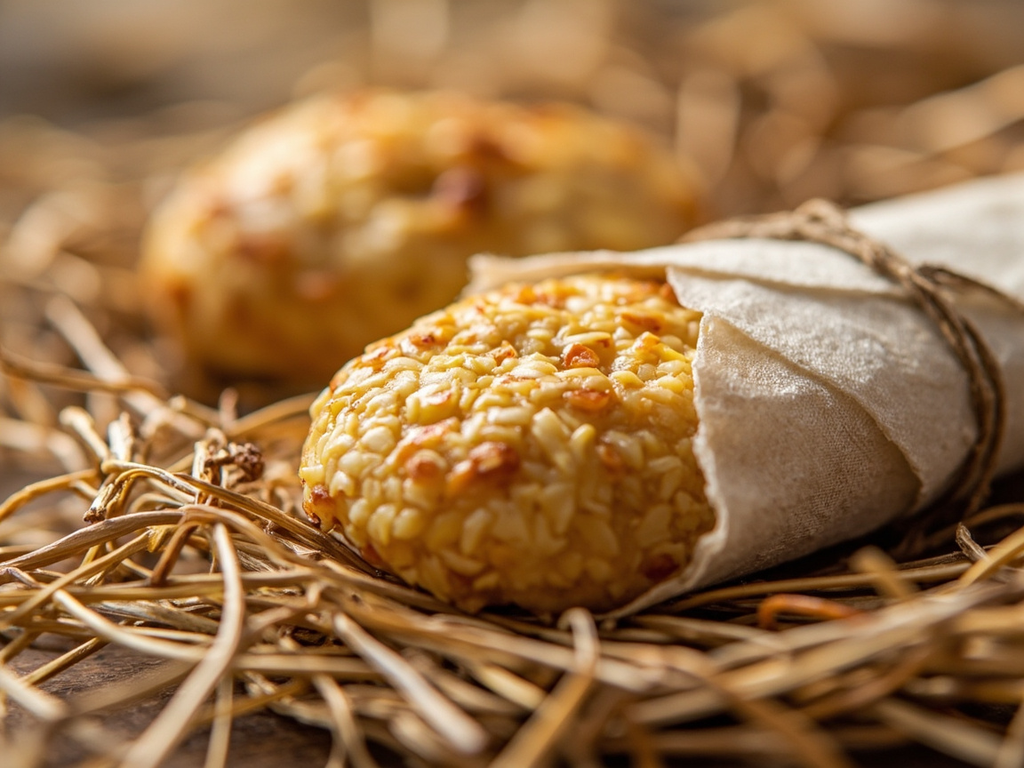
A dense flatbread of sesame seeds bound in cooked honey, shaped like a pebble and wrapped like an infant. Crunchy then melting, it is the ancestor of Greek pasteli: an energy reserve that defies time — the very adversary of Cronus.
My wife thought me blinder than I was: a stone wrapped in swaddling, and I swallowed it as one swallows fate. Learn from my mistake, mortal, and make yourself a stone to be devoured without regret. Bind sesame to boiling honey, roll it tight, swaddle it in leaves: it will harden like rock and keep for whole moons at the bottom of a pouch. Time gnaws everything — but it has no hold on what is made of honey and patience.
- •Sesame seeds — two measures (base)
- •Honey — one measure (binder and preservative)
- •Orange blossom or thyme water — a few drops (flavoring (optional))
Rhea's Stone — Sesame and Honey Flatbread Swaddled
A dense flatbread of sesame seeds bound in cooked honey, shaped like a pebble and wrapped like an infant. Crunchy then melting, it is the ancestor of Greek pasteli: an energy reserve that defies time — the very adversary of Cronus.
Why this dish? To save Zeus, Rhea handed Cronus a stone wrapped in swaddling clothes; the Titan swallowed it, thinking he was devouring his son. This compact sesame and honey flatbread, tightly rolled and 'swaddled,' evokes that deceptive stone — dense and durable, it keeps for a long time like travel provisions.
My wife thought me blinder than I was: a stone wrapped in swaddling, and I swallowed it as one swallows fate. Learn from my mistake, mortal, and make yourself a stone to be devoured without regret. Bind sesame to boiling honey, roll it tight, swaddle it in leaves: it will harden like rock and keep for whole moons at the bottom of a pouch. Time gnaws everything — but it has no hold on what is made of honey and patience.
Ingredients (period version)
- Sesame seeds — two measures (base)
- Honey — one measure (binder and preservative)
- Orange blossom or thyme water — a few drops (flavoring (optional))
Ingredients
- Sesame seeds — 200 g (base)
- Honey — 120 g (binder and preservative)
- Lemon juice — a few drops (prevents crystallization)
Method
- Toast the sesame seeds in a dry pan until golden and fragrant, stirring constantly.
- In a saucepan, heat the honey with lemon juice over low heat until it simmers, without burning.
- Pour the sesame into the hot honey and mix vigorously to coat well.
- Spread the mixture between two sheets of parchment paper and flatten to 1 cm with a rolling pin.
- Let cool slightly, then cut into pebbles or roll into a ball; once cold, the flatbread keeps for several weeks wrapped.
How it was made : Itria, thin sesame and honey flatbreads, are mentioned as early as Greek antiquity and are the direct ancestor of the pasteli still sold today. Rich and sweet, they kept well and served as nourishing provisions for travel and festivals.
The contemporary twist : Present it truly 'swaddled' in a strip of parchment tied with string, placed on a straw nest — the stone Cronus should not have swallowed.
Sources : Hesiod, *Theogony* (the stone given to Cronus, v. 485-491) · Athenaeus, *The Deipnosophists*, Book XIV (on sesame itria)
Cronos · Charactorium