 flip
flipPlakous with Honey and Fresh Cheese
Plakous with Honey and Fresh Cheese
Why this dish? Before fleeing Crete, a pious man thanks the gods; and Daedalus, who has so offended Minos, knows the price of an offering. The honey plakous, a cake placed on altars and shared at the symposion, is inspired by the sweet flatbreads that Greeks presented to the gods to win their favor — a gesture, never a reproduction of a sacred rite.
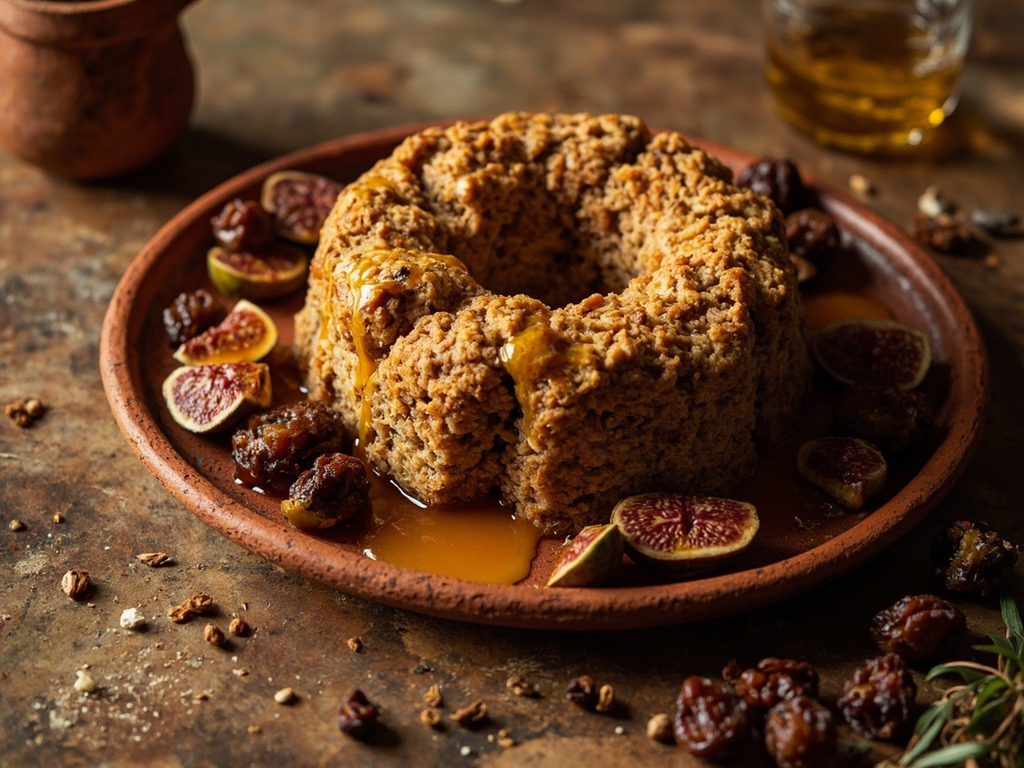
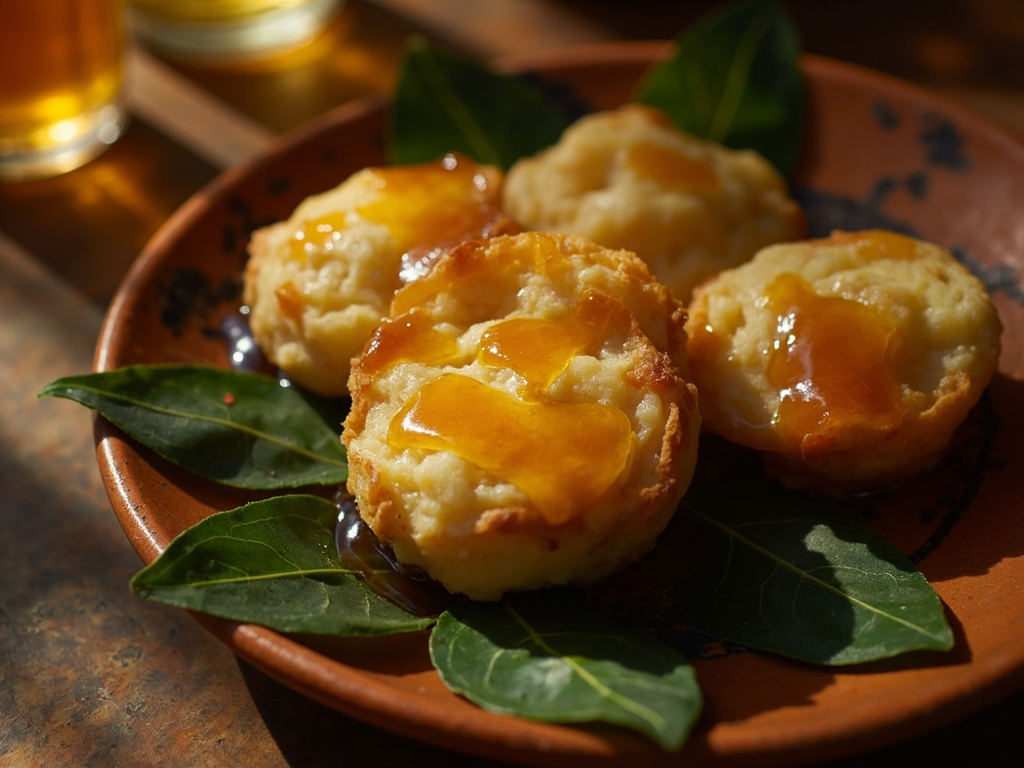
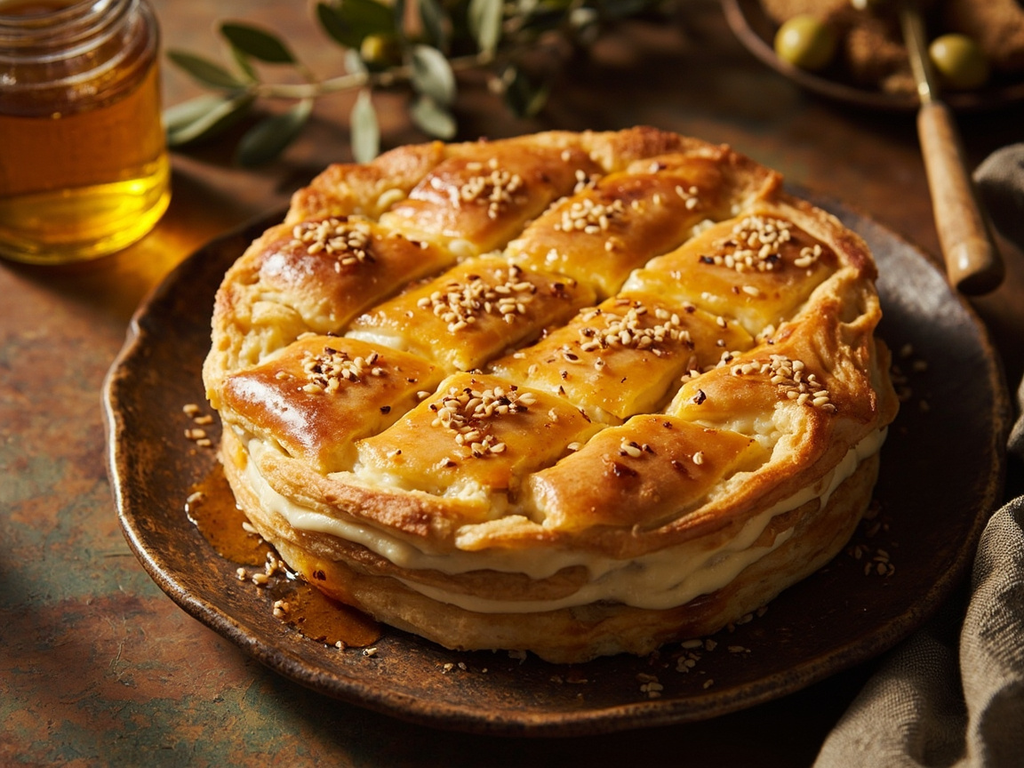
A cake of thin stacked pastry leaves, filled with fresh cheese beaten with honey, all drizzled while still warm with fragrant honey. A sweetness of altars and banquets, a distant ancestor of Mediterranean honey cakes.
When you have angered a king and perhaps the gods, young man, you do not arrive empty-handed before the altar. With my craftsman's fingers I spread sheets of dough as thin as the wax of my wings, I stack them with fresh cheese worked into Hymettus honey. The first portion is set aside for the Immortal, and the rest we keep for the evening cup. Believe a man who has dared too much: a little sweetness offered is better than a pride unshared.
- •Wheat flour — as needed for the leaves (dough)
- •Fresh ewe's milk cheese — a good portion (filling)
- •Hymettus honey — generously (sweetness and binder)
- •Olive oil — for the leaves (fat)
- •Sesame seeds — a handful (finish)
Plakous with Honey and Fresh Cheese
A cake of thin stacked pastry leaves, filled with fresh cheese beaten with honey, all drizzled while still warm with fragrant honey. A sweetness of altars and banquets, a distant ancestor of Mediterranean honey cakes.
Why this dish? Before fleeing Crete, a pious man thanks the gods; and Daedalus, who has so offended Minos, knows the price of an offering. The honey plakous, a cake placed on altars and shared at the symposion, is inspired by the sweet flatbreads that Greeks presented to the gods to win their favor — a gesture, never a reproduction of a sacred rite.
When you have angered a king and perhaps the gods, young man, you do not arrive empty-handed before the altar. With my craftsman's fingers I spread sheets of dough as thin as the wax of my wings, I stack them with fresh cheese worked into Hymettus honey. The first portion is set aside for the Immortal, and the rest we keep for the evening cup. Believe a man who has dared too much: a little sweetness offered is better than a pride unshared.
Ingredients (period version)
- Wheat flour — as needed for the leaves (dough)
- Fresh ewe's milk cheese — a good portion (filling)
- Hymettus honey — generously (sweetness and binder)
- Olive oil — for the leaves (fat)
- Sesame seeds — a handful (finish)
Ingredients
- Filo pastry (or homemade thin sheets) — 6 sheets (dough)
- Ricotta or fresh ewe's milk cheese — 250 g (filling)
- Fragrant honey (thyme, flowers) — 5 tbsp (sweetness and binder)
- Mild olive oil or butter — 4 tbsp (fat)
- Sesame seeds — 2 tbsp (finish)
Method
- Preheat the oven to 180°C.
- Beat the fresh cheese with 2 tablespoons of honey until smooth.
- Brush the filo sheets with oil one by one and layer half of them in a mold.
- Spread the honey-cheese cream, cover with the remaining oiled sheets.
- Sprinkle with sesame seeds and bake for 25-30 minutes until golden.
- Upon removal, drizzle with the remaining warm honey and let it soak before cutting.
How it was made : Plakous (from plax, 'flat surface') was a cake of layered sheets with cheese and honey, a common ancestor of many Mediterranean pastries. It was offered to the gods and shared at the symposion; Athenaeus cites numerous regional variants.
The contemporary twist : Cut into diamond-shaped 'wax tiles' and studded with golden sesame, echoing the assembled feathers of the wings.
Sources : Athenaeus of Naucratis, Deipnosophistae, Book XIV (cakes and plakountes) · Andrew Dalby, Food in the Ancient World from A to Z, 2003
Daedalus and Icarus · Charactorium