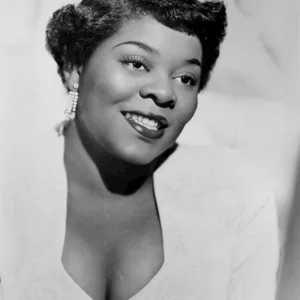

American singer (1924-1963), nicknamed the “Queen of the Blues.” A major figure in jazz, blues, and rhythm and blues during the 1940s and 1950s, she left her mark on African American music through her incisive phrasing and expressive voice.
Dinah Washington(1924 — 1963)
Dinah Washington
États-Unis
6 min read
Frequently asked questions
Key Facts
- Born on August 29, 1924, in Tuscaloosa, Alabama, under the name Ruth Lee Jones
- Got her start in the late 1930s singing gospel in Chicago before joining Lionel Hampton's band in 1943
- Achieved great success in the 1940s and 1950s with numerous titles charting on the rhythm and blues lists
- Found mainstream success with “What a Diff'rence a Day Makes” (1959), which won a Grammy Award
- Died prematurely on December 14, 1963, in Detroit, at the age of 39
Works & Achievements
One of her earliest recordings, written by the critic Leonard Feather, which revealed her biting voice.
A number one on the rhythm and blues chart, it confirmed her status as a star of the genre.
A live jazz album recorded with great instrumentalists, a testament to her versatility.
Her greatest hit, awarded a Grammy and heard far beyond the African American audience.
A memorable rendition of a standard, showcasing her sense of melody and emotion.
A poignant ballad that became a classic, covered and sampled many decades later.
A playful duet with Brook Benton, a huge hit that revived her popularity.
An elegant cover of a standard, showcasing her art of reinterpreting popular songs.
Anecdotes
Dinah Washington was born Ruth Lee Jones in Tuscaloosa, Alabama, in 1924, but grew up in Chicago, where her family settled during the Great Migration of African Americans. As a little girl, she played piano and sang in the gospel choir of St. Luke's Baptist Church. It was in this religious repertoire that she developed the vocal power and precision that would become her trademark.
Around the age of fifteen, she won an amateur contest at Chicago's famous Regal Theater by performing “I Can't Face the Music.” Spotted at a city club, the Garrick Stage Bar, she was hired by bandleader Lionel Hampton in 1943. It was around this time that she gave up her real name to become “Dinah Washington.”
She was nicknamed the “Queen of the Blues,” but Dinah refused to be confined to a single style: she sang blues, jazz, rhythm and blues, pop, and even country. “I can sing anything,” she declared, and her crisp diction made every word easy to understand—a quality that many singers later tried to imitate.
In 1959, her cover of “What a Diff'rence a Day Makes” became a huge hit that reached beyond African American audiences and earned her a Grammy Award. The song was originally a 1934 Mexican tune, “Cuando vuelva a tu lado,” proof of her talent for transforming any melody.
A star with a lavish lifestyle, married seven times, fond of diamonds and fur coats, Dinah Washington died suddenly in Detroit on December 14, 1963, at just 39 years old, from an accidental mix of diet pills and alcohol. Her premature death deprived American music of one of its most expressive voices.
Primary Sources
“I'm an evil gal, don't you bother with me / I'll empty your pockets and fill you with misery.”
Dinah Washington's “Baby Get Lost” reaches number one on the chart of the country's best-selling rhythm and blues records.
The award for Best Rhythm and Blues Performance goes to Dinah Washington for “What a Diff'rence a Day Makes.”
Key Places
Town in the segregated South where Ruth Lee Jones was born in 1924.
City where she grew up, sang gospel at St. Luke's church, and launched her career, notably at the Regal Theater.
A landmark of African American music where she performed regularly before adoring crowds.
She performed in the casinos here, even though Black artists were often barred from staying in the very hotels where they sang.
City where she died suddenly on December 14, 1963, at the age of 39.
Typical Objects

In front of this studio and stage microphone, Dinah Washington displayed her exceptionally crisp diction, in which every word remained perfectly audible.
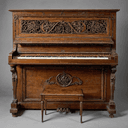
Trained in gospel from childhood, she accompanied herself on the piano in church and later in clubs before becoming a star singer.

Her recordings for the Mercury label, released on these records, fed the jukeboxes and the charts of the era.

On stage, Dinah Washington took great care with her appearance, wearing dazzling gowns worthy of her nickname, the “Queen.”

A symbol of this star's success and lavish lifestyle, fur was part of her spectacular wardrobe.

Known for her taste for luxury, she loved to adorn herself with diamonds, a mark of her meteoric social rise.

Like many successful African American artists, she flaunted her success behind the wheel of a large luxury automobile.
School Curriculum
Vocabulary & Tags
Key Vocabulary
Tags
Daily Life
Morning
On tour, Dinah Washington's mornings began late: the concerts ended in the dead of night. Upon waking, she would settle her band's affairs, the travel arrangements, and the rehearsals to come.
Afternoon
Afternoons were often devoted to sound checks in the evening's venue, to recording sessions in the studio, or to interviews for the music press. A demanding star, she personally oversaw the arrangements and the choice of songs.
Evening
In the evening, she took to the stage in clubs, theaters, and casinos, sometimes for several sets in the same night. Her flawless diction and direct connection with the audience made every performance an intense moment.
Food
On the road, African American musicians could not eat in every restaurant because of segregation and had to rely on the “Green Book.” Mindful of her figure, Dinah Washington followed diets and took weight-loss pills, which would contribute to her death.
Clothing
On stage, she wore dazzling evening gowns trimmed with sequins, paired with diamond jewelry and fur coats. Her polished appearance proudly displayed her success and her nickname, the “Queen.”
Housing
Settled in Chicago, she owned fine residences befitting her success. But while touring across the segregated United States, she often ran up against being barred from hotels reserved for white people, even in the very places where she performed.