 flip
flipCafeteria Poutine
Cafeteria Poutine
Why this dish? Donna Strickland enjoys informal lunches with colleagues at the university cafeteria (Waterloo, McMaster). Poutine is THE comfort food of Ontario campuses: cheap, hot, hearty — perfect between two sessions at the optical bench.
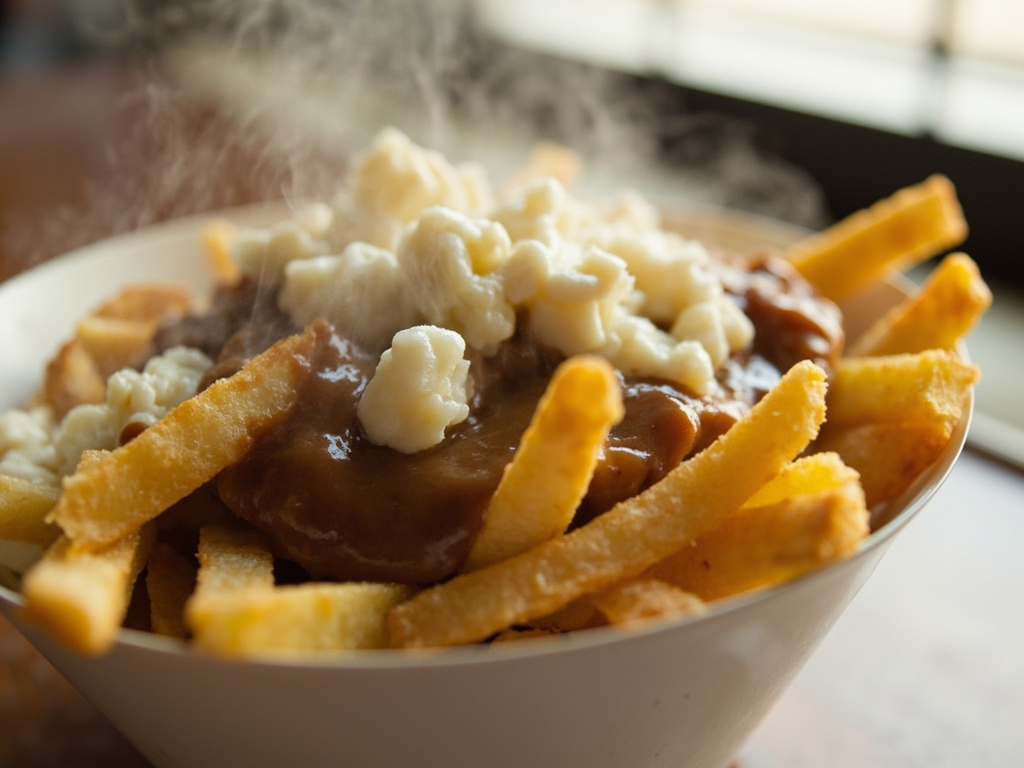
Well-browned fries, cheese curds that go 'squick' under your teeth, all drenched in a steaming brown gravy that just barely melts the cheese. The national Quebec dish adopted across Canada, and king of university canteens.
Okay, I'll be honest with you: when you spend twelve hours aligning lasers, you don't think gastronomy, you think fuel. And poutine is exactly that — hot, salty, comforting, and it sticks to your ribs until evening. The trick is to pour the gravy boiling hot just before serving, so the cheese curds start to melt without disappearing: they should still squeak a little under your teeth. My colleagues and I plowed through mountains of it at the cafeteria between experiments. Believe me, it's worth a coffee to recharge your batteries.
- •Russet potatoes — as needed (thick-cut homemade fries)
- •Fresh cheese curds — a good handful per serving (the melty heart)
- •Beef and chicken broth — enough for gravy (base for brown gravy)
- •Butter and flour — equal parts (roux for thickening)
- •Frying oil — for the pot (cooking fries)
Cafeteria Poutine
Well-browned fries, cheese curds that go 'squick' under your teeth, all drenched in a steaming brown gravy that just barely melts the cheese. The national Quebec dish adopted across Canada, and king of university canteens.
Why this dish? Donna Strickland enjoys informal lunches with colleagues at the university cafeteria (Waterloo, McMaster). Poutine is THE comfort food of Ontario campuses: cheap, hot, hearty — perfect between two sessions at the optical bench.
Okay, I'll be honest with you: when you spend twelve hours aligning lasers, you don't think gastronomy, you think fuel. And poutine is exactly that — hot, salty, comforting, and it sticks to your ribs until evening. The trick is to pour the gravy boiling hot just before serving, so the cheese curds start to melt without disappearing: they should still squeak a little under your teeth. My colleagues and I plowed through mountains of it at the cafeteria between experiments. Believe me, it's worth a coffee to recharge your batteries.
Ingredients (period version)
- Russet potatoes — as needed (thick-cut homemade fries)
- Fresh cheese curds — a good handful per serving (the melty heart)
- Beef and chicken broth — enough for gravy (base for brown gravy)
- Butter and flour — equal parts (roux for thickening)
- Frying oil — for the pot (cooking fries)
Ingredients
- Frying potatoes (Russet/Bintje type) — 800 g (thick fries)
- Cheese curds (or young cheddar chunks if unavailable) — 200 g (melty topping)
- Beef broth — 400 ml (gravy)
- Chicken broth — 200 ml (gravy)
- Butter — 40 g (roux)
- Flour — 40 g (roux)
- Worcestershire sauce — 1 tsp (umami note)
- Black pepper — to taste (seasoning)
- Frying oil — 1 L (cooking)
Method
- Peel and cut potatoes into thick sticks. Soak in cold water for 30 min, then dry thoroughly.
- First fry at 150°C for 6-7 min without browning; drain.
- Prepare gravy: make a brown roux with butter and flour, whisk in both hot broths, add Worcestershire and pepper. Simmer until thickened, about 10 min.
- Second fry at 190°C until golden and crispy.
- Plate fries in a bowl, sprinkle generously with cheese curds, then ladle hot gravy over to melt the cheese. Serve immediately.
How it was made : Born in rural Quebec snack bars in the 1950s, poutine spread across English Canada from the 1980s-90s, becoming a staple of university cafeterias and arena canteens. It's quintessential student and worker food.
The contemporary twist : Serve it as 'physicist's poutine': pour the gravy in front of your guests at the last moment, like an experiment — the instant the cheese starts to string is your 'intensity peak'.
Donna Strickland · Charactorium