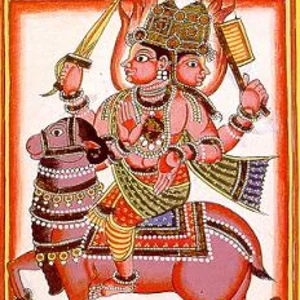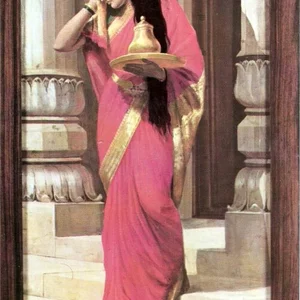

Central heroine of the Mahābhārata, the Sanskrit epic of the Hindu tradition. Shared wife of the five Pandava brothers, she symbolizes justice, dignity, and resistance to humiliation. Her story was passed down through a long oral tradition before being written down around the 4th century BCE.
Draupadi
Draupadi
9 min read
Frequently asked questions
Famous Quotes
« "If the law exists to protect, then who will protect me?" (words attributed by tradition to her at the disrobing in the Kaurava court)»
« "A woman publicly humiliated can know no peace until justice is done." (saying attributed by tradition)»
Key Facts
- Born, according to tradition, from the fire of a ritual sacrifice (yajña) performed by her father King Drupada — a story passed down orally and later set in writing
- Simultaneous wife of the five Pandava brothers (Yudhishthira, Bhima, Arjuna, Nakula, Sahadeva), an exceptional union at the heart of the epic
- Her public humiliation at court — an attempted disrobing ordered by Duryodhana — is one of the triggers of the Kurukshetra War
- She is regarded as a partial incarnation of the goddess Shri (Lakshmi) in certain versions of the epic
- The Mahābhārata, of which she is one of the central figures, is one of the longest works of literature in human history (approximately 100,000 couplets)
Works & Achievements
An epic of more than 100,000 verses (shlokas), the longest literary work in the world. Draupadi is its central female heroine, whose fate shapes the entire narrative across all eighteen books.
A philosophical dialogue between Krishna and Arjuna on the eve of the Battle of Kurukshetra. The war that occasions this teaching is directly linked to the humiliation of Draupadi, the primary motive for the Pandavas' revenge.
A body of folk tales and songs in Dravidian languages (Tamil, Telugu) devoted to Draupadi as a worshipped goddess. These traditions show how the cult of Draupadi spread beyond Sanskrit Brahmanism.
A traditional musical genre from Tamil Nadu dedicated to narrating the deeds of Draupadi-Amman. Bards perform these stories during Draupadi temple festivals, keeping the heroine's memory alive.
A landmark novel of modern Indian literature that retells the Mahābhārata from Draupadi's perspective. Translated into numerous languages, it played a key role in the feminist rediscovery of the character in the 20th century.
Anecdotes
During the archery tournament organized by her father King Drupada, Draupadi was to marry the archer able to strike the eye of a fish by aiming at its reflection in water. Arjuna, the most skilled of the Pandavas, passed the test. But when Draupadi arrived at the home of her mother-in-law Kunti, the latter called out without seeing her: 'Share equally whatever you have found.' And so Draupadi became the common wife of all five Pandava brothers.
During a rigged game of dice, Prince Yudhishthira lost everything: his kingdom, his brothers, himself, and finally Draupadi. Prince Duryodhana then ordered that she be dragged by force into the assembly hall and attempted to publicly disrobe her as an act of humiliation. Draupadi prayed fervently to the god Krishna, who answered her prayer by multiplying the folds of her sari infinitely, so that her tormentors could never expose her. This episode is one of the most celebrated in the Mahabharata.
Draupadi is unique among the great epic heroines in that she was not born into an ordinary family: she emerged from the flames of a ritual sacrifice — the yajna — performed by her father to obtain a son who would avenge him. This is why she is also called Yajnaseni, 'she who was born of sacrifice,' and Panchali, 'princess of Panchala.' Her supernatural birth foreshadows her extraordinary destiny.
Throughout the thirteen years of exile, Draupadi helped hold her five husbands together despite every hardship. She never hesitated to remind Yudhishthira of his responsibilities: 'A king who cannot protect his subjects or his own wife deserves not to rule.' Her direct and courageous words spoken to those in power make her a symbol of resistance to injustice in classical Hindu thought.
Primary Sources
Arjuna strung the bow with lightning speed, aimed at the reflection of the fish, and struck it down with a single arrow. The crowd cried out in astonishment. Draupadi stepped forward and placed the garland around his neck.
Duhshasana seized Draupadi by the hair and dragged her into the assembly hall. She cried out: 'I am in my menstrual period, clothed in a single garment!' Duryodhana commanded her to disrobe. Then she prayed to Krishna, and her garment became endless.
Draupadi said to Yudhishthira: 'How can a man who sees his wife humiliated remain patient? Wrath is the duty of the kshatriya. Without wrath, there is no justice.'
Draupadi walked among the dead on the field of Kurukshetra. She looked upon the bodies of her sons and wept. 'I have had my vengeance,' she said, 'but at what cost?'
Draupadi was the first of Yudhishthira's companions to fall during the great journey toward the sacred mountain. Bhima asked why she fell first; Yudhishthira replied that she had always favored Arjuna above her other husbands.
Key Places
The royal city where Draupadi was born from the flames of a sacrificial fire and where her svayamvara was held. Here her father Drupada ruled and plotted his revenge against Drona — a vendetta that drives the opening of the epic.
The Kaurava capital where the fateful dice game took place and Draupadi was humiliated before the assembled court. In the epic, this city stands as the seat of power, injustice, and tragic destiny.
The forests where Draupadi spent thirteen years in exile alongside her Pandava husbands. These wild landscapes form the backdrop for numerous trials, divine encounters, and the characters' spiritual growth.
The site of the great final battle between the Pandavas and Kauravas, which raged for eighteen days and claimed the lives of millions of warriors — including Draupadi's five sons. It is here that Krishna delivered the Bhagavad Gita and Draupadi's fate was fulfilled.
The sacred mountain toward which Draupadi and the Pandavas traveled during their great final pilgrimage (mahaprasthana). Draupadi was the first to fall along the way, bringing her epic journey to its close.
Typical Objects

A silk garment whose folds Krishna multiplied endlessly to protect Draupadi from public humiliation. This episode, known as the 'vastraharana' (disrobing), is one of the most discussed passages in the epic, symbolizing divine protection and feminine dignity.
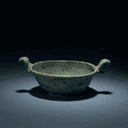
A magical vessel given to Draupadi by the sun god Surya during the exile. It produced an unlimited amount of food each day until Draupadi had eaten, ensuring that the Pandavas and their guests would never go hungry during their thirteen years of wandering.
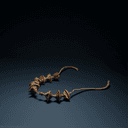
At the svayamvara, Draupadi took a garland and placed it around Arjuna's neck to signal her choice. This ritual gesture, traditional at bride-choice ceremonies (svayamvara), symbolizes a union freely entered into by the woman in the tradition of Indian epic culture.
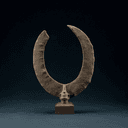
An extraordinarily heavy and difficult bow used for the svayamvara contest organized by Drupada. Among all the assembled princes, only Arjuna was able to string it and strike the target, sealing Draupadi's fate.
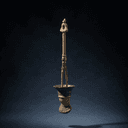
The instrument of the rigged gambling match in which Yudhishthira progressively lost everything he owned, including Draupadi. In the epic, the dice symbolize ill fortune, the blindness of fate, and the moral weakness of the compulsive gambler.
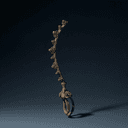
After her humiliation in the assembly hall, Draupadi vowed not to rebind her hair until it had been washed in Duhshasana's blood. Her loose hair, left undone for thirteen years, symbolized the oath of vengeance the Pandavas were bound to fulfill, running through the entire narrative as a dramatic thread.
School Curriculum
Vocabulary & Tags
Key Vocabulary
Daily Life
Morning
Draupadi rose before dawn to perform purification rituals (snana, ritual bathing) and recite her prayers. She oversaw the feeding of brahmin guests before anyone in the household ate, honoring the duty of hospitality (atithi seva). As queen, she directed the organization of the palace and the royal kitchens.
Afternoon
Afternoons were devoted to managing the household: Draupadi ensured her five husbands were fed, equipped, and prepared for their duties as warriors and kings. She took part in important consultations and did not hesitate to voice her opinions on matters of justice and politics — a rare and notable thing for a woman of her time.
Evening
In the evenings, Draupadi gathered her husbands for the shared meal and discussions. She listened to the recitations of sages and bards (sutas) who narrated epics and moral teachings. During the years of exile, she personally prepared meals in the forest using the akshaya patra, eating only last.
Food
Draupadi's diet was vegetarian and in keeping with brahminical precepts: rice, legumes (dal), vegetables, fruits, milk, and ghee (clarified butter). During the forest exile, the akshaya patra vessel provided enough food each day for all the Pandavas and their guests. She observed the ritual fasts (vrata) prescribed by the religious calendar.
Clothing
Draupadi wore silk saris in vivid colors, bordered with golden thread, draped in elaborate styles befitting kshatriya aristocracy. She adorned herself with numerous jewels: bangles, necklaces, earrings, and a forehead ornament (bindi or maang tikka). During exile, her garments were plainer, yet she maintained her royal dignity; her hair remained unbound as a sign of her sworn oath.
Housing
As queen, Draupadi lived in richly decorated palace halls with interior courtyards, tree-lined gardens, and separate women's quarters (antahpura). During the thirteen years of exile, she took shelter in makeshift forest dwellings, sleeping on the bare ground alongside her husbands — experiencing in her body the humiliation that injustice had brought upon her. This contrast between palace and forest is central to her epic biography.
Historical Timeline
Period Vocabulary
Visual Style
Style miniature indo-rajput aux tons joyaux : soieries cramoisies, dorures, peau sombre et chevelure dramatiquement dénouée de Draupadi dans des palais sculptés ou des clairières forestières.
Sound Ambience
Ambiance d'une cour royale de l'Inde épique : percussions rituelles, chants védiques, feu de sacrifice et tumulte d'un tournoi d'archerie, suivis du silence pesant de la forêt d'exil.
Liens externes & ressources
Références
Œuvres
Mahābhārata (épopée sanskrite)
Composition orale entre c. 800 et 400 av. J.-C. ; mise par écrit entre le IVe s. av. J.-C. et le IVe s. ap. J.-C.
Bhagavad-Gîtâ (chant inclus dans le Mahābhārata, Bhishma Parva)
Interpolée c. 200 av. J.-C. – 200 ap. J.-C.
Panchali Sabdham (tradition orale dravidienne)
Tradition orale, attestée dès le Ier millénaire ap. J.-C.
Villuppattu (chant du luth — tradition tamoule)
Tradition vivante depuis au moins le XIIe s. ap. J.-C.
Yājñasenī (roman de Pratibha Ray, en oriya)
1984