 flip
flipSesame and Honey Cakes for the Gods
Sesame and Honey Cakes for the Gods
Why this dish? Before every grave decision — sending Theseus to Crete, consulting the oracle — a pious king places cakes on the altars. These sesame patties bound with honey, ancestors of Greek pasteli, are the offering made to the gods to win their favor, then shared among the faithful.
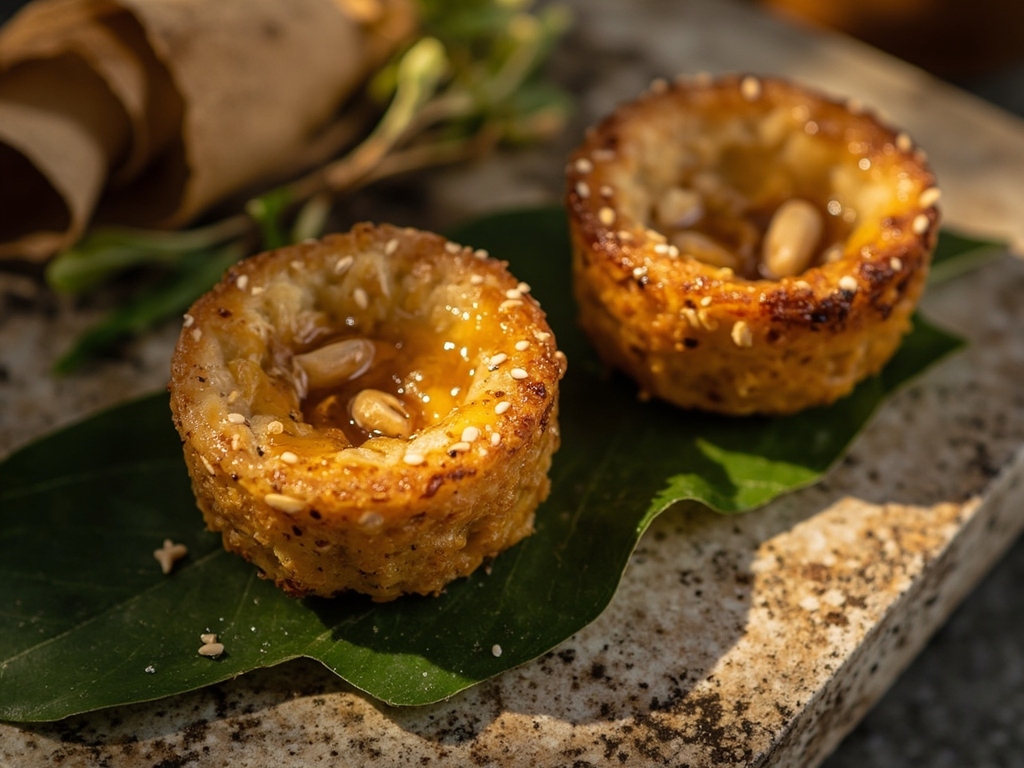
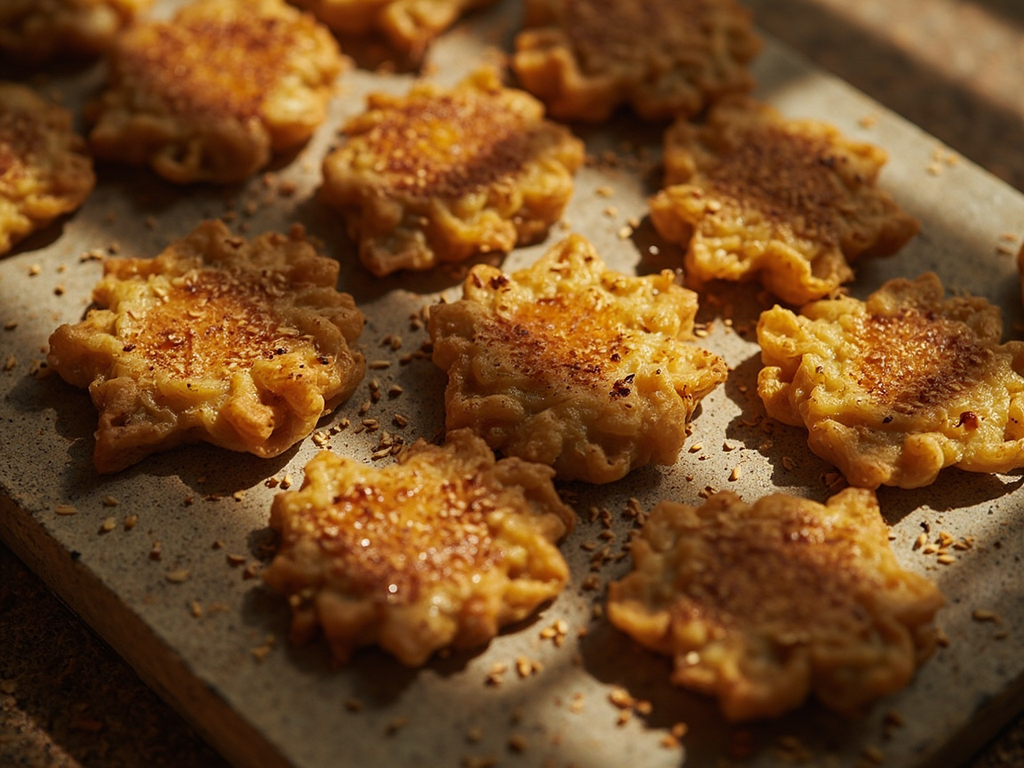
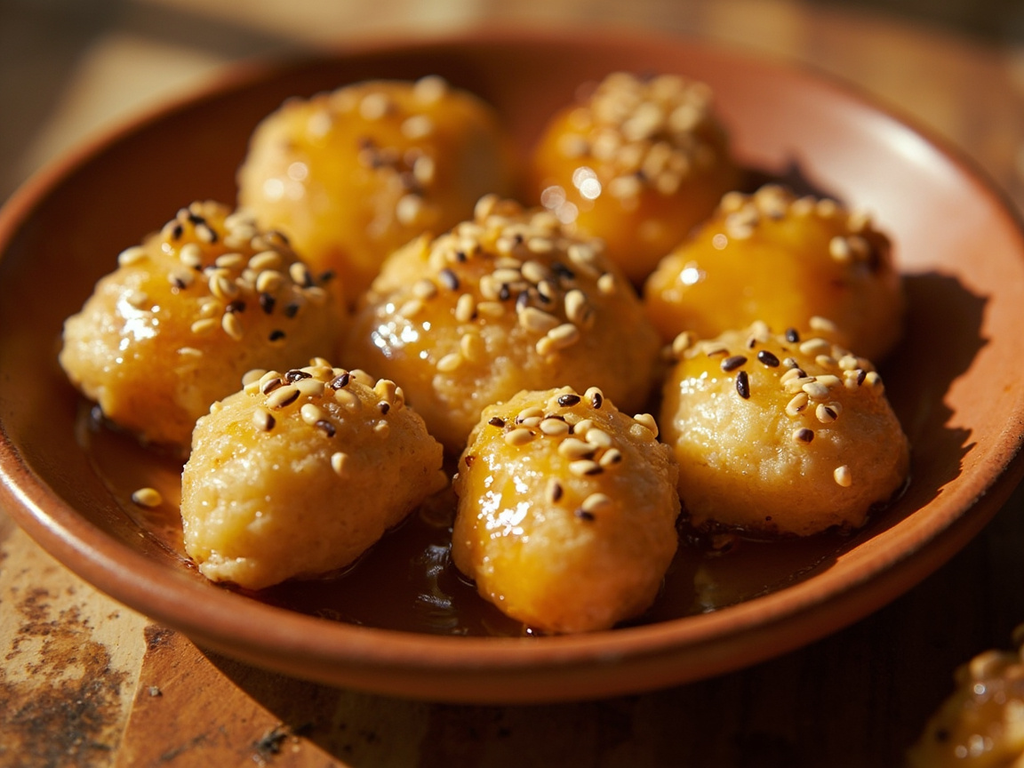
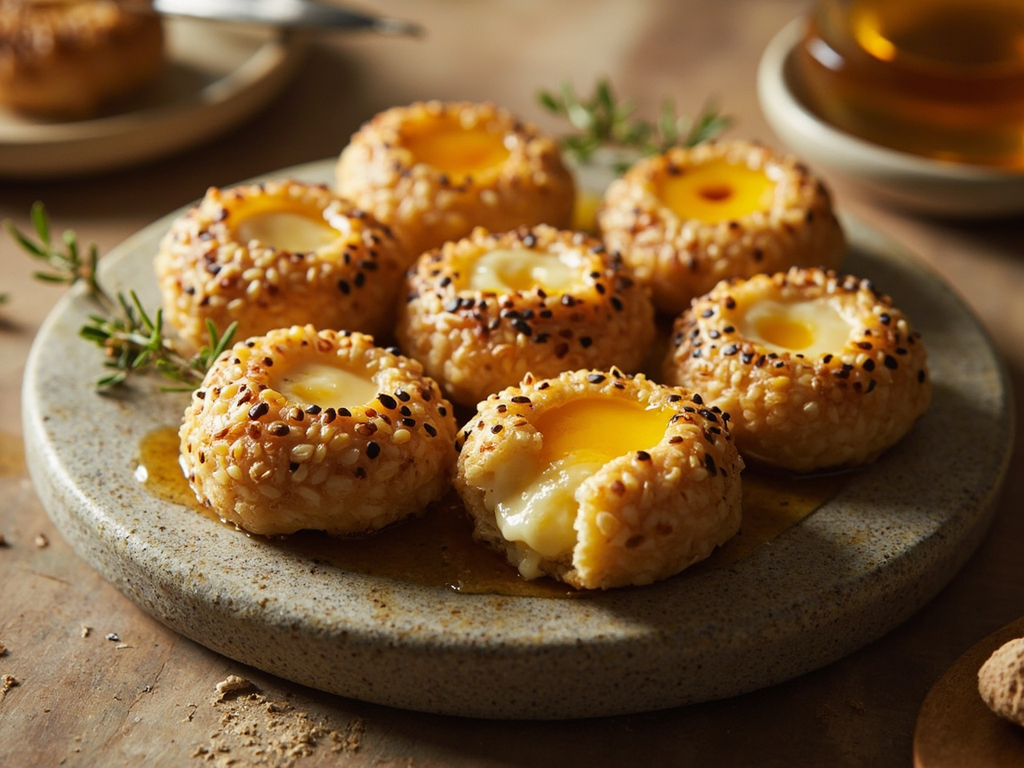
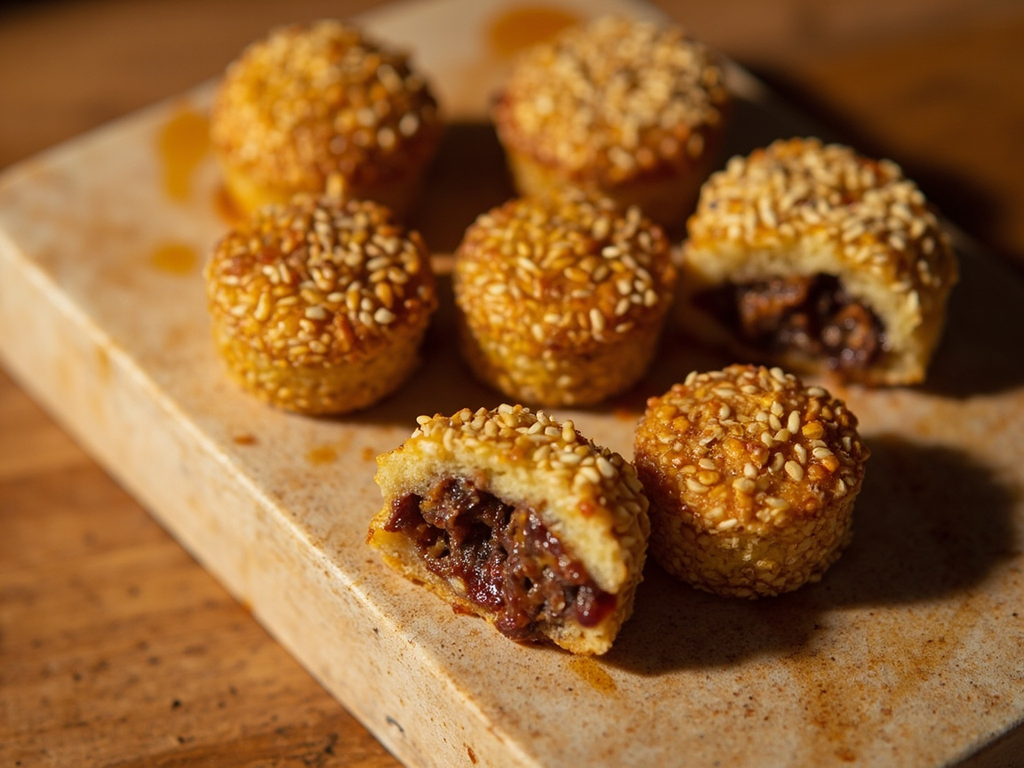
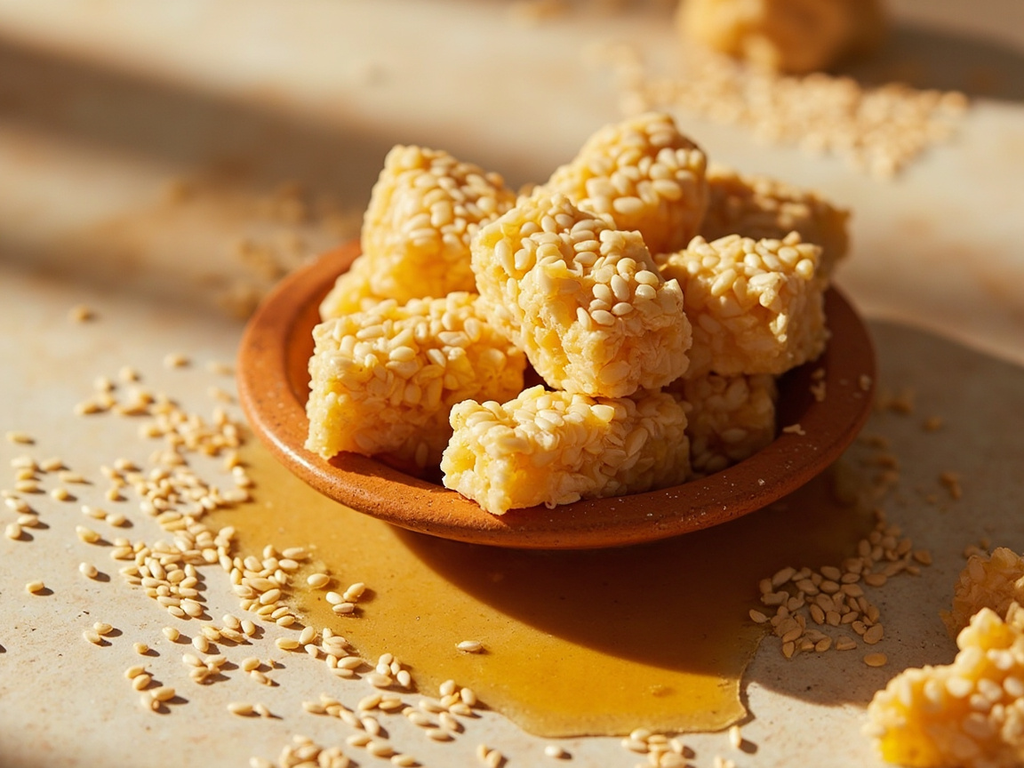
Small crunchy cakes of toasted sesame seeds set in hot honey, scented with a touch of oregano or zest. Golden, crispy, intensely sweet and roasted. One portion is offered to the gods, the rest savored.
When a king's heart is heavy with a decision, he does not go empty-handed before the gods. My women toast the sesame until it sings under the spoon, drown it in boiling honey, and let it set into cakes. I place the finest on the altar — for keeping everything for oneself without giving brings no luck, I have learned that to my cost. The rest we break among ourselves, and the honey sticks to the fingers like oaths that are never untied.
- •Sesame seeds — a good measure (crunchy base)
- •Honey — enough to coat all (binder and sweetness)
- •Dried oregano or scented zest — a pinch (aroma (optional))
Sesame and Honey Cakes for the Gods
Small crunchy cakes of toasted sesame seeds set in hot honey, scented with a touch of oregano or zest. Golden, crispy, intensely sweet and roasted. One portion is offered to the gods, the rest savored.
Why this dish? Before every grave decision — sending Theseus to Crete, consulting the oracle — a pious king places cakes on the altars. These sesame patties bound with honey, ancestors of Greek pasteli, are the offering made to the gods to win their favor, then shared among the faithful.
When a king's heart is heavy with a decision, he does not go empty-handed before the gods. My women toast the sesame until it sings under the spoon, drown it in boiling honey, and let it set into cakes. I place the finest on the altar — for keeping everything for oneself without giving brings no luck, I have learned that to my cost. The rest we break among ourselves, and the honey sticks to the fingers like oaths that are never untied.
Ingredients (period version)
- Sesame seeds — a good measure (crunchy base)
- Honey — enough to coat all (binder and sweetness)
- Dried oregano or scented zest — a pinch (aroma (optional))
Ingredients
- Sesame seeds — 200 g (base)
- Honey — 150 g (binder)
- Sugar (or extra honey) — 30 g (helps crispness)
- Lemon zest or pinch of oregano — to taste (aroma)
- Pinch of salt — 1 (balance)
Method
- Toast the sesame seeds dry in a pan over medium heat, stirring, until golden and fragrant (3 to 5 min). Set aside.
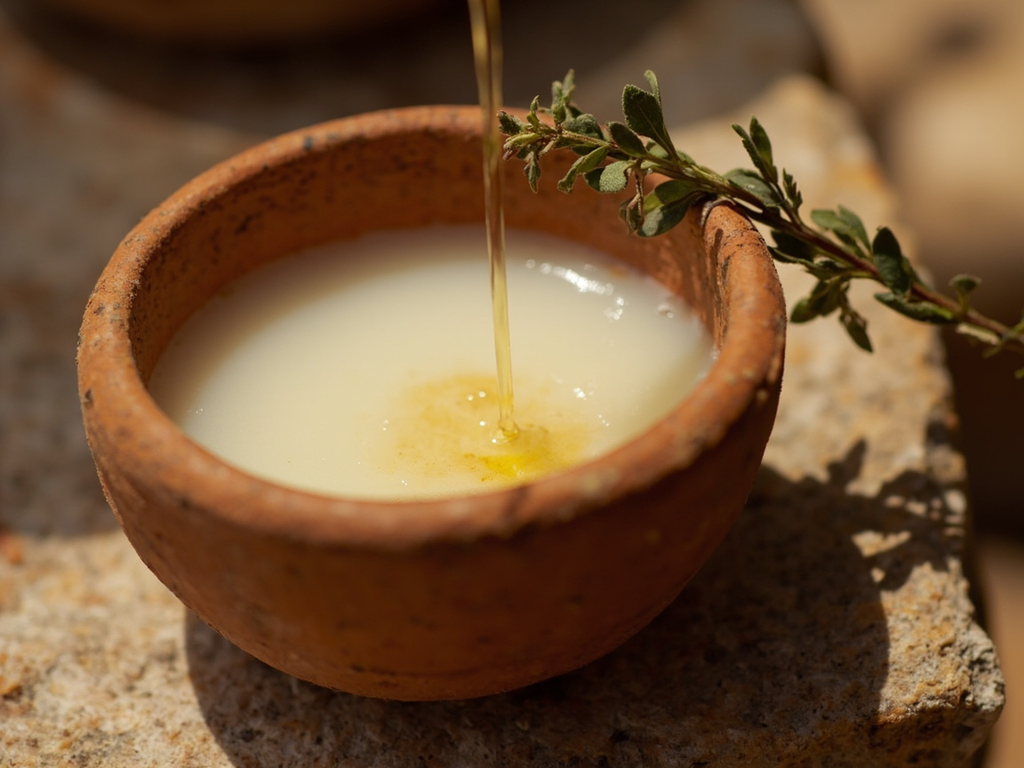
- In a saucepan, gently heat the honey (and sugar) until it simmers, without burning.
- Off the heat, add the sesame, salt, and zest; mix vigorously.
- Pour onto a greased sheet of parchment paper, cover with a second sheet, and roll out to half a centimeter.
- Let cool for 5 minutes, then cut into diamonds or squares before fully hardening.
- Let cool completely: the cakes become crunchy.
How it was made : Sesame bound with honey (sesame / itrion) is one of the oldest Greek confections, direct ancestor of the pasteli still sold today. Sweet cakes (pelanos, popana) were part of offerings placed on altars and distributed during religious festivals, honey being the main source of sugar in the ancient world.
The contemporary twist : Cut into small "offering" diamonds, wrap in a fig leaf or tied kraft paper — a gourmet gift in ancient style.
Sources : pasteli, traditional Greek confection (continuity from Antiquity) · Andrew Dalby, Food in the Ancient World from A to Z
Aegeus · Charactorium