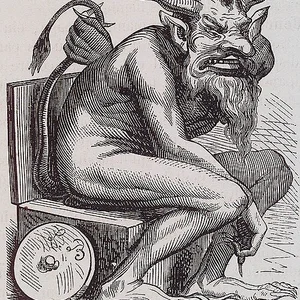
The succubus is a female demon from medieval demonology, believed to visit men in their sleep to unite with them and drain their vital energy. Ubiquitous in the theological and demonological treatises of the Middle Ages, it embodies religious anxieties about sexuality and evil.
Succubus
Succubus
9 min read
Frequently asked questions
Key Facts
- The term 'succubus' comes from the Latin 'succuba', referring to an entity that lies beneath a man during his sleep
- Saint Augustine (4th–5th century) mentions malevolent spirits linked to lust in his writings
- Thomas Aquinas (13th century) theorizes the existence of succubi and incubi in the Summa Theologica
- The Malleus Maleficarum (1487) devotes extensive passages to succubi in the context of the witch hunts
- The figure of the succubus is often associated with Lilith in medieval Jewish and Christian traditions
Works & Achievements
The first major patristic text to mention demonic unions with mortals. Augustine lays the theological groundwork that would allow the belief in succubi to develop within Christian orthodoxy.
A universal encyclopedia of the early Middle Ages that devotes entries to demons and nocturnal spirits. Isidore of Seville codifies and transmits to the entire Western Middle Ages the terminology and classification of demonic entities.
The masterwork of medieval scholasticism, which incorporates the question of succubi and incubi into a rigorous theological system. Thomas Aquinas validates their existence and explains their mode of action in a rational and doctrinal manner.
The first systematic treatise on witchcraft, written before the great wave of persecutions. Nider records testimonies about demons and their relationships with humans, directly influencing the authors of the Malleus Maleficarum.
The Inquisition's handbook, which became the definitive authority on witchcraft and demonology. This book precisely codifies the role of succubi and incubi and would be reprinted dozens of times through the seventeenth century.
The first work to scientifically challenge the reality of demonic pacts and succubi. This text by the Flemish physician Weyer marks the beginning of the rational questioning of medieval demonological beliefs.
Anecdotes
Saint Augustine, in the fifth century, already mentions in *The City of God* demons capable of uniting with men during sleep. This reference by one of the fathers of the Catholic Church granted the succubus a theological legitimacy that would carry through the entire Middle Ages.
The theologian Thomas Aquinas, in the thirteenth century, developed a complex theory whereby the succubus would collect male seed in order to pass it on to the incubus, its male counterpart, thereby enabling the conception of monstrous beings. This explanation was intended to reconcile popular belief with Christian doctrine.
The *Malleus Maleficarum* (The Hammer of Witches), published in **1486** by two Dominican inquisitors, devotes several full chapters to succubi and incubi. This work would become the standard reference manual for inquisitors hunting witches and demonstrating the reality of demonic intercourse.
In medieval tradition, episodes of sleep paralysis — physiological phenomena now well understood — were often interpreted as attacks by succubi. Monks and clerics who awoke exhausted or disturbed after sleep could attribute it to the presence of these female demons.
The name 'succubus' comes from the Latin *succuba*, derived from *succubare* meaning 'to lie beneath'. This etymology reveals the medieval view of the demon as an entity physically subordinate to man yet dominating his soul — a symbolic contradiction at the heart of the theological anxiety this figure embodied.
Primary Sources
There is a widespread opinion that the sylvans and fauns, commonly known as incubi, have often committed lewd acts upon women, whom they sought out and with whom they coupled.
It is not impossible that demons, both incubi and succubi, act with this purpose: that from the seed they collect they may beget men.
Succubus demons receive the seed of men and transmit it to incubi; or else one and the same demon first plays the role of succubus toward a man, then that of incubus toward a woman.
Certain wicked women, won back to the party of Satan and seduced by the illusions and phantoms of demons, believe and profess that they ride upon certain beasts in the night hours with Diana, goddess of the pagans.
Succubi are demons who take the form of women in order to corrupt men in their sleep, depriving them of their seed and spiritual virtue through diabolical illusion.
Key Places
The ultimate dwelling of the succubus according to medieval Christian cosmology, conceived as an underground world organized in circles of suffering. The succubus returns there after each nocturnal visit, reporting to Satan the fruits of its corruption missions.
A major center of medieval monastic reform where numerous theological texts on temptation and demons were written. The monks of Cluny developed strict rules of life to guard against demonic nocturnal temptations.
The city where the *Malleus Maleficarum* was primarily written by Heinrich Kramer. This Inquisition manual codifying the theology of succubi and incubi was first printed here before spreading across all of Europe.
The intellectual center where theologians debated the nature and powers of demons throughout the Middle Ages. Parisian masters, including Thomas Aquinas who taught there, helped shape the official theology of succubi.
The seat where papal bulls were issued to legitimize the official belief in the reality of demons and succubi. It was from Rome that the major inquisitorial campaigns against witchcraft were launched.
Typical Objects

A manuscript treatise cataloguing the names, attributes, and powers of demons. Medieval clerics recorded the characteristics of the succubus in these works to help confessors recognize and combat its influence.

The foremost protective object against nocturnal demonic attacks. Monks and the faithful kept their rosary under their pillow or around their wrist to ward off visits from the succubus during sleep.

A purifying liquid that priests prescribed as a remedy against demonic visitations. Sprinkling one's bedroom with holy water before sleeping was believed to create a protective barrier against succubi.

A magical symbol attributed to King Solomon, reputed to be capable of binding and controlling demons. Engraved on amulets or traced on walls, it was believed to prevent demons — including the succubus — from entering a space.

Used during exorcism rites, the smoke of consecrated incense was believed to purify the air and drive away demonic presences. The exorcist would swing the thurible while reciting the appropriate formulas to free the victim from the succubus.

A candle made from unworked wax, a symbol of purity. Burned through the night in the room of a man tormented by a succubus, it was believed to sustain the divine light that keeps demons at bay.

Fragments of bone or objects belonging to saints, kept in reliquaries. Wearing a relic on one's person or placing it under the pillow was one of the remedies recommended by confessors against the attacks of the succubus.
School Curriculum
Vocabulary & Tags
Key Vocabulary
Tags
Daily Life
Morning
In medieval cosmology, the succubus has no existence in daylight — it belongs to the realm of darkness and vanishes with the dawn. In the morning, its victim wakes up exhausted, troubled, sometimes unable to clearly recall the night before, which was interpreted as proof of demonic intervention.
Afternoon
During the daytime hours, the succubus is believed to dwell in the infernal regions or lurk in the shadows of cursed places — crossroads, cemeteries, ruins. Medieval theologians conceived of it as a creature of transition between two worlds, patiently awaiting the return of darkness.
Evening
With the setting of the sun, the succubus's time begins. It draws near to human dwellings, watching for men who fall asleep alone, particularly those who did not commend themselves to God before bed. The prayer of Compline, recited at bedtime in monasteries, was specifically intended to ward off such nocturnal visits.
Food
As a demonic being, the succubus does not feed on ordinary food but on vital energy — called 'seminal virtue' by medieval theologians — which it drains from its human victims. This gradual depletion was believed to leave the men it visited increasingly weak, pale, and melancholic.
Clothing
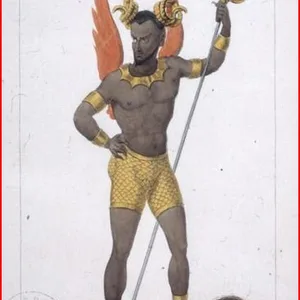
In medieval depictions, the succubus appears either naked the better to seduce, or dressed in deceitful feminine garments mimicking a respectable woman. Its bat wings and tail, recognizable demonic attributes, sometimes remain hidden until the victim is fully under its power.
Housing
The succubus resides in Hell according to Christian theology, but certain medieval texts assign it temporary dwellings in impure places: dark caves, marshes, ruins of pagan temples, or abandoned houses with a reputation for being haunted. These locations mark the symbolic boundary between the world of the living and the demonic realm.
Historical Timeline
Period Vocabulary
Visual Style
Style enluminure gothique tardive, figures hiératiques aux contours d'encre noire, ombres profondes et rehauts d'or sur fond de pierre sombre et de ciel nocturne.
Sound Ambience
Ambiance nocturne d'un monastère médiéval, entre prières latines murmurées, silence pesant des pierres et angoisse du sommeil troublé par les terreurs démoniaques.
Liens externes & ressources
Références
Œuvres
La Cité de Dieu (De Civitate Dei) — Saint Augustin
413-426
Étymologies (Etymologiae) — Isidore de Séville
630
Summa Theologiae — Thomas d'Aquin
1265-1274
Formicarius — Jean Nider
1437
Malleus Maleficarum — Heinrich Kramer & Jakob Sprenger
1486
De Praestigiis Daemonum — Johann Weyer
1563