 Flip the card
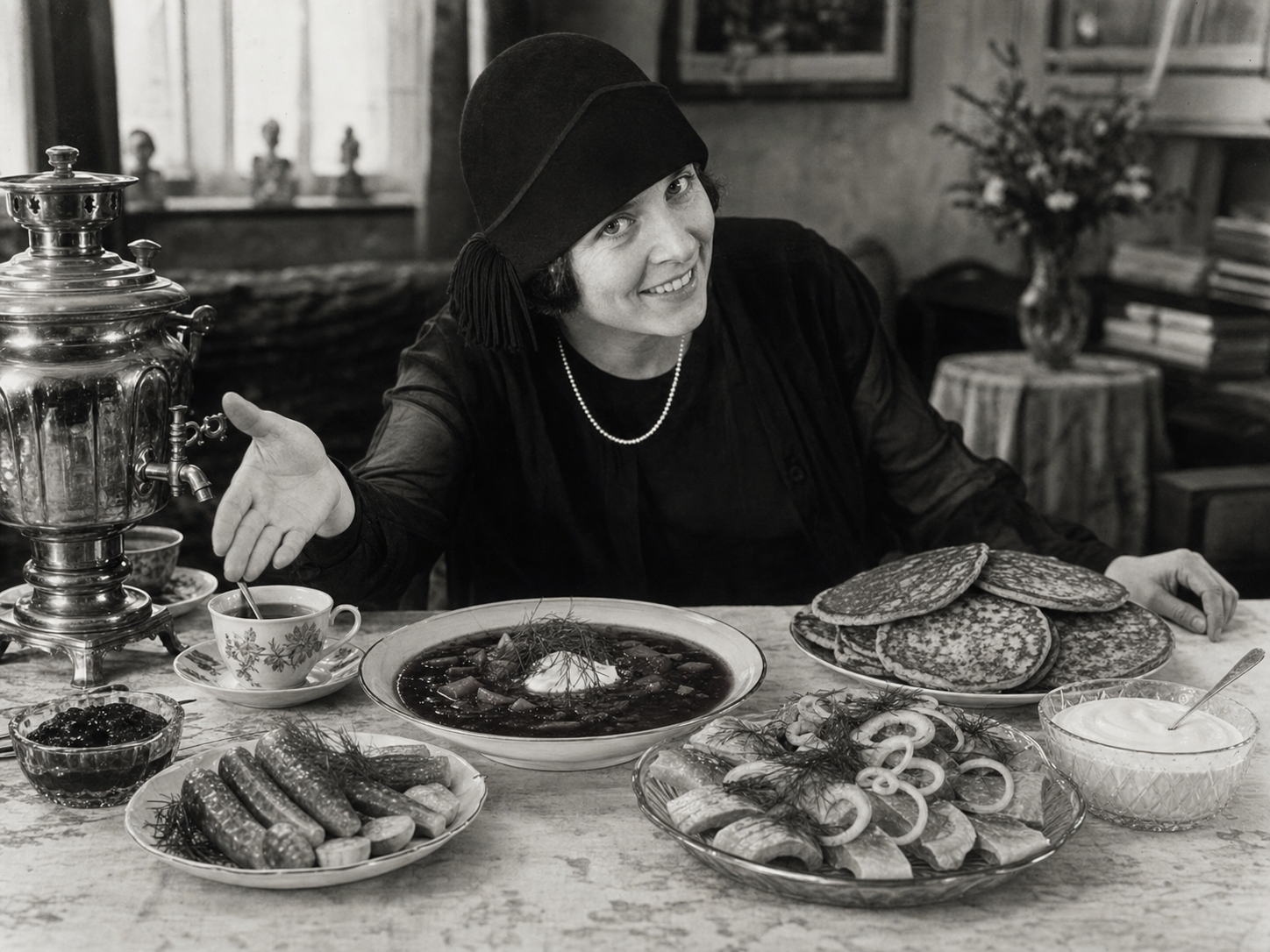
Elsa Triolet at the table
1896 — 1970
On the menu
The Russian émigré meal: zakouski, soup, and endless tea
At Elsa Triolet's table, the Russian meal structure was transplanted to Paris: first, the zakouski (small savory and pickled hors d'oeuvres placed all together on the table, to be nibbled while drinking), then a substantial soup that serves as the main course, and finally—above all—tea from the samovar, served at all hours with jams and sweets. The meal has no clear end: it glides into conversation over a glass of boiling tea, a Slavic habit Elsa kept all her life, even in the heart of Montparnasse.
Signature : Smetana and dill
Thick sour cream (smetana) and fresh dill are the double signature of this Russian cuisine: they crown the blinis, they lighten the borscht, they perfume the pickles. This lactic acidity and herbal freshness immediately distinguish a Slavic table from a French one, and Elsa preserved them as a thread stretching back to the Moscow of her childhood.
click to flip back
Elsa Triolet at the table
1896 — 1970
5 period recipes
 Festive
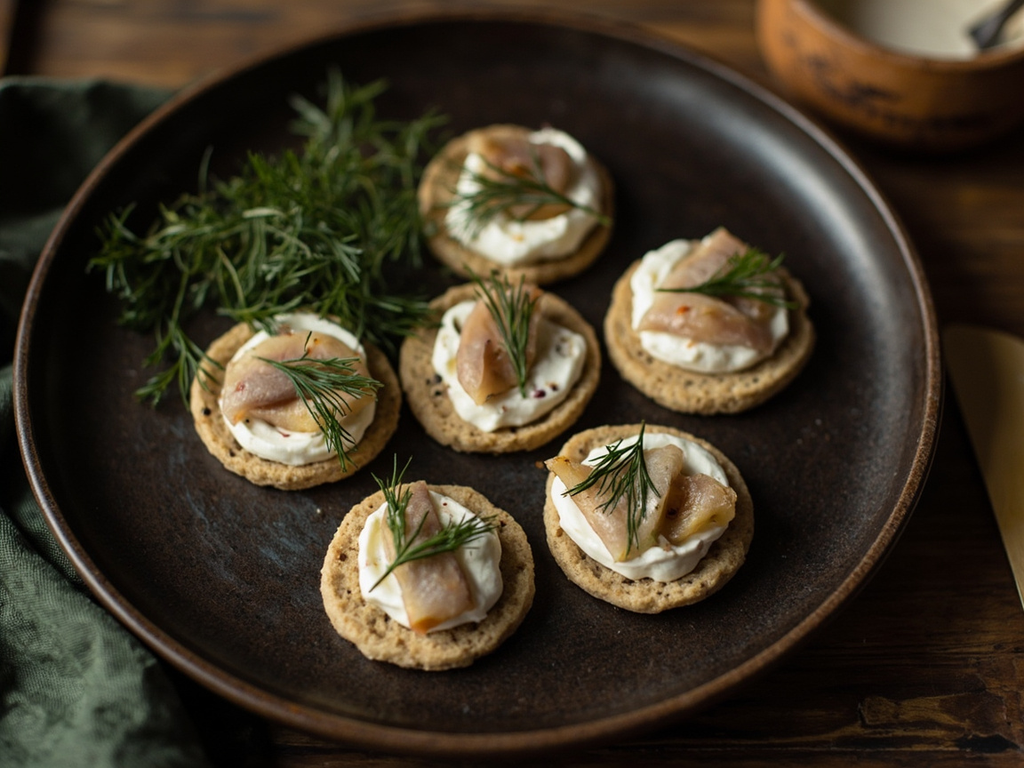
Buckwheat blinis with herring and smetana
Zakouska (hors d'oeuvre of the Russian table)
🧂 🍄 🫙· 45 min (+ 1 h 30 rising)
View the recipe
 Drink
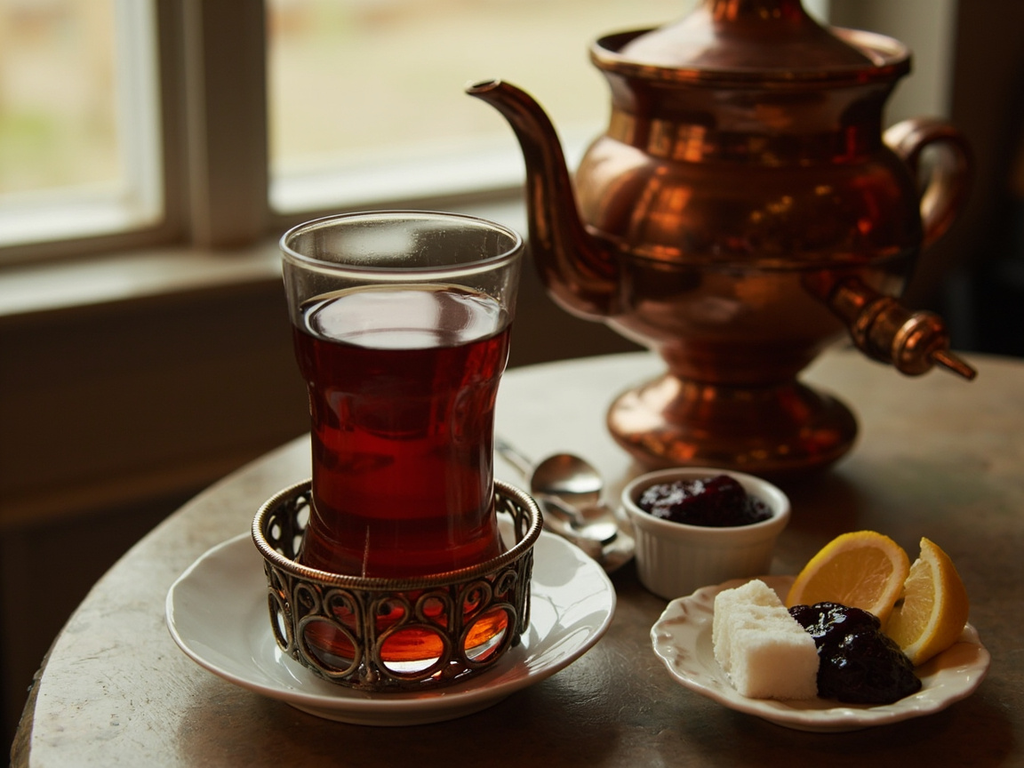
DrinkSamovar tea with cherry jam
Tchaï (Russian tea, central moment of the table)
☕ 🍯· 20 min (+ 40 min for jam)
View the recipe
 Everyday
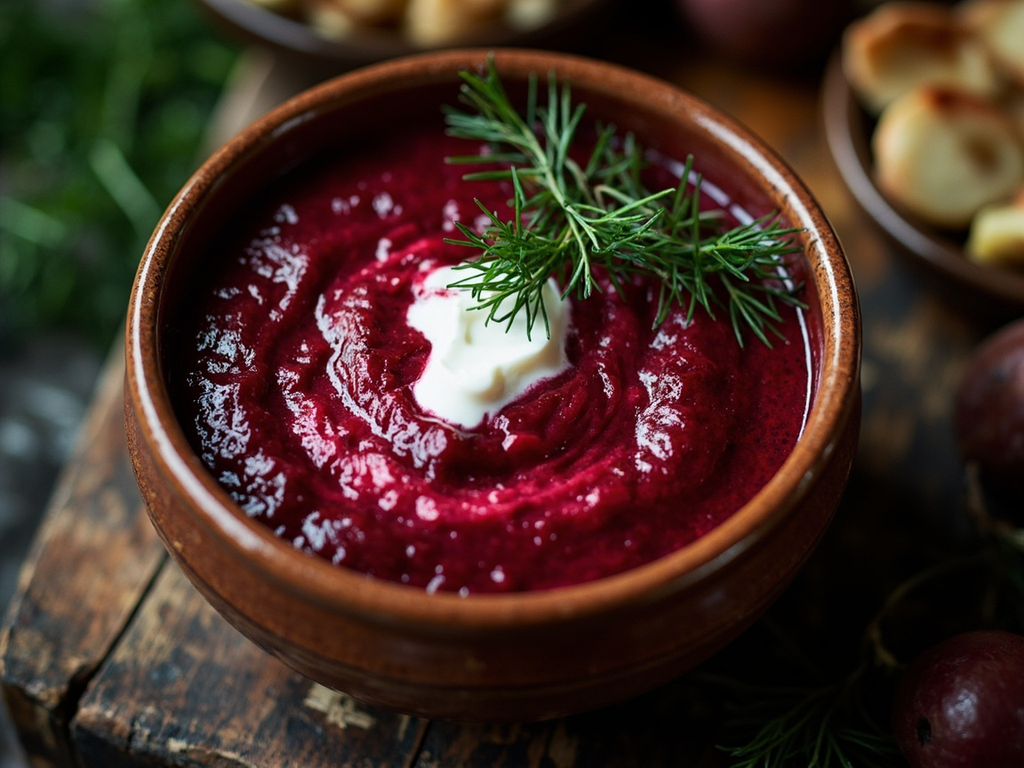
Beetroot borscht with dill
Pervoïe (the soup-base, first hot course of the Russian meal)
🍋 🧂· 1 h 15 (excluding broth)
View the recipe
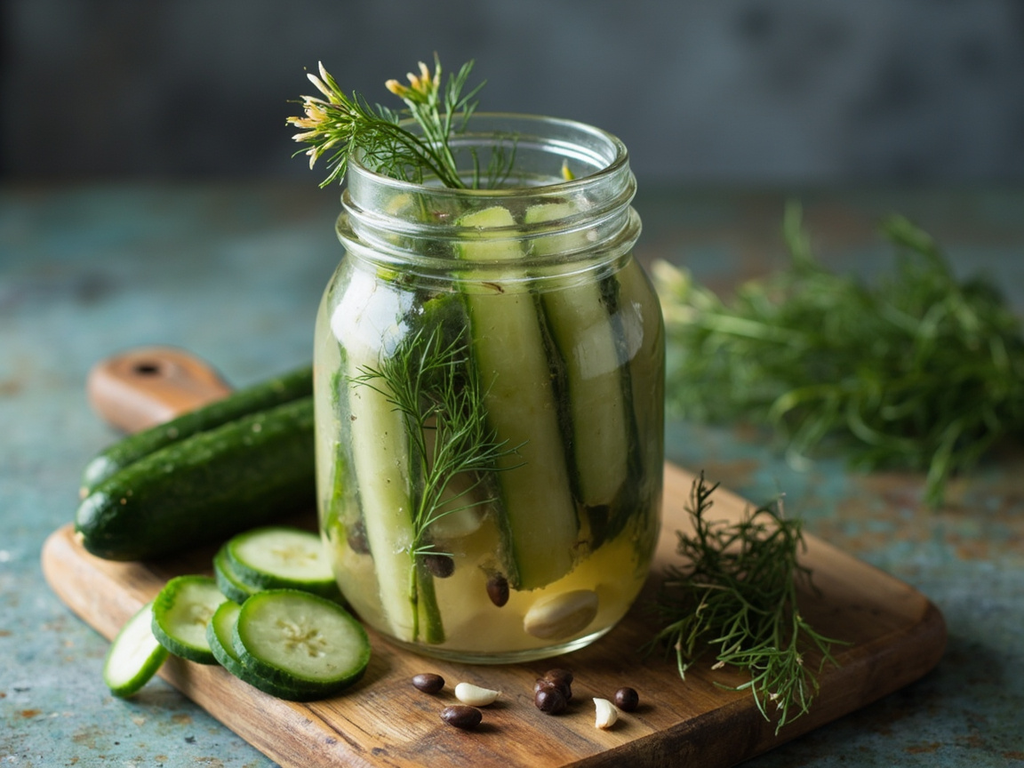 Preserving
Malossol cucumbers with salt and dill
Zakouska of preserves (the Russian pantry pickles)
🍋 🫙 🧂· 30 min (+ 3 to 5 days fermentation)
View the recipe
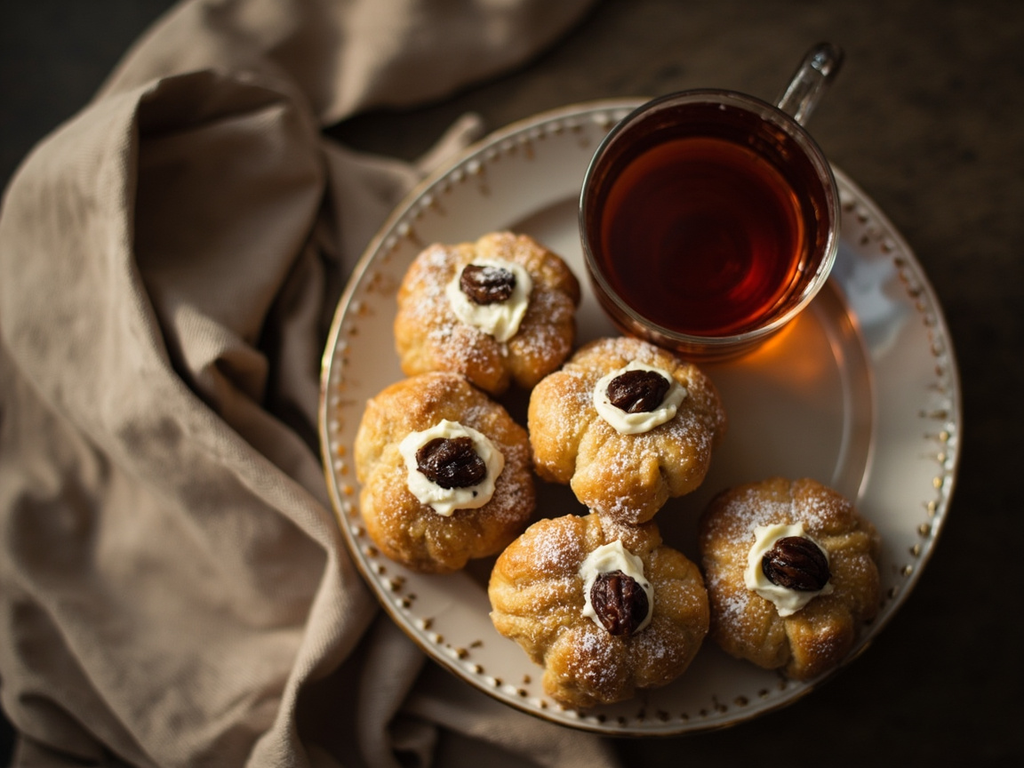 Festive
Vatrushka with quark and raisins
Tea sweet (the sweet accompaniment to the samovar)
🍯 🫙· 50 min (+ 1 h 30 rising)
View the recipe