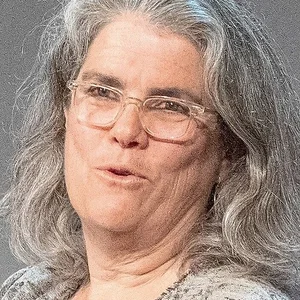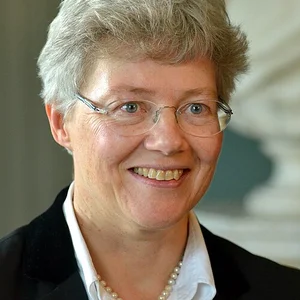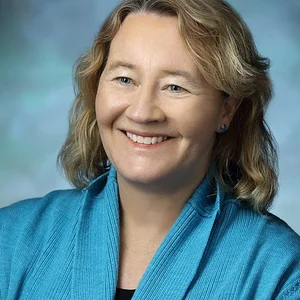

A French microbiologist and geneticist, she co-develops the CRISPR-Cas9 technique with Jennifer Doudna. This revolution in genome editing earns her the Nobel Prize in Chemistry in 2020.
Emmanuelle Charpentier(1968 — ?)
Emmanuelle Charpentier
France
8 min read
Frequently asked questions
Key Facts
- Born in 1968 in Juvisy-sur-Orge, France
- Co-discovery of the CRISPR-Cas9 technique with Jennifer Doudna in 2012
- Nobel Prize in Chemistry in 2020, shared with Jennifer Doudna
- Director of the Department of Regulation in Infection Biology at the Max Planck Institute in Berlin
- CRISPR-Cas9 opens the door to potential treatments for incurable genetic diseases
Works & Achievements
Charpentier published the discovery of tracrRNA, a small RNA essential to the functioning of the CRISPR-Cas9 system in Streptococcus pyogenes. This breakthrough was the missing piece that would directly lead to the development of the genome-editing tool.
Co-authored with Jennifer Doudna, this paper demonstrated that the Cas9 protein can be reprogrammed to cut any DNA sequence with unprecedented precision. It is considered one of the most important scientific publications of the 21st century.
Charpentier co-founded this biotechnology company aimed at developing medical therapies based on CRISPR-Cas9, symbolizing the transition from fundamental research to concrete applications for treating serious genetic diseases.
Charpentier founded and leads this new institute in Berlin, dedicated to studying the molecular mechanisms of infections. There she has full autonomy to direct her research toward new scientific frontiers.
The highest distinction, shared with Jennifer Doudna, awarded for the development of CRISPR-Cas9. It is the first time in history that two women have jointly shared the Nobel Prize in Chemistry.
Anecdotes
In 2011, at a microbiology conference in Puerto Rico, Emmanuelle Charpentier happened to meet American biochemist Jennifer Doudna while strolling through the streets of San Juan. This chance encounter sparked a historic scientific collaboration. In less than a year, the two researchers published one of the most revolutionary discoveries of the twenty-first century.
Before developing CRISPR-Cas9, Charpentier had worked at no fewer than nine institutions across five different countries: the United States, Austria, France, Sweden, and Germany. This nomadic life, driven by the search for the best possible scientific environment, allowed her to build an exceptional international network and to enrich her thinking through a wide variety of approaches.
In 2020, when the Nobel Committee called Emmanuelle Charpentier to announce the Nobel Prize in Chemistry, she was alone in her Berlin apartment at 4 a.m. Central European Time. It was the culmination of decades of fundamental research on bacteria — research that few would ever have imagined could lead to such a medical revolution.
Charpentier had long been fascinated by an apparently unremarkable bacterium, Streptococcus pyogenes, which causes strep throat and skin infections. It was while studying this bacterium's immune system that she discovered the crucial role of a small RNA she named tracrRNA — the key component of the future CRISPR-Cas9 tool, and a fundamental finding born from research with no predefined application.
Despite highly attractive offers from major American universities, Emmanuelle Charpentier chose in 2018 to establish her own research unit in Berlin. She thereby became the first woman to lead a Max Planck unit in Germany without being a German national, a testament to her scientific standing recognized on a global scale.
Primary Sources
We show that Cas9 endonucleases can be programmed with guide RNA engineered as a single transcript to cleave any dsDNA sequence. Our work highlights the potential to exploit the CRISPR-Cas9 system for RNA-programmable genome editing.
The type II CRISPR-Cas9 system provides an efficient means of introducing site-specific double-strand breaks in the genome. The Cas9 nuclease is directed to specific genomic loci by a short guide RNA.
CRISPR-Cas9 has been a transformative technology for biological research. The simplicity and versatility of this system have allowed scientists worldwide to edit the genomes of virtually any organism with unprecedented precision, opening new avenues for treating genetic diseases.
The CRISPR-Cas9 technology has rapidly become the tool of choice for genome editing in a wide range of organisms. Its simplicity, efficiency, and low cost have democratized functional genomics research.
Key Places
Emmanuelle Charpentier's birthplace, in the greater Paris region. She grew up there before moving to Paris to study biochemistry at university.
Where Charpentier studied biochemistry and microbiology and defended her doctoral thesis in 1995 — the founding institution of her scientific training.
The prestigious microbiology research institute where Charpentier worked in the 1990s. The Pasteur spirit — fundamental research in the service of human health — left a lasting mark on her scientific approach.
The German research centre where Charpentier led a laboratory and carried out some of her foundational work on the CRISPR system in pathogenic bacteria.
The institute Charpentier founded and has directed since 2018. There she continues her research into the molecular mechanisms of bacterial infections with full scientific independence.
The Swedish capital where Emmanuelle Charpentier received the Nobel Prize in Chemistry at the ceremony on 10 December 2020 — a historic recognition of her work.
Typical Objects

A fundamental tool in the molecular biology laboratory, used to handle tiny volumes of liquid. Charpentier uses it daily to prepare the enzymatic reactions involving CRISPR-Cas9.

A device that reads the sequence of genetic bases in a DNA fragment. Essential for verifying that the cuts introduced by CRISPR-Cas9 are precise and correctly targeted within the genome.

A machine used to amplify specific DNA fragments by cycling through precise temperature changes. Used to prepare experiments and verify the efficiency of genomic modifications induced by CRISPR.

A plastic or glass container used to culture bacteria. Charpentier cultured colonies of Streptococcus pyogenes in these dishes to study their immune system and identify the CRISPR mechanism.

A physical or digital 3D representation of the "molecular scissors" at the heart of the CRISPR technique. These models helped explain how the protein binds to its target DNA and cuts it with precision.

A laboratory technique used to separate DNA fragments by size in a gel subjected to an electric current. Charpentier uses it to visualize the results of her enzymatic cutting experiments.

A notebook in which the researcher carefully records every experiment, observation, and result. In Charpentier's case, these notebooks trace the key steps leading to the development of CRISPR-Cas9.
School Curriculum
Vocabulary & Tags
Key Vocabulary
Daily Life
Morning
Charpentier arrives early at her laboratory, often by 7 or 8 a.m. She begins by checking ongoing experiments, reviewing the results of bacterial cultures started the day before, and reading the latest publications in major international journals such as Science or Nature.
Afternoon
The afternoon is devoted to the most delicate experimental work — sample preparation, enzymatic reactions, sequencing analyses — as well as meetings with her team. She supervises doctoral students and postdoctoral researchers, discusses results, and steers new hypotheses toward testing.
Evening
In the evening, Charpentier writes or reviews scientific papers, responds to international collaborators in different time zones, and prepares conference presentations. The boundary between professional and personal life is often blurred for a researcher driven by such a deep passion for science.
Food
Her daily diet is simple and functional: coffee in the morning, meals taken in the institute cafeteria with colleagues, with scientific discussions frequently spilling over into mealtimes. Living in many different countries has broadened her eating habits, though food has never been a particular priority.
Clothing
In her laboratory, Charpentier wears the standard attire of a microbiology researcher: white lab coat, blue nitrile gloves, and protective goggles. Outside the lab, she favors understated, international professional dress — a reflection of a life shared across several countries.
Housing
Throughout her nomadic career, Charpentier has lived successively in New York, Vienna, Umeå (Sweden), Braunschweig, and then Berlin. Her homes have typically been city apartments close to her research institutes, reflecting a life dedicated above all to science.
Historical Timeline
Period Vocabulary
Visual Style
Esthétique du laboratoire de biologie moléculaire contemporain : lignes épurées, blanc et acier inoxydable, écrans affichant des séquences génomiques, et modèles tridimensionnels de protéines baignés dans une lumière froide et précise.
Sound Ambience
L'ambiance sonore d'un laboratoire de microbiologie de pointe : centrifugeuses, thermocycleurs et hottes de sécurité biologique créent une symphonie discrète et précise, rythmant le travail minutieux de la chercheuse.
Liens externes & ressources
Références
Œuvres
Identification du rôle du tracrRNA dans le système CRISPR
2011
Article fondateur CRISPR-Cas9 (Science)
2012
Co-fondation de CRISPR Therapeutics
2013
Fondation de l'Unité Max Planck pour la science des pathogènes
2018
Prix Nobel de chimie
2020