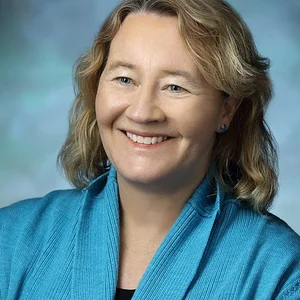

American computer scientist of Chinese origin, pioneer in artificial intelligence and computer vision. She created ImageNet, an image database that revolutionized deep learning. A professor at Stanford, she advocates for ethical and inclusive AI.
Fei-Fei Li(1976 — ?)
Fei-Fei Li
États-Unis
8 min read
Frequently asked questions
Key Facts
- Born in 1975 in China, she immigrated to the United States at age 16
- Created ImageNet in 2009, a database of 14 million labeled images
- The ImageNet Large Scale Visual Recognition Challenge (2010) sparked the deep learning revolution
- Director of the Stanford Artificial Intelligence Laboratory (Stanford AI Lab)
- Co-founded AI4ALL in 2017 to promote diversity in AI
Works & Achievements
A database of over 14 million annotated images organized into 20,000 categories, built by Fei-Fei Li and her team at Stanford. It became the global standard benchmark for training and evaluating computer vision algorithms.
An annual international competition based on ImageNet that spurred global rivalry in image recognition and directly led to the rise of deep learning following AlexNet's landmark victory in 2012.
A viral talk in which Fei-Fei Li advocates for a human-centered, ethical, and inclusive approach to artificial intelligence, reaching millions of viewers worldwide.
A nonprofit organization co-founded to promote diversity and inclusion in AI, offering educational programs for young people from underrepresented groups across the United States.
A university institute co-founded with John Etchemendy to orient AI research toward human well-being, safety, and equity, bringing together researchers from a wide range of disciplines.
A memoir in which Fei-Fei Li recounts her journey from immigrant to AI pioneer, weaving personal autobiography together with the history of the digital revolution for a general audience.
Anecdotes
At 16, Fei-Fei Li left Beijing with her parents to settle in Parsippany, New Jersey. Her family spoke no English and had few resources: her parents opened a small dry-cleaning shop to make ends meet. Fei-Fei juggled high school, learning English, and helping out at the family business, all while nurturing a consuming passion for science.
When Fei-Fei Li launched the ImageNet project around 2007, the idea of building a dataset of millions of annotated images was considered far too ambitious by many of her peers. She struggled to secure funding and had to win over skeptical colleagues. It was through Amazon Mechanical Turk, an online micro-task platform, that she mobilized thousands of annotators around the world to label more than a million images in just a few months.
In 2012, an event researchers would come to call the "ImageNet moment" took place: a team from Toronto used ImageNet and a deep neural network (AlexNet) to win the ILSVRC competition with an error rate twice as low as any competitor. Fei-Fei Li realized that her dataset had just triggered a worldwide revolution in artificial intelligence.
In 2017, Fei-Fei Li was appointed Chief Scientist at Google Cloud while remaining a professor at Stanford. That same year, she co-founded AI4ALL, an organization offering summer programs to introduce young people from underrepresented backgrounds — girls, ethnic minorities, low-income families — to careers in artificial intelligence.
In 2023, Fei-Fei Li published her memoir *The Worlds I See*, in which she recounts both her journey as an immigrant and the birth of modern AI. She describes how scientific curiosity and the pursuit of social equity became intertwined throughout her career, making the book a rare testament to the human face of the digital revolution.
Primary Sources
We have designed a large-scale ontology of images built upon the backbone of the WordNet structure. ImageNet aims to populate the majority of the 80,000 synsets of WordNet with an average of 500-1000 clean and full resolution images.
We want AI to be centred on human needs, human experiences and human values. We cannot afford to leave ethics, fairness and inclusivity as an afterthought — they must be built into AI from the very beginning.
Artificial intelligence is one of the most transformative technologies of our time. But technology is not destiny. People are. We must shape this technology to reflect our values: transparency, fairness, safety, and respect for human dignity.
I grew up in two worlds — a China defined by ancient traditions and a modern America full of future possibilities. Science was the bridge between them. Building ImageNet was never just about machines; it was about how machines can learn to see the richness of human life.
Key Places
Fei-Fei Li's birthplace, where she spent her childhood before emigrating to the United States as a teenager. This dual Sino-American background would shape her entire vision of science and humanity.
The prestigious university where Fei-Fei Li earned her bachelor's degree in physics. It was here that her passion for computational neuroscience and artificial intelligence truly took shape.
The institution where Fei-Fei Li completed her doctorate and conducted her earliest research on computer vision and artificial visual perception.
The university where Fei-Fei Li became a tenured professor and founded her Vision and Learning Lab. It is here that she conceived, launched, and developed ImageNet, revolutionizing AI worldwide.
Google's headquarters, where Fei-Fei Li served as Chief Scientist of Google Cloud from 2017 to 2018, working to deploy AI at scale while championing an ethical approach to the technology.
Typical Objects

Rows of high-performance graphics cards are the heart of Fei-Fei Li's laboratories. Without this computing power, training neural networks on millions of ImageNet images would have been impossible.

A collection of more than 14 million digital images organized into 20,000 categories, each manually annotated by human contributors. It is the defining achievement of Fei-Fei Li's career.

This online micro-work platform allowed Fei-Fei Li to mobilize thousands of anonymous annotators worldwide to label ImageNet images quickly and at scale.

An everyday tool for writing scientific papers, analyzing experimental results, and collaborating with students and colleagues around the world.

In team meetings at Stanford, the whiteboard covered in equations and neural network architectures is where ideas are born and AI models take shape.

Computer vision starts with visual data captured by sensors. Fei-Fei Li works with engineers developing systems that enable machines to "see" and interpret the visual world.
School Curriculum
Vocabulary & Tags
Key Vocabulary
Tags
Daily Life
Morning
Fei-Fei Li often starts her day early, around 6 a.m., reading the latest scientific papers published the night before. She has a simple breakfast before cycling to the Stanford campus, savoring this moment of solitary reflection in the California morning light.
Afternoon
The afternoon is devoted to meetings with her doctoral students to track their research progress, teaching her courses on computer vision and machine learning, and reviewing papers submitted to international conferences such as CVPR or NeurIPS.
Evening
In the evenings, Fei-Fei Li answers emails, prepares her public talks, or takes part in roundtable discussions on ethical AI. She also sets aside time for family and reading, particularly philosophy and the history of science.
Food
Her diet reflects her two cultures: she enjoys traditional Chinese dishes — soups, rice, stir-fried vegetables — as much as the light Californian cuisine built around fresh produce. Sharing meals with colleagues and students is, for her, an essential moment of togetherness.
Clothing
Fei-Fei Li favors a professional yet approachable style: understated blazers, colorful blouses, or casual outfits depending on the occasion. For public presentations and TED talks, she pays closer attention to her appearance, embodying both scientific rigor and human openness.
Housing
She lives in a house in a residential suburb near the Stanford campus, in Silicon Valley. Her home office is equipped with multiple screens and scientific books, extending the laboratory space into her private life.
Historical Timeline
Period Vocabulary
Visual Style
Un style visuel alliant la rigueur scientifique — diagrammes de réseaux de neurones, mosaïques d'images annotées — à la clarté pédagogique d'une chercheuse engagée dans un environnement universitaire californien lumineux et ouvert.
Sound Ambience
L'ambiance sonore d'un laboratoire d'IA à Stanford : bourdonnement des serveurs GPU, clics de claviers et murmures de chercheurs concentrés, entrecoupés du bruit de fond lumineux du campus californien.
Liens externes & ressources
Références
Œuvres
ImageNet
2007–2009
ImageNet Large Scale Visual Recognition Challenge (ILSVRC)
2010–2017
Conférence TED 'How to Make AI That's Good for People'
2018
Stanford Human-Centered AI Institute (HAI)
2019
The Worlds I See
2023