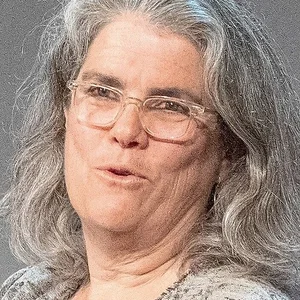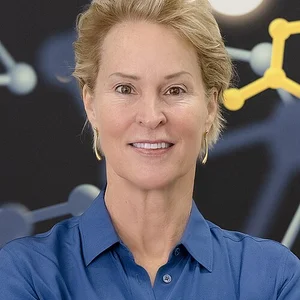

American chemist and pioneer of directed protein evolution. She received the Nobel Prize in Chemistry in 2018 for applying the principles of natural evolution to enzyme design. Her work is revolutionizing biochemistry and the pharmaceutical industry.
Frances Arnold(1956 — ?)
Frances Arnold
États-Unis
8 min read
Frequently asked questions
Famous Quotes
« I've learned from evolution — nature is the best chemist.»
« The best way to create something new is to borrow from what already works.»
Key Facts
- Born on July 25, 1958, in Pittsburgh, Pennsylvania (United States)
- Developed the technique of directed enzyme evolution starting in the 1990s
- First woman to receive the Nobel Prize in Chemistry since 2009 (co-laureate in 2018)
- Professor at the California Institute of Technology (Caltech)
- Her synthetic enzymes are used in the production of pharmaceuticals and biofuels
Works & Achievements
First experimental demonstration of directed evolution applied to an enzyme, published in PNAS. Arnold shows that by applying random mutagenesis and iterative selection, the activity of an enzyme in an organic solvent can be dramatically improved.
A series of studies on this key metabolic enzyme, yielding variants capable of highly selective oxidation reactions. These enzymes have direct applications in the industrial synthesis of pharmaceuticals.
A review article published in Accounts of Chemical Research summarizing the philosophy and methods of directed evolution. Cited thousands of times, it has become a foundational text in the field of protein engineering.
A publication in Science demonstrating that evolved enzymes can form silicon–carbon bonds, which are absent from natural biology. This feat opens the door to bio-based organosilicon chemistry of great industrial value.
Creation of a California start-up using evolved enzymes to produce isobutanol as a biofuel from biomass. A landmark example of academic technology transfer to the green energy industry.
International recognition of Arnold's twenty-five years of work on directed evolution, shared with George Smith and Gregory Winter. The prize validates the biomimetic approach as a central paradigm in contemporary biological engineering.
Anecdotes
In 1993, Frances Arnold conducted an experiment that would transform biochemistry: rather than painstakingly engineering an enzyme piece by piece, she applied the principles of natural evolution in the laboratory. She introduced random mutations into an enzyme's gene, selected the best-performing variants, and repeated the process — like Darwin on fast-forward. Within a few weeks, she produced an enzyme far more efficient than the original.
Before turning to biology, Frances Arnold was an aerospace engineer. After graduating from Princeton with a degree in mechanical engineering in 1979, she made a radical career change following her doctorate at Berkeley, captivated by the idea of applying engineering methods to living systems. This dual background — technical and biological — lies at the heart of her scientific revolution.
In 2016, her team at Caltech achieved an unprecedented feat: engineering enzymes capable of forming silicon-carbon bonds, a chemical reaction that does not occur in nature. The achievement, published in the journal *Science*, demonstrated that directed evolution could endow living organisms with entirely new capabilities, opening the door to a revolutionary green chemistry.
At the 2018 Nobel Prize in Chemistry ceremony in Stockholm, Frances Arnold became the fifth woman in history to receive this honor, and the first American citizen to do so. During her Nobel lecture, she emphasized the collective contribution of her students and postdoctoral researchers: without them, twenty-five years of research on directed evolution would not have been possible.
Frances Arnold is one of the rare academic scientists to have founded several start-ups based on her discoveries, including Gevo in 2005, specializing in biofuels derived from biomass. She has also served on the U.S. Presidential Council of Advisors on Science and Technology, advocating for fundamental research to directly serve the energy transition.
Primary Sources
We have used sequential random mutagenesis and screening to evolve an enzyme for catalysis in a highly nonnatural environment. Ten amino acid substitutions identified in three generations of random mutagenesis resulted in an enzyme 256 times more active than the wild-type enzyme in 60% dimethylformamide.
Directed evolution uses iterative cycles of mutagenesis and screening to improve proteins. By mimicking the processes of natural evolution, we can generate proteins with properties far outside the range of what exists in nature, including new substrate specificities, activities in nonaqueous solvents, and altered thermostabilities.
We report here that iron-containing proteins can catalyze the formation of carbon-silicon bonds — something nature has never done before. Using directed evolution, we engineered a bacterial cytochrome c to produce organosilicon compounds with high selectivity.
I use directed evolution to optimize or create new proteins. By making and testing large libraries of genetic variants, I can find proteins with new and useful functions. The proteins discovered by directed evolution are now used in the synthesis of drugs, biofuels, and other chemicals.
Key Places
The institution where Arnold has worked since 1987 and leads her research laboratory in chemical and biological engineering. It is here that she developed and refined directed evolution, surrounded by researchers from around the world.
The university where Arnold earned her PhD in chemical engineering in 1985. Through her immersion in Berkeley's academic environment, she began exploring how engineering principles could be applied to biological systems.
Where Arnold earned her undergraduate degree in mechanical and aerospace engineering in 1979. Her engineering training profoundly shaped her methodical, quantitative approach to biology.
The venue for the annual Nobel Prize award ceremony, where Frances Arnold received the Nobel Prize in Chemistry in December 2018, becoming the fifth woman and the first American woman to receive this distinction.
The birthplace of Frances Arnold in 1956, situated in the industrial heart of the American Rust Belt. This heavy-industry environment is thought to have shaped her interest in the practical, industrial applications of fundamental research.
Typical Objects

A ubiquitous tool in Arnold's laboratory, used to handle tiny volumes of biological liquids with precision. It is used at every stage of directed evolution, from pipetting DNA to analyzing enzyme variants.

A machine that rapidly alternates temperatures to amplify DNA fragments and introduce targeted mutations. Essential for creating the mutant gene libraries that lie at the heart of the directed evolution strategy.

A controlled vessel in which bacteria are cultured to mass-produce the selected evolved enzymes. Arnold uses bioreactors at various scales to test and then industrialize her best variants.

An automated system capable of testing thousands of enzyme variants in parallel within a few hours. This equipment is central to Arnold's strategy: generating a large diversity of mutants, then automatically identifying the best-performing ones.

A computational tool for modeling the 3D structure of an enzyme and analyzing the effect of mutations. Arnold uses it to understand why certain amino acid substitutions improve catalytic performance.

An analytical instrument that separates and quantifies the products of an enzymatic reaction with great precision. Essential for measuring the efficiency of evolved enzymes and verifying the purity of synthesized compounds.
School Curriculum
Vocabulary & Tags
Key Vocabulary
Tags
Daily Life
Morning
Frances Arnold arrives early at Caltech, often before 8 a.m., coffee in hand. She starts by scanning the latest scientific publications in Nature, Science, and JACS, then tours the lab to discuss ongoing experiments with her international PhD students and postdocs.
Afternoon
Afternoons are devoted to team meetings where each researcher presents their results on directed evolution. Arnold rigorously questions the data, proposes new mutagenesis approaches, and helps interpret the enzymatic activity curves coming out of the screening robots.
Evening
In the evening, Arnold writes scientific papers, prepares funding applications for the NIH or DOE, or responds to inquiries from industrial partners. An avid outdoor enthusiast, she sometimes treats herself to a hike in the Pasadena hills before nightfall.
Food
Practical, no-fuss meals typical of American university campuses: the Caltech cafeteria at lunch, a sandwich or salad at the computer on busy days, family dinners in the evening. Arnold is known for her long workdays that leave little room for elaborate meals.
Clothing
In the lab, Arnold is required to wear a white lab coat, blue nitrile gloves, and regulation safety goggles. Outside the lab, her style is relaxed and functional — jeans, sneakers — a stark contrast to the formal attire she adopts for international conferences and awards ceremonies.
Housing
Frances Arnold long resided in Pasadena, a few kilometers from Caltech, in a Craftsman-style house typical of Southern California. Her home, surrounded by a garden, provided an essential space to decompress from the intense pace of high-level academic research.
Historical Timeline
Period Vocabulary
Visual Style
Esthétique scientifique contemporaine : laboratoire épuré baigné de lumière froide, structures protéiques en 3D sur écran, dégradés analytiques sur plaques de criblage — l'univers visuel de la biochimie de pointe américaine.
Sound Ambience
L'atmosphère sonore d'un laboratoire de biochimie de pointe des années 1990–2010, rythmée par les centrifugeuses, les thermocycleurs PCR et les robots de criblage automatisé.
Liens externes & ressources
Références
Œuvres
Évolution dirigée de la subtilisine E — article fondateur
1993
Évolution dirigée du cytochrome P450
1996–2002
Design by Directed Evolution — revue de référence
1998
Bringing silicon to life — liaisons Si-C par évolution dirigée
2016
Co-fondation de Gevo Inc. — biocarburants enzymatiques
2005
Prix Nobel de Chimie — reconnaissance mondiale
2018