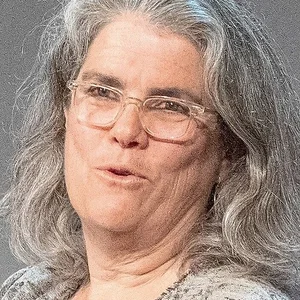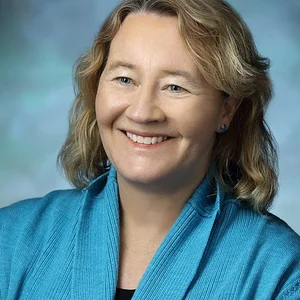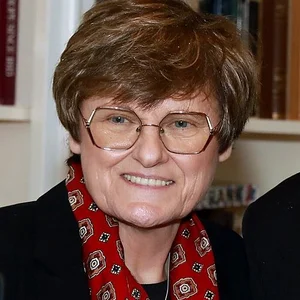

Hungarian biochemist and pioneer of messenger RNA technology. Her research, long overlooked, made mRNA vaccines against COVID-19 possible. She received the Nobel Prize in Physiology or Medicine in 2023.
Katalin Karikó(1955 — ?)
Katalin Karikó
Hongrie, États-Unis
8 min read
Frequently asked questions
Key Facts
- Born in 1955 in Hungary, she emigrated to the United States in 1985 to pursue her research
- For decades, her work on messenger RNA was ignored and underfunded
- In 2005, she published a landmark discovery with Drew Weissman showing that mRNA could be used without triggering an excessive immune response
- Her work enabled the development of the Pfizer-BioNTech and Moderna COVID-19 vaccines in 2020
- She received the Nobel Prize in Physiology or Medicine in 2023 alongside Drew Weissman
Works & Achievements
Paper co-authored with Drew Weissman demonstrating that chemically modified nucleosides allow mRNA to evade recognition as foreign by the immune system. Considered the scientific breakthrough that made mRNA vaccines possible.
First patent filed by Karikó and Weissman protecting the mRNA modification technology. It was later licensed to Moderna and BioNTech, becoming the cornerstone of an entire industry.
Second major publication clarifying that pseudouridine (a modified base) increases both the stability and translation efficiency of mRNA while reducing its immunogenicity.
The first mRNA vaccine granted emergency authorization worldwide, developed in under a year at BioNTech with Karikó's direct contribution. It relies entirely on the modified nucleoside technology she pioneered.
A memoir in which Karikó recounts her journey from communist Hungary to American laboratories, the repeated rejections, the demotion, and the perseverance that ultimately led her to the Nobel Prize.
Anecdotes
In 1985, Katalin Karikó and her husband decided to leave Hungary for the United States to pursue her research. Unable to freely take their money out of the country, they converted the proceeds from selling their car (roughly 900 British pounds) into dollars, which they hid inside their little daughter Susan's teddy bear. That child would later become a two-time Olympic rowing champion.
In 1995, her supervisor at the University of Pennsylvania lost faith in her work on messenger RNA and demoted her, stripping her of her faculty position and funding. Rather than giving up, Karikó continued her research on a reduced salary, convinced that therapeutic mRNA was achievable. That perseverance would ultimately change the history of medicine.
It was at a photocopier that Katalin Karikó met immunologist Drew Weissman around 1997. As they discussed their respective work, they realized they could combine their expertise. From that chance encounter grew the scientific collaboration that would lead to the discovery of modified nucleosides and, twenty years later, to the Nobel Prize.
Their 2005 paper in the journal Immunity, describing how to modify messenger RNA so it would no longer trigger an inflammatory response in human cells, was initially rejected by the leading journals Nature and Science. Ignored for years by the scientific community, this work is now recognized as one of the most important biological discoveries of the twenty-first century.
When the COVID-19 pandemic broke out in 2020, Karikó had been working at BioNTech in Mainz since 2013. In less than a year, the technology she had developed over three decades of obscurity enabled the creation of the Pfizer-BioNTech BNT162b2 vaccine, administered to hundreds of millions of people around the world.
Primary Sources
We show that RNA synthesized in vitro is immunostimulatory and that this property can be reduced by the incorporation of modified nucleosides. These findings suggest a general mechanism by which modified nucleosides reduce the immunogenicity of RNA.
mRNA containing pseudouridine was translated more efficiently than unmodified mRNA in primary cells and in vivo, and was significantly less immunogenic, demonstrating its potential as a therapeutic vector.
Throughout my career I experienced many setbacks, grant rejections, and a demotion. Despite these obstacles, I never lost faith in the potential of mRNA. The discovery of modified nucleosides opened the door to safe and effective mRNA therapeutics.
Science is not a straight road. It is full of detours, failures and moments of doubt. What keeps you going is the conviction that the question you are asking matters, even when no one else believes it yet.
Key Places
A small town on the Hungarian Great Plain where Katalin Karikó was born in 1955 and grew up. Her childhood in these modest surroundings shaped her work ethic and determination.
A university city in southern Hungary where Karikó earned her doctorate in biochemistry in 1978 and began her first RNA research at the Biological Research Centre.
The institution where Karikó spent the bulk of her American career (1989–2013), despite being demoted in 1995. It was here that she met Drew Weissman and published their landmark 2005 discovery.
The biotechnology company co-founded by Uğur Şahin and Özlem Türeci that Karikó joined in 2013. It was in its laboratories that the BNT162b2 vaccine against COVID-19 was designed and developed.
On December 10, 2023, Katalin Karikó received the Nobel Prize in Physiology or Medicine in Stockholm — international recognition of thirty years of research that had been overlooked and misunderstood.
Liens externes & ressources
Références
Œuvres
Article fondateur : « Suppression of RNA Recognition by Toll-like Receptors » (Immunity)
2005
Brevet sur les nucléosides modifiés pour l'ARNm thérapeutique
2006
Article : « Incorporation of pseudouridine into mRNA » (Molecular Therapy)
2008
Vaccin BNT162b2 (Pfizer-BioNTech) contre la COVID-19
2020-2021
Autobiographie : Breaking Through — My Life in Science
2023