 flip
flipSunday Musical Gugelhupf
Sunday Musical Gugelhupf
Why this dish? Every Sunday, Fanny conducted the Sonntagsmusiken in the garden room of the Mendelssohn villa on Leipziger Straße. A select audience, musicians, coffee, and a large molded cake: the Gugelhupf, tall and fluted, was the centerpiece of these afternoons where she finally reigned as conductor.
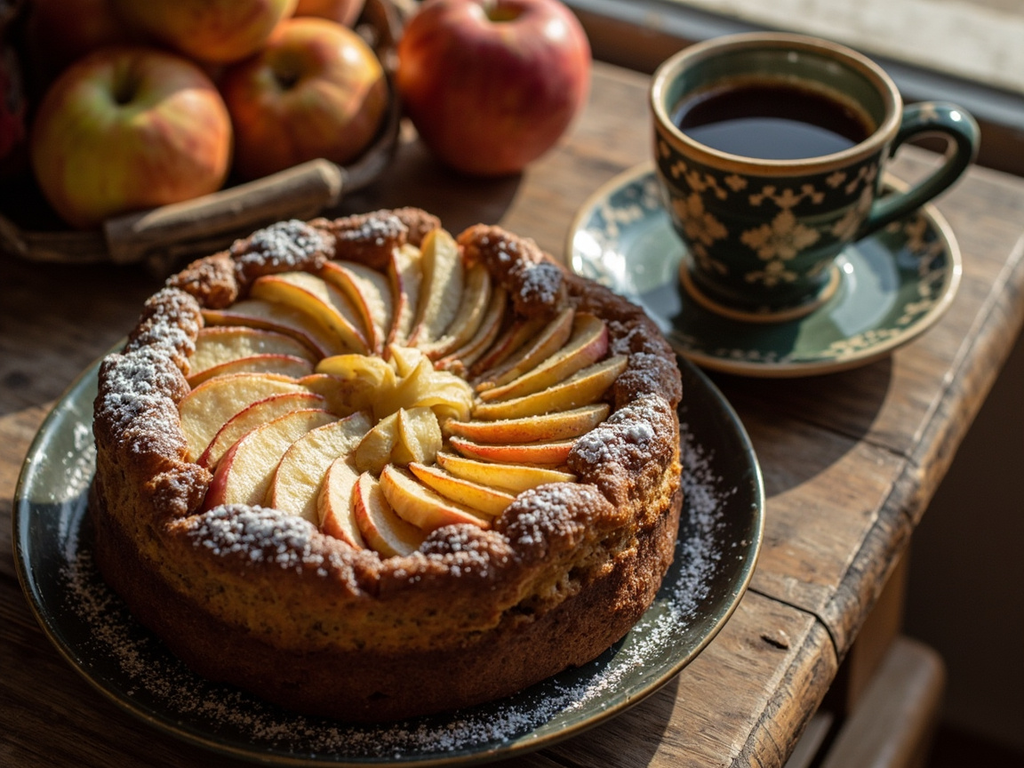
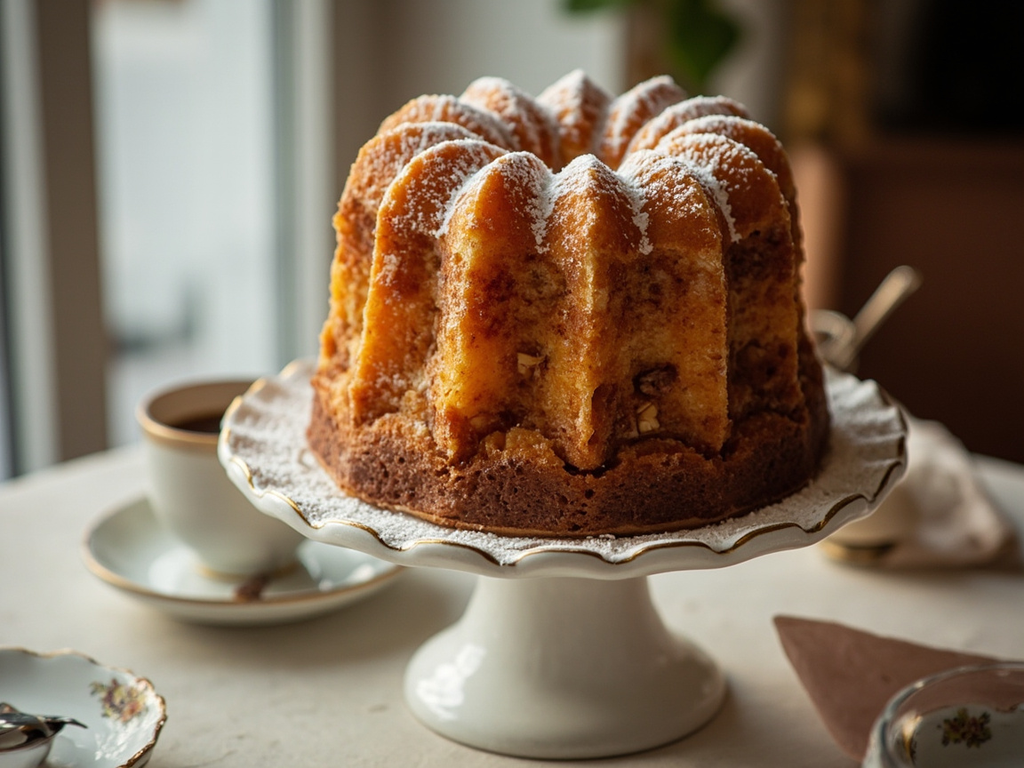
A soft, yeasted cake, scented with lemon zest and almonds, baked in its fluted turban mold. Served sliced, dusted with sugar, beside steaming coffee cups.
Approach, I pray, and take a seat near the keyboard. On Sundays, when the garden room fills and my musicians tune their instruments, this cake sits on the table like a second voice. My cook beats it for long minutes, for the dough loves only patience; I have her grate the zest of a lemon, like a clear note in a deep chord. Believe me: a well-risen Gugelhupf and a well-led fugue demand the same thing — measure and breath.
- •Wheat flour — a good pound (base)
- •Fresh butter — a quarter pound (softness)
- •Eggs — six (binder and richness)
- •Brewer's yeast — a piece (leavening)
- •Warm milk — a cup (hydration)
- •Sugar — half a cup (sweetness)
- •Blanched almonds — a handful (mold garnish)
- •Lemon zest — of one lemon (flavor)
- •Currants — a handful (garnish)
Sunday Musical Gugelhupf
A soft, yeasted cake, scented with lemon zest and almonds, baked in its fluted turban mold. Served sliced, dusted with sugar, beside steaming coffee cups.
Why this dish? Every Sunday, Fanny conducted the Sonntagsmusiken in the garden room of the Mendelssohn villa on Leipziger Straße. A select audience, musicians, coffee, and a large molded cake: the Gugelhupf, tall and fluted, was the centerpiece of these afternoons where she finally reigned as conductor.
Approach, I pray, and take a seat near the keyboard. On Sundays, when the garden room fills and my musicians tune their instruments, this cake sits on the table like a second voice. My cook beats it for long minutes, for the dough loves only patience; I have her grate the zest of a lemon, like a clear note in a deep chord. Believe me: a well-risen Gugelhupf and a well-led fugue demand the same thing — measure and breath.
Ingredients (period version)
- Wheat flour — a good pound (base)
- Fresh butter — a quarter pound (softness)
- Eggs — six (binder and richness)
- Brewer's yeast — a piece (leavening)
- Warm milk — a cup (hydration)
- Sugar — half a cup (sweetness)
- Blanched almonds — a handful (mold garnish)
- Lemon zest — of one lemon (flavor)
- Currants — a handful (garnish)
Ingredients
- All-purpose flour T45 — 400 g (base)
- Softened butter — 120 g (softness)
- Eggs — 4 (binder and richness)
- Fresh baker's yeast — 20 g (leavening)
- Warm milk — 120 ml (hydration)
- Sugar — 90 g (sweetness)
- Slivered or whole almonds — 40 g (lining the mold)
- Zest of one organic lemon — 1 (flavor)
- Raisins — 60 g (garnish)
- Powdered sugar — for dusting (finishing)
Method
- Dissolve the yeast in warm milk with a spoonful of sugar and a little flour; let foam for 15 min.
- Cream the softened butter with sugar, add eggs one by one, the lemon zest, then the flour and the leaven.
- Knead until a soft and shiny dough forms; incorporate the raisins. Cover and let double in size, about 1 h 30.
- Generously butter a Gugelhupf mold (fluted ring) and line the bottom with almonds.
- Punch down the dough, pour it into the mold, and let rise another 45 min.
- Bake at 180°C for about 40 min, until golden brown. Unmold while warm, dust with powdered sugar.
How it was made : In the 19th century, there was neither baking powder nor stand mixer: the dough was raised with brewer's yeast and beaten by hand for a good quarter hour, work entrusted to the domestic staff in well-off homes. The tinned copper mold with a central chimney ensured even baking of this rich dough.
The contemporary twist : Serve it as a 'score': a thin line of candied zest laid on top like a staff, a wink to the composer.
Sources : Henriette Davidis, Praktisches Kochbuch für die gewöhnliche und feinere Küche, 1845 (reference for German bourgeois cuisine of the era)
Fanny Mendelssohn · Charactorium