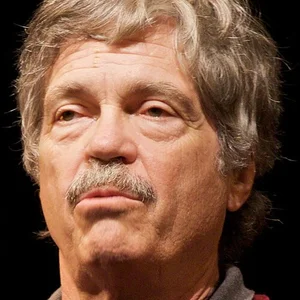
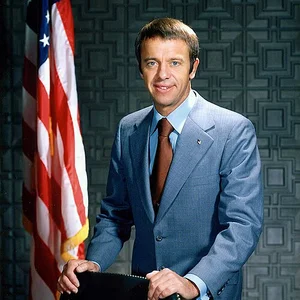
Fritz Strassmann was a German chemist who, together with Otto Hahn, carried out in 1938 the experiment demonstrating the fission of the uranium nucleus. This discovery, interpreted by Lise Meitner and Otto Frisch, paved the way for nuclear energy and nuclear weapons.
Fritz Strassmann(1902 — 1980)
Fritz Strassmann
Allemagne
6 min read
Frequently asked questions
Key Facts
- Born in 1902 in Boppard, Germany, and died in 1980 in Mainz
- Discovered the nuclear fission of uranium with Otto Hahn in December 1938
- Identified through chemical methods the presence of barium among the products of the reaction
- Refused to join the Nazi party and hid a Jewish friend during the war, which would earn him the title of Righteous Among the Nations
- Otto Hahn alone received the 1944 Nobel Prize in Chemistry for this discovery, while neither Strassmann nor Meitner were honored
Works & Achievements
Chemical identification of barium among the products of bombarding uranium with neutrons: the first proof of the splitting of the atomic nucleus.
Published in the journal Naturwissenschaften, announcing to the scientific world the results of the founding experiment.
Strassmann contributed to a technique for the radiometric dating of rocks, an application of radiochemistry to geology.
Reorganization of nuclear chemistry research and teaching in postwar Germany.
An act of civil resistance: Fritz and Maria Strassmann hid a Jewish friend, an act for which they were honored as Righteous Among the Nations.
Anecdotes
In December 1938, Fritz Strassmann and Otto Hahn bombarded uranium with neutrons and found barium, an element twice as light. The result was so puzzling that Hahn wrote to his former colleague Lise Meitner: “Perhaps you can suggest some fantastic explanation?” It was she who would understand that this was the fission of the nucleus.
Strassmann was a younger and less well-known chemist than Hahn, but his expertise in analytical chemistry proved decisive: it was by chemically separating and identifying the products of the reaction that he proved the presence of barium, where other physicists searched in vain.
During the Third Reich, Strassmann refused to join Nazi organizations, which cost him promotions and kept him in a junior, poorly paid position. Yet together with his wife Maria, he hid a Jewish friend in their home, the musician Andrea Wolffenstein, for several months in 1943.
In 1985, five years after his death, the Yad Vashem institute in Israel recognized Fritz and Maria Strassmann as “Righteous Among the Nations” for having risked their lives by hiding a Jewish person.
Strassmann was long overshadowed by Otto Hahn, who alone received the Nobel Prize in Chemistry in 1944 for the discovery of fission. History has since recognized that this discovery was the fruit of the joint work of Hahn, Strassmann, and Meitner.
Primary Sources
As chemists, on the basis of these brief experiments, we ought to rename the symbols Ra, Ac, Th and write Ba, La, Ce instead. But as “nuclear physicists” close to the field of physics, we cannot bring ourselves to make this leap, which contradicts all previous experience in nuclear physics.
It could still be a curious coincidence. But we are increasingly coming to the dreadful conclusion: our radium isotopes do not behave like radium, but like barium. Perhaps you can suggest some fantastic explanation?
It therefore seems possible that the uranium nucleus has only little stability of form, and may, after capturing a neutron, divide itself into two nuclei of roughly equal size.
Key Places
Small town on the banks of the Rhine where Fritz Strassmann was born in 1902.
Laboratory where Strassmann, Hahn and Meitner carried out their research and where nuclear fission was discovered in 1938.
Institution where Strassmann studied chemistry and earned his doctorate in 1929.
University where Strassmann became professor of inorganic and nuclear chemistry after the war and founded his institute.
City in southwestern Germany where Strassmann lived, worked and died in 1980.
Typical Objects

Device combining radium and beryllium to emit a stream of neutrons. Strassmann and Hahn used it to bombard samples of uranium.

Instrument that detects radioactivity through electrical discharges. It made it possible to track the activity of the products created by bombarding uranium.

Laboratory glassware used to separate and identify elements through chemical reactions. It was through these methods that Strassmann demonstrated the presence of barium.

Uranium salt used as a target for neutrons. Its breakdown into lighter elements was the key to the discovery of fission.

Notebook in which the dates, measurements and observations of experiments were recorded. The one kept by Hahn and Strassmann preserved a precise record of that December 1938 night.

A balance able to weigh tiny masses, indispensable to quantitative chemistry. It helped to verify the nature of the elements obtained.
School Curriculum
Vocabulary & Tags
Key Vocabulary
Daily Life
Morning
Strassmann arrived early at the institute's laboratory, dressed in a white coat. Mornings were spent preparing samples, adjusting the neutron sources, and meticulously recording each procedure in his notebook.
Afternoon
Afternoons were devoted to delicate chemical separations: precipitations, filtrations, and radioactivity measurements with a counter. He discussed the results with Otto Hahn and corresponded by letter with the exiled Lise Meitner.
Evening
In the evening, he returned to his modest lodging, since his refusal to join Nazi organizations kept him in a poorly paid position. In 1943, his evening might be marked by the immense risk of secretly sheltering a Jewish friend.
Food
Like most Germans of the time, he ate simply: rye bread, potatoes, cabbage, and soups. During the war, rationing made food scarce, and sharing his rations with someone in hiding deepened the hardship.
Clothing
In the laboratory, he wore the chemist's white coat. In town, he dressed soberly in the interwar style: a dark suit, shirt, tie, and hat.
Housing
Lacking promotion, the Strassmanns lived in a modest apartment in the Berlin area. After 1946, their living conditions improved in Mainz, where Fritz directed his own university institute.
Historical Timeline
Period Vocabulary
Liens externes & ressources
Références
Œuvres
Découverte de la fission nucléaire de l'uranium (avec Otto Hahn)
décembre 1938
Article « Sur la mise en évidence et le comportement des métaux alcalino-terreux formés lors de l'irradiation de l'uranium par des neutrons »
6 janvier 1939
Mise au point de la méthode rubidium-strontium de datation
années 1930
Fondation et direction de l'Institut de chimie inorganique et nucléaire de Mayence
à partir de 1946
Sauvetage d'Andrea Wolffenstein
1943