 flip
flipMadeleines with Beurre Noisette
Madeleines with Beurre Noisette
Why this dish? The Parisian musical salons and tea parties — where Les Six gathered in the afternoon around a piano — called for these little bites. The madeleine, made a literary symbol of memory by Proust, embodies the cultured Paris in which Germaine moved.
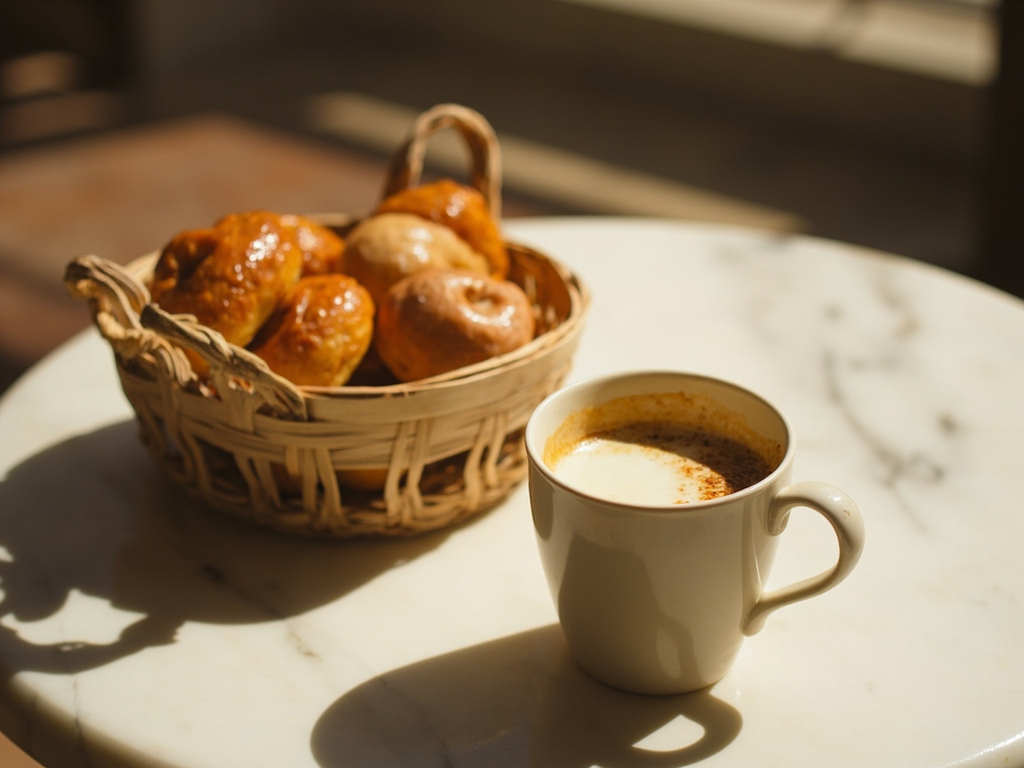
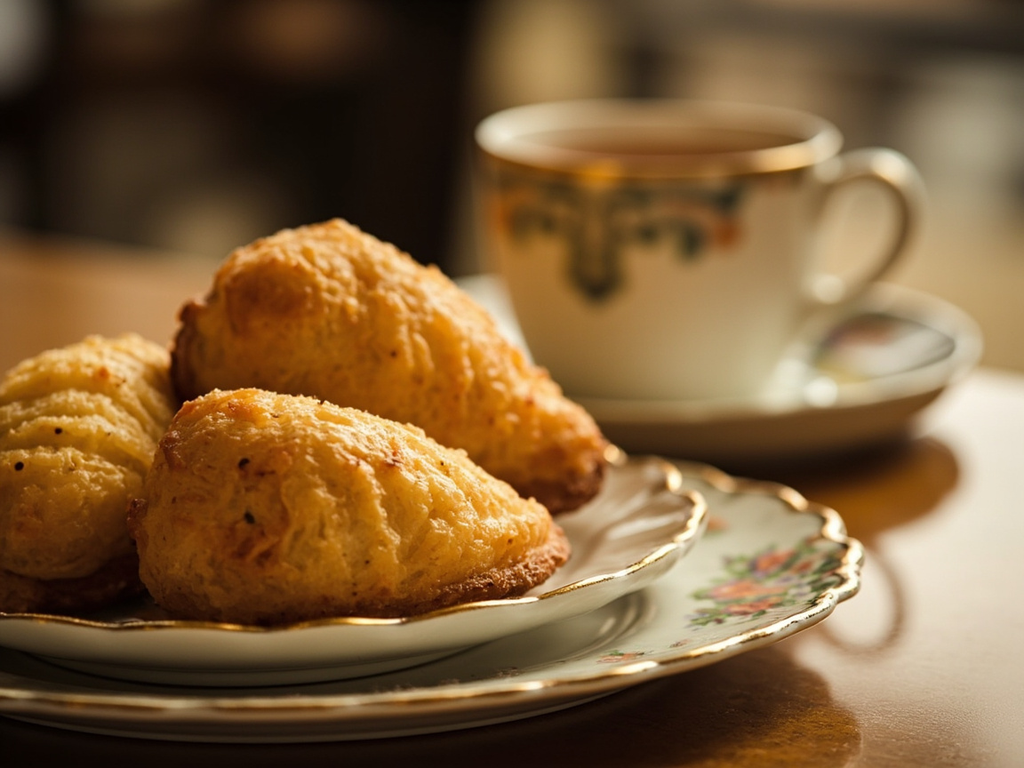
Small shell-shaped cakes with a well-golden bump, flavored with beurre noisette and lemon. The treat you dip in tea at teatime.
At the hour when we left the piano for tea, one needed something to nibble with fingertips, and nothing beats a still-warm madeleine. The secret is the butter you brown until hazelnut, and the batter you let rest in the cool: it is this rest that gives it its lovely bump. Dip it in tea, close your eyes, and a whole afternoon of music comes back. We never ate just one.
- •Eggs — a few (structure)
- •Powdered sugar — equal parts (sweetness)
- •Flour — equal parts (body)
- •Butter — generously (moistness and beurre noisette)
- •Lemon zest — 1 (flavor)
Madeleines with Beurre Noisette
Small shell-shaped cakes with a well-golden bump, flavored with beurre noisette and lemon. The treat you dip in tea at teatime.
Why this dish? The Parisian musical salons and tea parties — where Les Six gathered in the afternoon around a piano — called for these little bites. The madeleine, made a literary symbol of memory by Proust, embodies the cultured Paris in which Germaine moved.
At the hour when we left the piano for tea, one needed something to nibble with fingertips, and nothing beats a still-warm madeleine. The secret is the butter you brown until hazelnut, and the batter you let rest in the cool: it is this rest that gives it its lovely bump. Dip it in tea, close your eyes, and a whole afternoon of music comes back. We never ate just one.
Ingredients (period version)
- Eggs — a few (structure)
- Powdered sugar — equal parts (sweetness)
- Flour — equal parts (body)
- Butter — generously (moistness and beurre noisette)
- Lemon zest — 1 (flavor)
Ingredients
- Eggs — 2 (structure)
- Sugar — 100 g (sweetness)
- Flour — 100 g (body)
- Butter — 100 g (beurre noisette)
- Baking powder — 1/2 packet (leavening)
- Lemon zest — 1 (flavor)
- Pinch of salt — 1 (balance)
Method
- Melt the butter until it turns golden and smells of hazelnut, then let it cool slightly.
- Whisk the eggs with sugar and salt until the mixture whitens.
- Fold in the sifted flour and baking powder, the zest, then the beurre noisette.
- Let the batter rest in the refrigerator for at least 1 hour (ideally overnight) — this creates the bump.
- Fill buttered madeleine molds, bake in a hot oven (220°C) for 4 minutes then reduce to 180°C for 5 minutes, until golden. Unmold while warm.
How it was made : Madeleines, popularized in Commercy in the 18th century, were a common teatime snack at the turn of the 20th century, also sold by pastry chefs and at markets. Chilling the batter, the key to the famous bump, was part of the domestic know-how.
The contemporary twist : Glaze the shell with a streak of tempered dark chocolate, or flavor the batter with a spoonful of orange blossom water.
Sources : Marcel Proust, Swann's Way, 1913 (cultural reference) · Prosper Montagné, Larousse gastronomique, 1938
Germaine Tailleferre · Charactorium