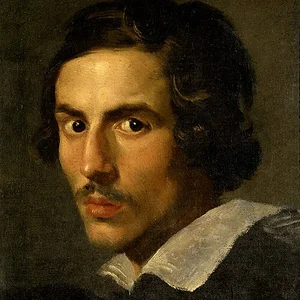

Italian sculptor, architect and painter, a leading figure of the Roman Baroque in the 17th century. A genius of dramatic staging, he turned marble into flesh and orchestrated the décor of papal Rome, most notably in the service of Saint Peter's Basilica.
Gian Lorenzo Bernini(1598 — 1680)
Bernini
Italie
6 min read
Frequently asked questions
Key Facts
- Born in 1598 in Naples, died in 1680 in Rome
- Created The Ecstasy of Saint Teresa (1647-1652) in the church of Santa Maria della Vittoria
- Sculpted The Rape of Proserpina and Apollo and Daphne (around 1622-1625) for Cardinal Borghese
- Designed the baldachin (1624-1633) and the colonnade (1656-1667) of Saint Peter's Basilica in Rome
- Sculpted the Fountain of the Four Rivers (1648-1651) on the Piazza Navona
Works & Achievements
Marble group capturing the nymph's metamorphosis into a laurel tree, the supreme display of the young Bernini's virtuosity.
Statue depicting the hero in mid-action, his body coiled to hurl the sling, breaking with the serenity of the Renaissance.
Immense canopy of gilded bronze with twisting columns towering over the papal altar, a manifesto of the Roman Baroque.
Group in the Cornaro Chapel blending marble, light, and architecture to portray a mystical vision of overwhelming intensity.
Fountain in Piazza Navona personifying four great rivers of the world around an obelisk, a feat of engineering and stagecraft.
Double elliptical colonnade embracing the square like two arms thrown open to the faithful, a masterpiece of Baroque urban design.
Marble portrait of the Sun King made in Paris, the model for the Baroque ceremonial royal portrait.
Intimate, lifelike portrait of his mistress, a rare testament to private and passionate sculpture from Bernini's own hand.
Anecdotes
The son of the sculptor Pietro Bernini, the young Gian Lorenzo was introduced to Pope Paul V around the age of eight. Marvelling at his precocious talent, the pope reportedly nicknamed him the “little Michelangelo” and entrusted his education to Cardinal Maffeo Barberini, the future Pope Urban VIII.
To bring to life the screaming face of his “Head of a Damned Soul”, Bernini is said to have burned his own skin with a flame while looking at himself in a mirror, in order to capture the exact expression of pain. This quest for extreme realism lay at the very heart of his way of carving marble.
His bell tower for the façade of St. Peter's Basilica was a resounding fiasco: cracks appeared and it had to be demolished in 1646. This failure tarnished his reputation and, for a time, benefited his great rival, the architect Francesco Borromini.
In 1665, Louis XIV invited Bernini to Paris to redesign the Louvre. Welcomed like a prince, the artist behaved haughtily towards the French architects and his grandiose project was ultimately abandoned, but during this stay he created a striking bust of the Sun King.
Bernini led a tumultuous private life: in love with his mistress Costanza Bonarelli, he was seized by a furious jealousy upon discovering her affair with his own brother, and had the young woman's face disfigured. Pope Urban VIII then forced him to marry in order to set his conduct straight.
Primary Sources
He used to say that, in conceiving the statue of David, he had no other mirror than the marble, and that what he carved, he drew from within himself.
He says that, when he was working, he threw himself wholly into his work and forgot even to eat and to sleep.
My son, you do not know that you are working to your own shame, for this work will surpass you yourself, said his father upon seeing the group of Apollo and Daphne.
Key Places
Bernini's birthplace, then the capital of the Kingdom of Naples under Spanish rule. He spent his early childhood there before leaving for Rome.
The city where Bernini spent most of his life and died, at the heart of papal patronage. Here he unleashed his genius across squares, churches, and palaces.
The principal project of his career, where he created the baldachin, the Chair of Saint Peter, and the colonnade. He worked here in the service of several popes for half a century.
The villa of Cardinal Scipione Borghese, his first great patron, which houses his youthful masterpieces such as Apollo and Daphne. The place that established his reputation.
The French capital where he stayed in 1665, received by Louis XIV for the Louvre project. There he sculpted the famous bust of the king despite the failure of his architectural plans.
The Roman square crowned by his Fountain of the Four Rivers, a spectacular interplay of water and stone. It marked his return to favor after the bell tower episode.
Typical Objects

The basic tools for carving marble, roughing out the block and then refining the details. Bernini wielded them with legendary virtuosity to render flesh and movement.

White marble quarried from the Carrara quarries, prized for its purity and translucency. Bernini selected it personally for his most ambitious statues.

A bow-driven drill used to bore into marble to hollow out pupils, locks of hair or deep shadows. This tool gave Bernini's sculptures their dramatic intensity.

A small clay sketch shaped by hand to set the composition before the final carving. These models reveal the fire and spontaneity of Bernini's creative gesture.

A colossal canopy with twisting columns crowning the papal altar of St. Peter's, cast in gilded bronze. A symbol of the splendor of papal Rome and a masterpiece of monumental metalwork.

Drafting instruments used by Bernini to design squares, fountains and façades. They attest to his dual genius as both sculptor and architect.
School Curriculum
Vocabulary & Tags
Key Vocabulary
Daily Life
Morning
Bernini rose early and headed to his workshop or his Roman building sites, sometimes after attending Mass. Deeply pious, he often began his day with a prayer before taking up the chisel.
Afternoon
He directed a large team of assistants and apprentices, roughing out the blocks himself and reserving the most delicate details for his own hand. It is said that he could work the marble for hours on end without pausing, so absorbed that he forgot everything around him.
Evening
In the evening, he received patrons, cardinals and distinguished visitors, or devoted himself to the theatre, writing and staging comedies with elaborate stage machinery. A man of the court, he cultivated his network among the popes and the great.
Food
Like the well-off Romans of his time, he ate bread, pasta, vegetables, fish and meats, washed down with local wine. It was said that, absorbed in his work, he sometimes forgot to eat his meals.
Clothing
As an ennobled artist, he wore the dark, well-tailored clothes of a gentleman: doublet, cloak and lace collar. Knighted, he displayed the dignity of his rank at the papal court.
Housing
He lived in a comfortable house-workshop in Rome, near the sites where he worked. Showered with honours and income, he left a considerable fortune at his death.
Historical Timeline
Period Vocabulary
Liens externes & ressources
Références
Œuvres
Apollon et Daphné
1622-1625
David
1623-1624
Baldaquin de Saint-Pierre
1624-1633
L'Extase de sainte Thérèse
1647-1652
Fontaine des Quatre-Fleuves
1648-1651
Colonnade de la place Saint-Pierre
1656-1667
Buste de Louis XIV
1665