 flip
flipMelikraton, Libation of Honey and Milk
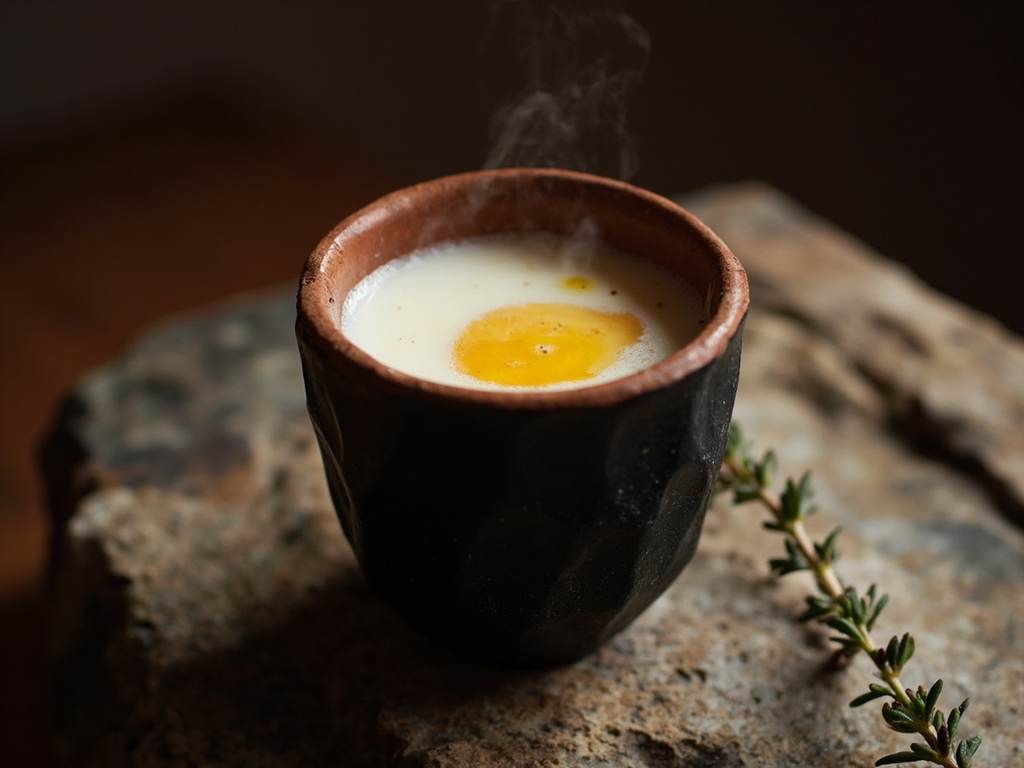
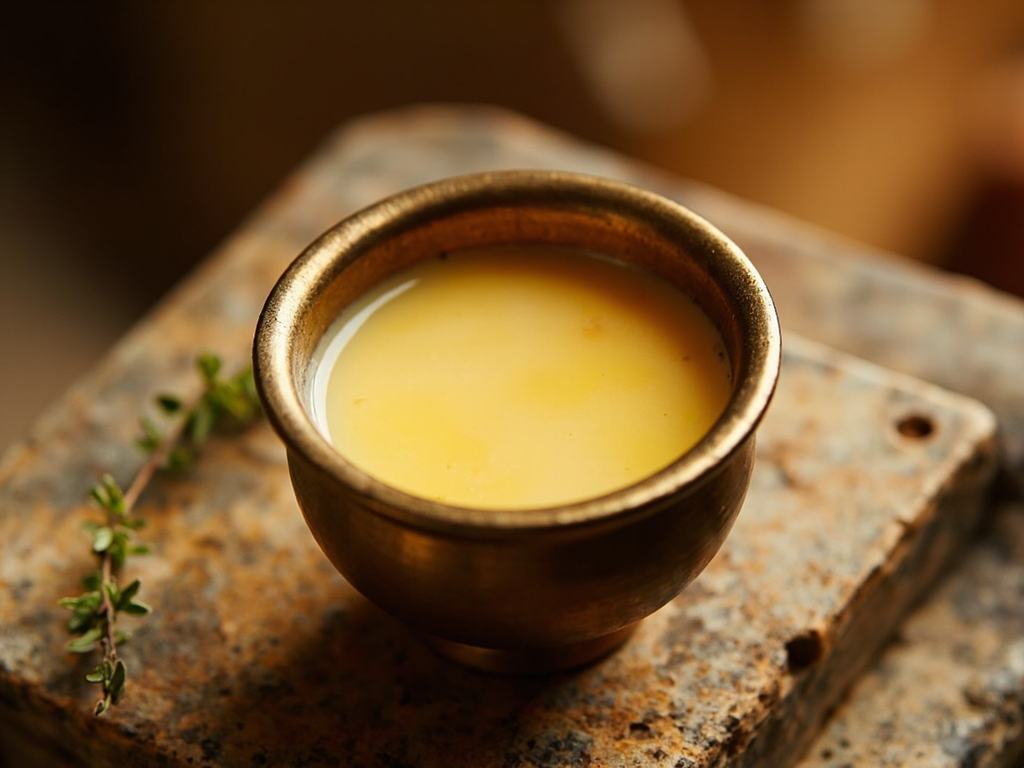
Melikraton, Libation of Honey and Milk
Why this dish? Helen was not only a queen: at Sparta, near Therapne, she received a cult at the Menelaion and was honored as a heroine, almost a goddess. Melikraton—a mixture of honey and milk (or water)—is the quintessential libation poured to the dead, heroes, and chthonic deities. Inspired by these offerings, this sweet drink evokes the honors paid to Helen herself.
A sweet, clear drink of honey dissolved in milk or water, sometimes perfumed with herbs. It was poured on altars and tombs; it could also be drunk, comforting and fortifying.
Pour slowly, and let your hand not tremble: this honey mixed with milk is not for quenching thirst, but to honor those who watch beneath the earth and beyond. At Therapne, it is poured for heroes—and one day perhaps they will offer it to me, when I am but memory. Warm it gently, never to a boil, until the honey melts and sings; then give the Immortals their share before you taste it yourself.
- •Greek honey (thyme or savory) — a good portion (sacred sweetness)
- •Fresh goat's milk — a bowl (base)
- •Spring water — to dilute (dilution)
Melikraton, Libation of Honey and Milk
A sweet, clear drink of honey dissolved in milk or water, sometimes perfumed with herbs. It was poured on altars and tombs; it could also be drunk, comforting and fortifying.
Why this dish? Helen was not only a queen: at Sparta, near Therapne, she received a cult at the Menelaion and was honored as a heroine, almost a goddess. Melikraton—a mixture of honey and milk (or water)—is the quintessential libation poured to the dead, heroes, and chthonic deities. Inspired by these offerings, this sweet drink evokes the honors paid to Helen herself.
Pour slowly, and let your hand not tremble: this honey mixed with milk is not for quenching thirst, but to honor those who watch beneath the earth and beyond. At Therapne, it is poured for heroes—and one day perhaps they will offer it to me, when I am but memory. Warm it gently, never to a boil, until the honey melts and sings; then give the Immortals their share before you taste it yourself.
Ingredients (period version)
- Greek honey (thyme or savory) — a good portion (sacred sweetness)
- Fresh goat's milk — a bowl (base)
- Spring water — to dilute (dilution)
Ingredients
- Milk (preferably goat's milk) — 500 ml (base)
- Thyme honey — 4 tbsp (sweetness)
- Water — 100 ml (optional, to lighten) (dilution)
- A bay leaf or sprig of thyme — 1 (optional fragrance)
Method
- Pour the milk (and water) into a saucepan with, if desired, the sprig of thyme or bay leaf.
- Heat over very low heat without ever boiling: the mixture should only barely simmer.
- Off the heat, add the honey and whisk until fully dissolved.
- Remove the herb, let infuse 5 minutes, and serve warm in a cup.
- In the spirit of offering, you may symbolically pour a few drops before drinking—a gesture of remembrance, not a sacred ritual.
How it was made : Melikraton (from meli, honey, and keramai, to mix) is mentioned as early as Homer. It was primarily used as a libation for the dead and underworld powers, poured on tombs and altars, but it was also drunk as a comforting and medicinal beverage. It existed in versions with milk or water; since sugar was unknown, honey was the only great sweetener of the ancient Mediterranean.
The contemporary twist : Serve chilled in summer as 'Greek honey milk' flavored with a zest of lemon thyme—a sweet drink with no added sugar.
Sources : Homer, The Odyssey, Books 10 and 11 (libations) · Pausanias, Description of Greece (cult of Helen at the Menelaion of Therapne)
Helen of Troy · Charactorium