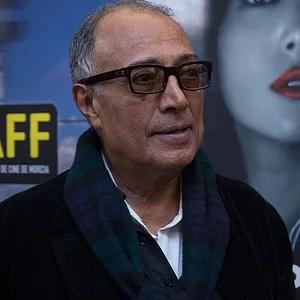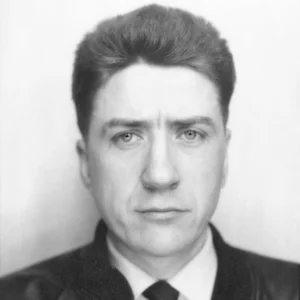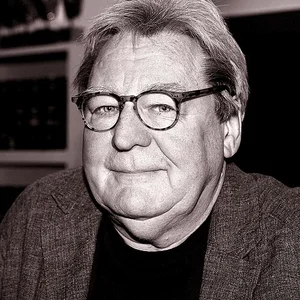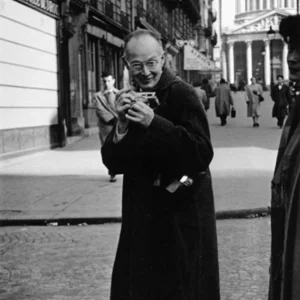

French photographer, regarded as one of the fathers of photojournalism and street photography. Co-founder in 1947 of the Magnum Photos agency, he theorized the notion of the “decisive moment.”
Henri Cartier-Bresson(1908 — 2004)
Henri Cartier-Bresson
France
6 min read
Frequently asked questions
Famous Quotes
« To photograph is to put the head, the eye and the heart on the same line of sight.»
Key Facts
- Born in 1908 in Chanteloup-en-Brie and died in 2004 in Montjustin
- Co-founds the Magnum Photos cooperative agency in 1947 with Robert Capa, David Seymour and George Rodger
- Publishes in 1952 “Images à la sauvette” (The Decisive Moment), whose preface popularizes the notion of the “decisive moment”
- Produces major photo essays (India during Gandhi’s death in 1948, China during the 1949 revolution)
- Favors the 35 mm Leica and black and white, refusing to crop his images
Works & Achievements
Iconic photograph of a man leaping over a puddle, which became the very emblem of the “decisive moment.”
A major book, at once a collection of photographs and a theoretical manifesto in which he defines the “decisive moment.”
Exceptional coverage of Gandhi's death, one of the most important photographic reportages of the 20th century.
A book documenting China at the moment of the Communist victory, a historical testimony of the first order.
A great photographic album offering a portrait of the peoples and landscapes of post-war Europe.
Creation of a cooperative of photographers that guarantees authors control over their images, a model of independent photojournalism.
Anecdotes
As a teenager, Henri Cartier-Bresson dreamed of becoming a painter and studied under André Lhote. It was only around 1932, after discovering the small Leica camera, that he switched permanently to photography, keeping the eye of a draftsman all his life.
In 1947, he was believed to be dead! The Museum of Modern Art in New York was preparing a “posthumous” exhibition of his photographs, thinking he had perished during the war. Very much alive, Cartier-Bresson returned from the United States to take part in the hanging himself.
During the Second World War, he was taken prisoner by the Germans in 1940 and spent nearly three years in labor camps. He escaped on his third attempt in 1943 and joined the Resistance, where he notably photographed the liberation of Paris.
Cartier-Bresson was so concerned with discretion that he covered the shiny parts of his Leica with black tape so as not to be spotted. He also refused to use flash, which he considered crude, “like a gunshot” in the middle of a concert.
He hated being photographed and often hid his face. Once he became world-famous, this allowed him to keep working in the street without being recognized, true to his belief that the photographer must make himself invisible.
Primary Sources
There is nothing in this world that does not have a decisive moment. To take a photograph is to recognize, in the same instant and in a fraction of a second, both a fact and the rigorous organization of visually perceived forms that express and give meaning to that fact.
For me, the camera is a sketchbook, the instrument of intuition and spontaneity.
To photograph is to put on the same line of sight the head, the eye, and the heart.
Key Places
Village in Seine-et-Marne where Henri Cartier-Bresson was born in 1908 into a well-off family of textile industrialists.
City where he studied painting, developed street photography, and where the Henri Cartier-Bresson Foundation would be created. The center of his artistic life and of the Magnum agency.
City where Magnum Photos has one of its two founding headquarters and where the MoMA has devoted major exhibitions to him.
Here he photographed the final moments of Gandhi and his funeral in 1948, one of his great reportages.
Village in the Alpes-de-Haute-Provence where he retired to draw and where he died in 2004.
Typical Objects

A small film camera, light and quiet, that made it possible to take photographs discreetly in the street. It is the emblematic tool of Cartier-Bresson, who described it as an “extension of his eye.”

A standard lens he favored because its field of view is close to that of the human eye. He used it almost exclusively throughout his career, refusing telephoto lenses.

35 mm film onto which the image was recorded before the digital era. Cartier-Bresson worked almost always in black and white and entrusted his prints to expert laboratories.

Trained as a painter, he drew constantly and returned to drawing at the end of his life. He compared his camera to a “sketchbook” of the moment.

He covered the shiny chrome parts of his Leica with black tape to stay invisible. This discretion was essential to his practice of street photography.

A print on baryta paper made in the darkroom from the negative. It is the final form exhibited in galleries and published in books and the press.
School Curriculum
Vocabulary & Tags
Key Vocabulary
Daily Life
Morning
An early riser, Cartier-Bresson loved to roam the streets at first light, when the light is soft and the city still quiet. With his Leica around his neck, he walked for a long time observing passers-by, ready to capture the moment.
Afternoon
The afternoon was often spent walking some more, on the lookout for street scenes, geometries, and glances. During his assignments abroad, he could spend entire days patiently waiting for the right moment.
Evening
In the evening, he would meet up with artist, writer, and photographer friends to discuss art and politics. He also devoted time to sorting his negatives and preparing his reportages, but left the printing to trusted darkroom technicians.
Food
Born into a bourgeois family, he appreciated French cuisine but led a sober life, entirely devoted to his work. On assignment, he gladly shared the simple meals of the people he photographed, from Mexico to India.
Clothing
He dressed plainly, in discreet, neutral clothes that helped him blend into the crowd. This understated dress was part of his method: never to draw attention, the better to photograph life as it spontaneously unfolded.
Housing
He lived mostly in Paris, where he had his studio, and retired to a Provençal house in Montjustin at the end of his life. A tireless traveller, he also spent long stretches abroad, in India, China, or the United States.
Historical Timeline
Period Vocabulary
Liens externes & ressources
Références
Œuvres
Derrière la gare Saint-Lazare
1932
Images à la sauvette
1952
Reportage sur les funérailles de Gandhi
1948
D'une Chine à l'autre
1954
Les Européens
1955