Character Catalog

Historical Library

CollectionGalaxy
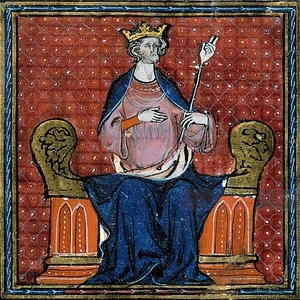
Portrait de Hugh Capet

Hugh Capet

Hugh Capet

940 — 996

royaume des Francs, royaume de France

PoliticsMonarquePolitiqueMiddle Ages10th century (late central Middle Ages)

Hugh Capet (940–996) was a French nobleman who founded the Capetian dynasty by becoming King of the Franks in 987. He brought an end to the Carolingian dynasty and established a new royal lineage from which all kings of France would descend until the Revolution.

Émotions disponibles (6)

N

Neutre

par défaut

I

Inspiré

P

Pensif

S

Surpris

T

Triste

F

Fier

Key Facts

  • 987: Elected King of the Franks at Noyon, ending the Carolingian dynasty
  • 987–996: Reign marked by the establishment of royal authority in the ĂŽle-de-France region
  • Founded the Capetian dynasty, which would rule France for 800 years
  • Associated his son Robert II with the throne (996) to secure the succession
  • Consolidated royal power despite the weakening of central authority brought about by feudalism

Works & Achievements

Foundation of the Capetian dynasty (987)

By having himself elected and crowned king of the Franks in 987, Hugh Capet founded the dynasty that would bear his name and reign over France until 1792. All kings of France are his direct descendants.

Coronation and association of his son Robert II (987)

Hugh Capet introduced the innovation of having his son Robert crowned during his own lifetime, thereby securing the hereditary transmission of the throne. This practice would be repeated by his successors and guaranteed the stability of the dynasty for three centuries.

Support for the Peace of God movement (989)

Hugh Capet actively supported the Peace of God councils (Charroux, 989), which aimed to limit feudal violence and protect clergy, peasants, and merchants. This movement was one of the first institutional efforts to pacify medieval society.

Alliance with the Church and reform of the episcopate (987-996)

Throughout his reign, Hugh Capet relied on the Church as a pillar of his power, confirming the privileges of abbeys and bishoprics. This policy of cooperation with the clergy was essential to legitimise the new dynasty against Carolingian claims.

Consolidation of the royal domain in ĂŽle-de-France (987-996)

Hugh Capet worked to strengthen royal authority over his direct domain centred on Paris, Senlis, Orléans, and Étampes. This modest but solid territorial base would be the foundation upon which his successors built the kingdom of France.

Anecdotes

In 987, upon the death of the Carolingian king Louis V, Hugh Capet was elected king of the Franks by an assembly of great lords and bishops gathered at Senlis. This election put an end to the long Carolingian dynasty and opened a new era for France. The choice was partly backed by Adalberon, Archbishop of Reims, who preferred a king capable of governing over a Carolingian child.

Hugh Capet was consecrated king at Noyon in July 987 by Archbishop Adalberon of Reims. To secure the continuity of his lineage, he had the shrewd idea of having his son Robert consecrated during his own lifetime, also in 987, thereby inaugurating the practice of crowning the eldest son while the father was still alive — a custom that guaranteed the transmission of the throne for more than three centuries.

The nickname 'Capet' given to Hugh remains a subject of debate among historians: it may derive from the Latin word 'capa' meaning a cape or cloak, in reference to the relic of the cloak of Saint Martin of Tours, of which his ancestors were the lay guardians. This nickname was only used after his death to designate his dynasty.

Hugh Capet was Count of Paris and Duke of the Franks before becoming king, which already granted him immense territorial power in the ĂŽle-de-France region. Yet as king, his actual authority remained limited: many great lords such as the Duke of Normandy or the Count of Anjou were nearly as powerful as he was, illustrating the feudal fragmentation of the kingdom.

Primary Sources

Letters of Gerbert of Aurillac (future Pope Sylvester II) (v. 987-989)
Gerbert, adviser to Hugh Capet and Archbishop of Reims, recounts in his letters the circumstances of the election of 987 and the first acts of the new king. He describes Hugh as an energetic prince concerned with maintaining peace in the kingdom.
Chronicle of Richer of Reims (Historia) (v. 991-998)
Richer, a monk of Saint-Remi of Reims and contemporary of the events, writes: 'Hugh, Duke of the Franks, was elected king by the unanimous consent of the bishops and great lords of the kingdom, and consecrated at Noyon by Archbishop Adalberon.'
Royal Charters of Hugh Capet (987-996)
The charters preserved in the national archives show Hugh Capet confirming donations to abbeys, notably to Saint-Denis and Fleury-sur-Loire, asserting his role as protector of the Church and guardian of the Frankish royal tradition.
Chronicle of Flodoard of Reims (Annals) (v. 919-966)
Flodoard, a canon of Reims, reports on the power struggles among the great Carolingian and Robertian lords in the decades preceding 987, shedding light on the rise to power of Hugh Capet's family.

Key Places

Noyon (Oise)

It was in Noyon that the coronation of Hugh Capet was celebrated in July 987, by Archbishop Adalberon of Reims. This cathedral of ancient Neustria was a powerful symbolic site for Frankish royalty.

Paris (ĂŽle-de-France)

Hugh Capet was Count of Paris before becoming king, and it was in this city that he died in 996. Paris was the heart of his royal domain and would become the capital of the Kingdom of France under his successors.

Senlis (Oise)

It was in Senlis that the assembly of great lords and bishops met in 987 and elected Hugh Capet King of the Franks, bringing the Carolingian dynasty to an end.

Tours and the Basilica of Saint-Martin

The Robertian family, ancestors of Hugh Capet, served as lay abbot of Saint-Martin of Tours and custodians of the saint's cloak. This connection to the most venerated shrine in Gaul granted them immense prestige.

Reims (Marne)

The seat of the archbishopric and the traditional site of the coronation of Frankish kings, Reims was at the heart of the political intrigues of Hugh Capet's reign, notably during the dispute over the archbishopric and the role of Gerbert of Aurillac.

Typical Objects

The Frankish royal crown

At his coronation in Noyon in 987, Hugh Capet received a crown symbolizing his kingship. The crown was the visible sign of divine anointing and royal power, worn during great religious and political ceremonies.

The ceremonial sword

The sword was among the royal regalia presented at the coronation, symbolizing the king's role as protector of Christendom and warlord. Hugh Capet, even before becoming king, was a warrior lord who had fought the Normans and the great feudal lords.

The scepter and the Hand of Justice

These two royal attributes were presented to the king at the coronation: the scepter symbolized temporal power, and the Hand of Justice symbolized the sovereign's equity. They were part of the Carolingian royal treasure that Hugh Capet symbolically inherited.

The cope of Saint Martin

Hugh Capet's ancestors were lay guardians of the relic of the cope of Saint Martin of Tours, one of the most venerated saints in Gaul. This prestigious charge is said to have given the family its surname 'Capet', and conferred considerable religious prestige.

The parchment and royal seal

Royal diplomas, written on parchment and sealed with Hugh Capet's seal, were used to formalize donations, confirmations of privileges, and political decisions. These documents are the main direct traces of his reign preserved to this day.

The hauberk (chainmail coat)

As a feudal lord and king, Hugh Capet wore chainmail armor during military expeditions. War and mounted campaigns were at the heart of the lifestyle of the great lords of the 10th century.

School Curriculum

Cycle 3 (CM1-6e)Histoire
Cycle 3 (CM1-6e)Histoire — La féodalité au Moyen Âge
Cycle 3 (CM1-6e)Histoire — Les débuts de la monarchie capétienne
Cycle 3 (CM1-6e)Histoire — Les grandes dynasties royales françaises
Cycle 3 (CM1-6e)Histoire — Le pouvoir royal au Xe siècle
Cycle 3 (CM1-6e)Histoire — La transition du haut Moyen Âge au Moyen Âge central

Vocabulary & Tags

Key Vocabulary

dynastyfeudalismKing of the Franksroyal successionlordshipvassalsuzeraintyroyal legitimacy

Tags

Hugues Capetdynastieféodalitéroi des Francssuccession royaleseigneurievassalsuzeraintélégitimité royaleXe siècle (fin du Moyen Âge central)

Daily Life

Morning

Hugues Capet begins his day with the offices of Matins and Lauds, assisted by the court chaplains. After prayer, he receives reports from his seneschals and discusses the affairs of the royal domain with his close advisors.

Afternoon

The afternoon is devoted to royal audiences, hunting in the forests of Île-de-France — an activity that is both aristocratic and strategic — and occasional military expeditions to maintain order in the domain. He may also preside over pleas, judicial assemblies where he dispenses justice.

Evening

In the evening, Hugues Capet feasts in the great hall with his vassals and clerks, around an abundant meal served by the court officers. Jesters or clerks would entertain the assembly; the evening ends with Vespers and Compline before rest.

Food

The royal table is rich in roasted meats (game, pork, poultry) and fish on the lean days prescribed by the Church. Wheat bread, vegetables, seasonal fruits are consumed, and large quantities of wine and cervoise (barley beer) are drunk. Spices such as pepper and cinnamon, imported from the East, are a sign of prestige.

Clothing

Hugues Capet wears a long tunic of wool or fine linen, topped by a purple or scarlet royal mantle clasped at the shoulder. During ceremonies, he dons the royal regalia: crown, dalmatic, embroidered shoes. On campaign, he puts on a mail hauberk and a conical iron helmet.

Housing

Hugues Capet resides primarily in fortified palaces in Paris, Senlis, and Orléans, inherited from the Carolingian era. These stone buildings include a large ceremonial hall, a royal chapel, chambers, and outbuildings for the court. Comfort is rudimentary compared to later centuries: heating comes from a central hearth and sleeping is done in canopied beds hung with curtains.

Historical Timeline

888Eudes, ancêtre d'Hugues Capet, est élu roi des Francs, première fois qu'un non-carolingien accède au trône.
936Louis IV d'Outremer, carolingien, reprend le trĂ´ne ; les robertiens restent ducs des Francs puissants.
940Naissance d'Hugues Capet, fils d'Hugues le Grand, duc des Francs et comte de Paris.
956Mort d'Hugues le Grand : Hugues hérite du titre de duc des Francs et devient l'homme le plus puissant du royaume après le roi.
978Le roi carolingien Lothaire attaque Aix-la-Chapelle, ravivant les tensions avec l'empire germanique ; Hugues Capet reste en retrait.
986Mort du roi Lothaire ; son fils Louis V lui succède mais meurt sans héritier en 987 après moins d'un an de règne.
987Assemblée de Senlis : les grands du royaume élisent Hugues Capet roi des Francs, mettant fin à la dynastie carolingienne.
987Sacre d'Hugues Capet Ă  Noyon, puis association au trĂ´ne de son fils Robert (futur Robert II le Pieux).
989Concile de Charroux : début du mouvement de la Paix de Dieu, soutenu par Hugues Capet, visant à protéger les clercs et les paysans des violences féodales.
991Arnoul, archevêque de Reims, est déposé au concile de Saint-Basle ; Gerbert d'Aurillac lui succède, illustrant les tensions entre Hugues Capet, le pape et les prélats.
993Hugues Capet mène une expédition militaire en Bourgogne pour affirmer son autorité sur des vassaux récalcitrants.
996Mort d'Hugues Capet à Paris ; son fils Robert II lui succède, assurant la continuité de la nouvelle dynastie capétienne.

Period Vocabulary

Coronation — Religious ceremony during which a king receives the anointing of holy oil and the royal insignia from the hands of a bishop or archbishop. The coronation grants the king a quasi-sacred dimension and legitimizes his power before God and men.
Duke of the Franks — Title held by Hugh Capet before his royal election. The Duke of the Franks was the most powerful vassal of the Carolingian king, tasked with commanding the armies and defending the kingdom, particularly against Norman incursions.
Placitum — Judicial or political assembly gathering the king and his great vassals to render justice, make important decisions, or settle disputes. The placitum is the forerunner of medieval royal councils.
Fief — Land granted by a lord to a vassal in exchange for an oath of loyalty and military service. The feudal system rests on this exchange of land for loyalty and armed service.
Peace of God — Religious and social movement born at the end of the 10th century that forbade, under pain of excommunication, attacking clerics, peasants, women, and merchants. The Peace of God councils, supported by Hugh Capet, sought to limit the violence of feudal society.
Robertians — Name given to Hugh Capet's family before they were called Capetians, after their ancestor Robert the Strong. The Robertians established themselves as the principal family rivaling the Carolingians for the throne of France during the 9th and 10th centuries.
Unction — Ritual gesture consisting of anointing the king with holy oil (the holy chrism) during the coronation. The royal unction symbolizes the divine favor granted to the sovereign and sets him apart from all other men.
Royal Diploma (diploma) — Official document issued by the royal chancellery, written on parchment and sealed with the king's seal, confirming rights, donations, or political decisions. Hugh Capet's diplomas are the principal direct sources for his reign.
Suzerain — Lord at the apex of the feudal hierarchy, upon whom all other vassals theoretically depend. The king is the supreme suzerain, but in the 10th century his authority over the great lords was often purely nominal.
Elective Crown — In the 10th century, Frankish kingship was not yet fully hereditary: the king was elected by the great men of the kingdom (lords and bishops). Hugh Capet was elected in 987; it was he who progressively established hereditary succession by having his son crowned during his own lifetime.

Gallery


Hugh Capetlabel QS:Lfr,"Hugues Capet, roi de France (942-996)"label QS:Len,"Hugh Capet"

Hugh Capetlabel QS:Lfr,"Hugues Capet, roi de France (942-996)"label QS:Len,"Hugh Capet"


Hugh Capetlabel QS:Lfr,"Hugues Capet, roi de France (942-996)"label QS:Len,"Hugh Capet"

Hugh Capetlabel QS:Lfr,"Hugues Capet, roi de France (942-996)"label QS:Len,"Hugh Capet"

Joseph Anton Koch, purgatorio, 1825-28, 12

Joseph Anton Koch, purgatorio, 1825-28, 12


French:  Hugues Capet, roi de France (942-996)King Hugh of Francetitle QS:P1476,fr:"Hugues Capet, roi de France (942-996)"label QS:Lfr,"Hugues Capet, roi de France (942-996)"label QS:Len,"King Hugh o

French: Hugues Capet, roi de France (942-996)King Hugh of Francetitle QS:P1476,fr:"Hugues Capet, roi de France (942-996)"label QS:Lfr,"Hugues Capet, roi de France (942-996)"label QS:Len,"King Hugh o

Pietro Nocchi - La visione di Ugo Capeto

Pietro Nocchi - La visione di Ugo Capeto

Hugues Capet

Hugues Capet


Cabinet des singularitez dárchitecture, peinture, sculpture, et graveure : ou, Introduction a la connoissance des plus beaux arts, figurés sous les tableaux, les statuës, & les estampes

Cabinet des singularitez dárchitecture, peinture, sculpture, et graveure : ou, Introduction a la connoissance des plus beaux arts, figurés sous les tableaux, les statuës, & les estampes


Description historique et chronologique des monumens de sculpture, réunis au Musée des monumens français;

Description historique et chronologique des monumens de sculpture, réunis au Musée des monumens français;


La sculpture française depuis le XIVe [i.e. quatorzième] siècle

La sculpture française depuis le XIVe [i.e. quatorzième] siècle


Notice des peintures et des sculptures du Palais de Versailles

Notice des peintures et des sculptures du Palais de Versailles

Visual Style

Style inspiré des enluminures carolingiennes et du début de l'art roman : fonds dorés, figures stylisées aux couleurs vives, architecture à arcs en plein cintre et insignes royaux richement ornés.

#1A3A6B
#C0392B
#2D6A27
#C9A84C
#4A1A6B
AI Prompt
Carolingian and early Capetian illuminated manuscript style, late 10th century France. Flat figures with expressive faces, rich gold leaf backgrounds, bold outlines in black ink, Byzantine-influenced iconography. Colors of deep blue lapis lazuli, vermillion red, forest green, and burnished gold. Romanesque architectural elements in the background: rounded arches, thick stone columns. Royal regalia prominently featured: crown, scepter, royal mantle in deep purple. Style references the Winchester School of illumination and the Reims school of Carolingian art.

Sound Ambience

L'ambiance sonore évoque la cour royale et le château fort du Xe siècle : cloches d'église, chants liturgiques, bruit des armures et des chevaux, discussions de conseillers et grattements de plumes sur parchemin.

AI Prompt
Medieval France, late 10th century, royal court atmosphere. Sounds of a stone castle or fortified manor: crackling firewood in a great hall, the clinking of iron armor, horseshoes on cobblestones, distant church bells ringing for canonical hours, Latin chanting from monks in prayer, quill scratching on parchment, occasional fanfare of horns announcing a royal procession, murmur of counselors discussing around a table, wind through narrow arrow slits, and the distant sound of blacksmiths forging weapons in the courtyard.

Portrait Source

Wikimedia Commons — domaine public