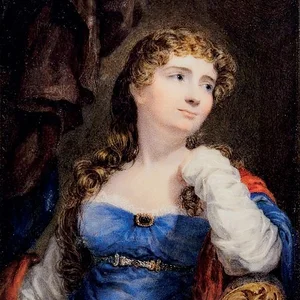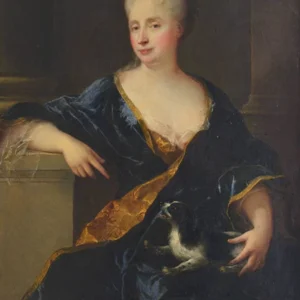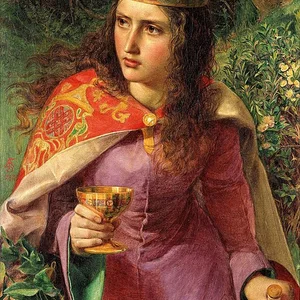

Duchess of Aquitaine and Countess of Poitou, Eleanor of Aquitaine (1124–1204) was Queen of France through her marriage to Louis VII, then Queen of England after her union with Henry II Plantagenet. A towering figure of the Middle Ages, she wielded considerable political influence and was the mother of several kings of England.
Frequently asked questions
Key Facts
- 1137: Marriage to Louis VII of France; becomes Queen of France and brings the Duchy of Aquitaine to the French crown
- 1152: Annulment of her marriage to Louis VII; remarried weeks later to Henry II Plantagenet, becomes Queen of England
- 1147–1149: Participation in the Second Crusade alongside her husband Louis VII
- 1173: Revolt against her husband Henry II alongside her sons; imprisoned for sixteen years
- 1189–1204: Period of increased influence during the reigns of her sons Richard the Lionheart and John Lackland
Works & Achievements
Marriage that made Eleanor Queen of France and united Aquitaine with the French crown. This union considerably strengthened royal French power by bringing the vast territories of Aquitaine.
Remarriage that made Eleanor Queen of England and created the Plantagenet empire. This union reshaped medieval geopolitics by uniting England, Normandy, and Aquitaine under a single reign.
Eleanor actively participated in this military expedition alongside her first husband Louis VII. She embodied the role of great noble ladies in the religious and military affairs of the Middle Ages.
Eleanor supported the revolt of her sons against King Henry II, which earned her a long captivity. This major action illustrates her political power and influence over English royal successions.
After the death of Henry II, Eleanor exercised major political influence during the reigns of Richard the Lionheart and John Lackland. She ensured the cohesion of the kingdom and protected the Plantagenet legacy until her death.
Eleanor patronized troubadours and courtly literature, particularly at the court of Poitiers. She fostered the emergence of Occitan culture and contributed to the development of medieval romance literature.
Throughout her reign, Eleanor preserved Aquitaine as a distinct and important possession, despite political pressures. She ensured that her territories remained a major center of power in the West.
Anecdotes
Eleanor of Aquitaine was one of the most powerful women of the Middle Ages: as Duchess of Aquitaine, she controlled territories larger than those of the King of France himself. At 15, she married the future King Louis VII, becoming Queen of France, before divorcing and remarrying Henry II of Anjou, who became King of England, making her Queen of England at 32.
Eleanor of Aquitaine participated in the Second Crusade alongside her first husband Louis VII in 1147. According to the chronicles of the time, she reportedly even donned warrior's armor and considered fighting on the front lines, which scandalized her contemporaries and contributed to her reputation as an extraordinary woman.
Imprisoned for 16 years by her son King John of England, Eleanor was not discouraged. She escaped from her prison and continued to exert political influence until her death at the age of 80, an exceptional age for the time, demonstrating her legendary determination and vitality.
Eleanor of Aquitaine supported the revolt of her sons against their father Henry II in 1173, a spectacular act of political betrayal that weakened the Plantagenet kingdom. This event shows that she did not hesitate to intervene directly in affairs of state and to defy male authority, even that of her own husband.
Eleanor of Aquitaine's court at Poitiers was a brilliant cultural center where courtly poetry and troubadour music flourished in the 12th century. She encouraged the arts and letters, making her court an intellectual model for all of medieval Europe, establishing her as a pioneering patron of the medieval cultural Renaissance.
Primary Sources
Queen Eleanor, wife of King Henry, was of great wisdom and remarkable nobility. She governed the lands of Aquitaine with prudence and exercised considerable influence over the affairs of the kingdom.
Eleanor of Aquitaine, Duchess of Guyenne and Normandy, wife of King Henry II, was renowned for her political intelligence and her ability to govern her vast domains.
By the grace of God and of our dear wife Queen Eleanor, we confirm the privileges of the Duchess of Aquitaine over her lands and possessions.
Duchess Eleanor, wife of King Louis and mother of powerful princes, played a role of the utmost importance in the great events of her time.
Key Places
Capital of Aquitaine, birthplace of Eleanor in 1124. She inherited the Duchy of Aquitaine and its vast territories, making her one of the greatest heiresses in France.
Capital of Poitou, of which Eleanor was countess. She resided there regularly and exercised her political power in this strategic region of southwestern France.
Founded in 1101 in Anjou, this abbey became the seat of the Plantagenet dynasty. Eleanor was buried there in 1204 after spending her final years as a nun.
Royal residence in Normandy where Eleanor was imprisoned for approximately 16 years (1173–1189) by her husband Henry II following her revolt alongside her sons.
Capital of England where Eleanor exercised her influence after her marriage to Henry II Plantagenet in 1152. She was recognized there as queen and mother of future kings Richard and John.
City in the Levant where Eleanor stayed during the Second Crusade (1147–1149) alongside her first husband Louis VII, before their divorce and her remarriage.
Typical Objects
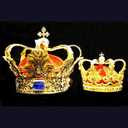
Symbol of absolute power worn by Eleanor during her two successive marriages. She bore the crown of France alongside Louis VII, then that of England with Henry II Plantagenet, embodying her status as queen in two major kingdoms.
📷 CC BY-SA 2.0 · Wikimedia Commons ↗
Eleanor's official instrument as Duchess of Aquitaine and Countess of Poitou. The seal authenticated her documents and decrees, attesting to her political and administrative authority over her vast domains.
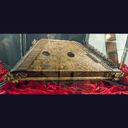
Eleanor was a great patron of the arts and literature, commissioning illuminated manuscripts and patronizing troubadours. These decorated manuscripts reflect the splendor of her court and her role in transmitting courtly culture.

Symbol of her two major political marriages: first to Louis VII of France in 1137, then to Henry II Plantagenet in 1152. These unions transformed the political balance of the medieval West.
📷 Domaine public · Wikimedia Commons ↗
Military equipment representative of the feudal wars of the 12th century. Eleanor herself led troops and took part in major political conflicts, including the revolt against her son Richard the Lionheart.
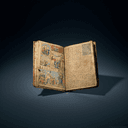
A devotional object characteristic of the medieval period, richly illuminated for nobles. Eleanor, a woman of faith, owned precious psalters reflecting her status and courtly piety.
📷 CC BY-SA 4.0 · Wikimedia Commons ↗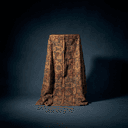
A symbol of wealth and social status, tapestries adorned Eleanor's castles. They decorated her prestigious residences in Aquitaine, Poitou, and England, testifying to her economic power.
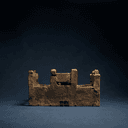
Impressive architectural complexes such as Poitiers and Rouen serving as residences and administrative centers. These castles embodied Eleanor's territorial power and her ability to control strategic regions.
School Curriculum
Vocabulary & Tags
Key Vocabulary
Tags
Mouvement
Daily Life
Morning
Eleanor wakes in her private chambers in a castle or royal palace, assisted by her ladies-in-waiting who help her with her toilette and dressing. She attends Mass in the castle chapel, a major religious obligation for a 12th-century queen. After this moment of devotion, she receives her advisors and manages the administrative affairs of her domains.
Afternoon
Eleanor devotes part of the afternoon to formal audiences, receiving petitioners and vassals to address matters of justice and governance. She is involved in political decisions concerning her territories (Aquitaine and Poitou) and may take part in diplomatic negotiations. She also dedicates time to the arts and culture, patronizing troubadours and poets, which reinforces her reputation as a great patron.
Evening
In the evening, Eleanor presides over the festive meal in the great hall of the castle, seated beside the king or in a place of honor. The table is a space of power where she forges alliances, influences political decisions, and asserts her status. After dinner, she may take part in entertainments: music, poetry, and courtly songs performed by the troubadours of her court.
Food
Eleanor enjoys a high-quality diet: roasted meats (venison, pork, poultry), fish during Lent, fine wheat bread, and seasonal fruits and grapes. Royal feasts include spiced sauces and sweets. She drinks superior-quality wine, a precious and prestigious resource at that time, and has access to filtered water rather than common tap water.
Clothing
Eleanor wears the sumptuous garments of a great feudal lady: long robes in silks and precious fabrics, often purple or crimson, adorned with embroidery and pearls. She wears veils, gold chaplets, jewels, and crowns on solemn occasions. Her appearance reflects her exceptional power and wealth in an era when clothing signals social status.
Housing
Eleanor resides in royal castles and seigneurial strongholds: the Palais de la Cité in Paris, Windsor or Nottingham in England, and her castles in Aquitaine. These fortified residences feature towers, thick walls, and vaulted halls; she has private apartments heated by fireplaces, a private chapel, and spaces dedicated to governance. Her living environment reflects relative luxury for the era, with tapestries, furnishings, and numerous servants.
Historical Timeline
Period Vocabulary
Visual Style
Un style inspiré des manuscrits illuminés du XIIe siècle, combinant la richesse des enluminures médiévales avec une palette somptueuse de or, pourpre et bleu royal. L'ambiance évoque la cour féodale, la puissance politique et l'élégance aristocratique de l'époque des Plantagenêts et des Capétiens.
Sound Ambience
Une ambiance sonore de cour royale médiévale mêlant l'élégance courtoise des XIIe-XIIIe siècles avec les murmures de pouvoir et d'intrigue politique. Les sons évoquent la grandeur des châteaux d'Aquitaine et d'Angleterre, ponctuée par la musique raffinée des troubadours et les bruits quotidiens d'une cour ducale influente.
Liens externes & ressources
Références
Œuvres
Union avec Louis VII de France
1137
Union avec Henri II Plantagenêt
1152
Participation à la deuxième croisade
1147-1149
Révolte contre Henri II
1173
Régence et influence politique
1189-1204
Mécénat culturel et littéraire
1150-1190
Maintien de l'intégrité territoriale aquitaine
1170-1204