 flip
flipGrautr — barley porridge with honey and wild berries
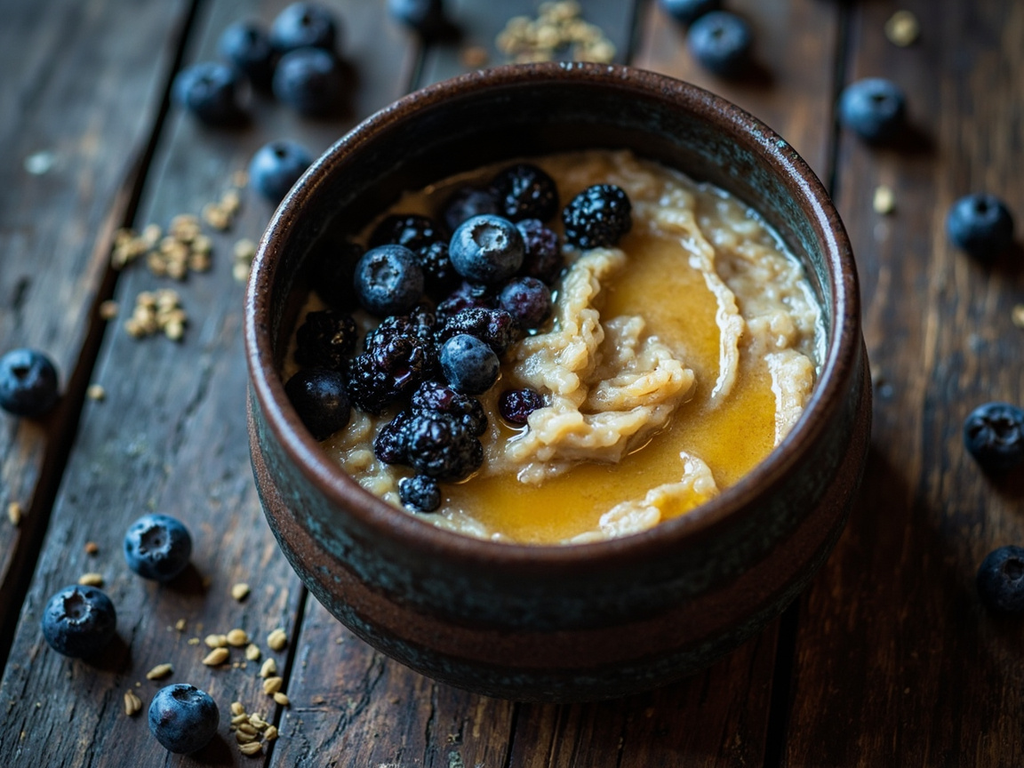
Grautr — barley porridge with honey and wild berries
Why this dish? Idunn is the goddess of youth and natural renewal; her profile says she is nourished by wild berries from the forests of Asgard, milk, honey, and barley bread. This warm morning porridge brings together exactly those simple foods that, in the Norse imagination, sustain the body's vitality.
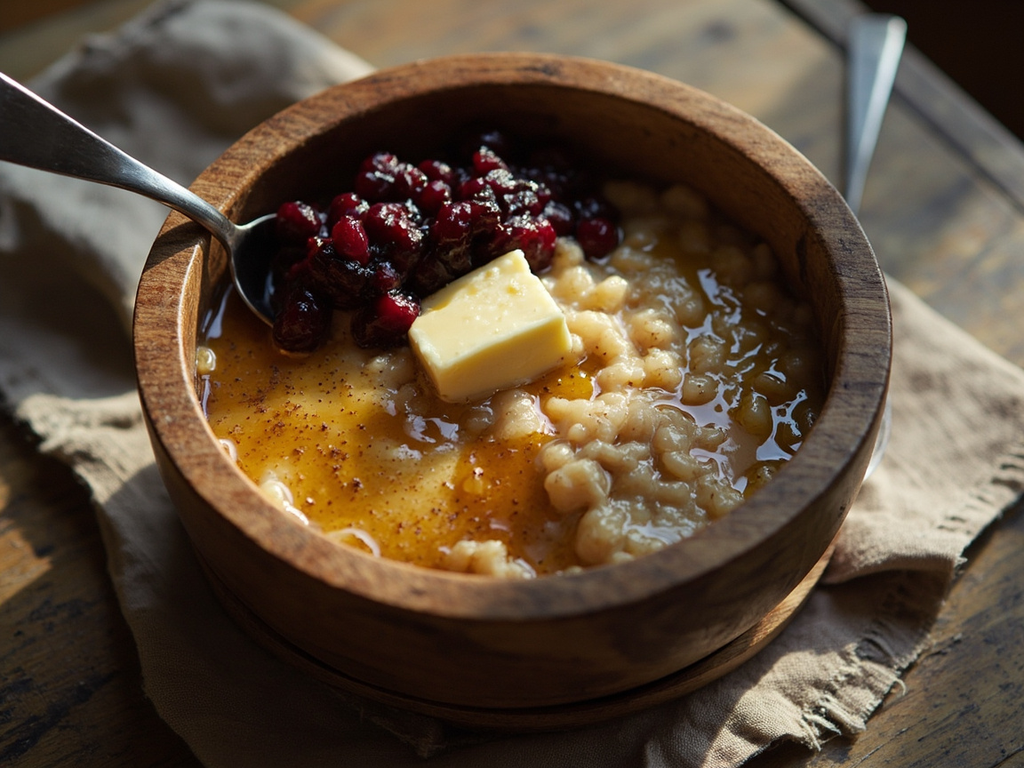
A barley porridge cooked long in milk, smoothed with honey and crowned with blueberries and lingonberries. Comforting, barely sweet, tangy with forest berries—the true satisfying breakfast of northern farms.
Draw near the fire, traveler, and hold out your wooden bowl. At daybreak I stir the barley in the milk until it softens, slow as the patience that ripens a fruit. I pour in the honey from my Asgard hives, and scatter above the little blue berries gathered beneath the ash trees. Eat warm: what the earth gives in the morning, it returns as strength for the whole day.
- •Hulled barley — two handfuls (staple starch)
- •Fresh milk (cow or goat) — enough to cover (cooking liquid)
- •Wild honey — a horn spoonful (sweetness, signature)
- •Wild blueberries and lingonberries — a handful (tangy topping)
- •Butter — a knob (richness)
- •Salt — a pinch (seasoning)
Grautr — barley porridge with honey and wild berries
A barley porridge cooked long in milk, smoothed with honey and crowned with blueberries and lingonberries. Comforting, barely sweet, tangy with forest berries—the true satisfying breakfast of northern farms.
Why this dish? Idunn is the goddess of youth and natural renewal; her profile says she is nourished by wild berries from the forests of Asgard, milk, honey, and barley bread. This warm morning porridge brings together exactly those simple foods that, in the Norse imagination, sustain the body's vitality.
Draw near the fire, traveler, and hold out your wooden bowl. At daybreak I stir the barley in the milk until it softens, slow as the patience that ripens a fruit. I pour in the honey from my Asgard hives, and scatter above the little blue berries gathered beneath the ash trees. Eat warm: what the earth gives in the morning, it returns as strength for the whole day.
Ingredients (period version)
- Hulled barley — two handfuls (staple starch)
- Fresh milk (cow or goat) — enough to cover (cooking liquid)
- Wild honey — a horn spoonful (sweetness, signature)
- Wild blueberries and lingonberries — a handful (tangy topping)
- Butter — a knob (richness)
- Salt — a pinch (seasoning)
Ingredients
- Pearl barley — 150 g (staple starch)
- Whole milk — 600 ml (cooking liquid)
- Water — 300 ml (cooking relief)
- Multifloral honey — 2 tbsp (sweetness, signature)
- Fresh or frozen blueberries — 100 g (topping)
- Lingonberries (or blackcurrants) — 50 g (tangy topping)
- Butter — 15 g (richness)
- Salt — 1 pinch (seasoning)
Method
- Rinse the pearl barley under cold water.
- Place it in a saucepan with the water, milk, and a pinch of salt.
- Bring to a simmer, then reduce heat and cook for 40–45 minutes, stirring often, until the grains are tender and the porridge creamy.
- Remove from heat, stir in the butter and honey.
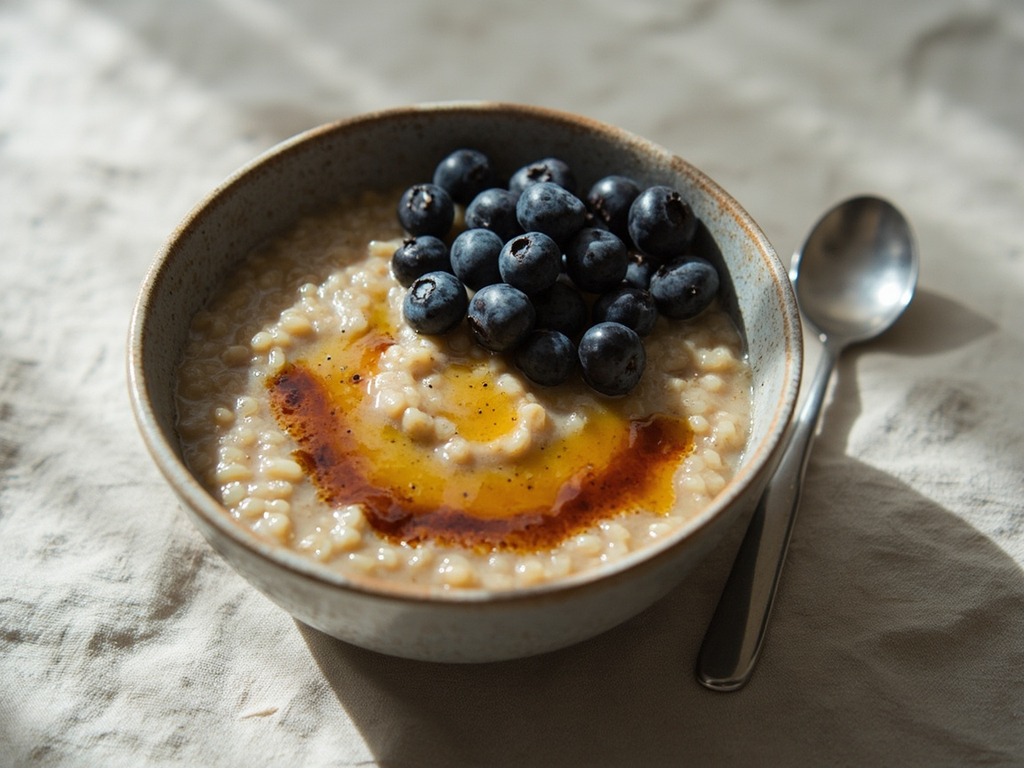
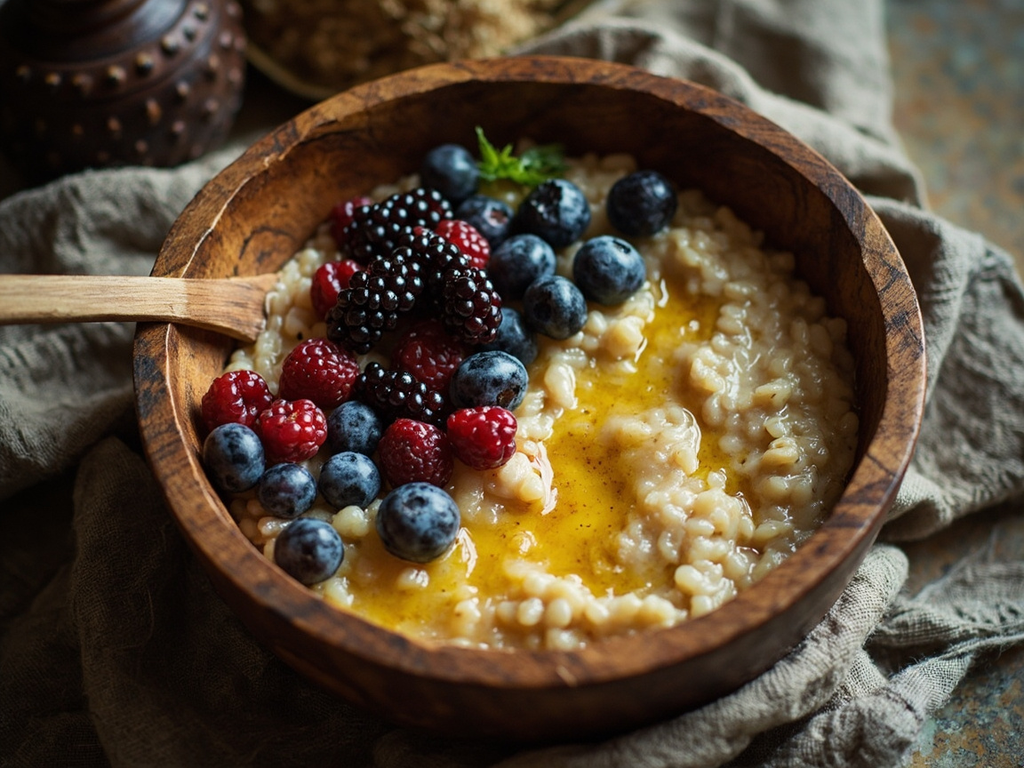
- Pour into bowls, top with blueberries and lingonberries, add a final drizzle of honey, and serve hot.
How it was made : Barley was the queen of cereals in the Viking Age, more reliable than wheat at these latitudes. It was cooked into a thick porridge (grautr) in milk or water, sweetened with honey for lack of sugar, and enlivened by berries that women and children gathered in summer: blueberries, lingonberries, arctic brambles. The whole simmered in an iron or soapstone cauldron suspended over the central hearth.
The contemporary twist : Serve it as an 'Idunn bowl': a spiral of golden honey in the center and a crown of midnight-blue berries, evoking the orchard that guards youth.
Sources : Daniel Serra & Hanna Tunberg, An Early Meal: A Viking Age Cookbook & Culinary Odyssey, 2013 · Snorri Sturluson, Edda (Gylfaginning, Skáldskaparmál)
Idunn · Charactorium