 flip
flipSu-renkon — Vinegared Lotus Root
Su-renkon — Vinegared Lotus Root
Why this dish? Benzaiten often holds a white lotus, symbol of purity rising from muddy water. Its root, renkon, crunches under the tooth and reveals latticed windows when sliced. Prepared with mild vinegar, it is the humble everyday vegetable offering at altars, faithful to the Buddhist vegetarianism (shōjin) that surrounds the goddess.
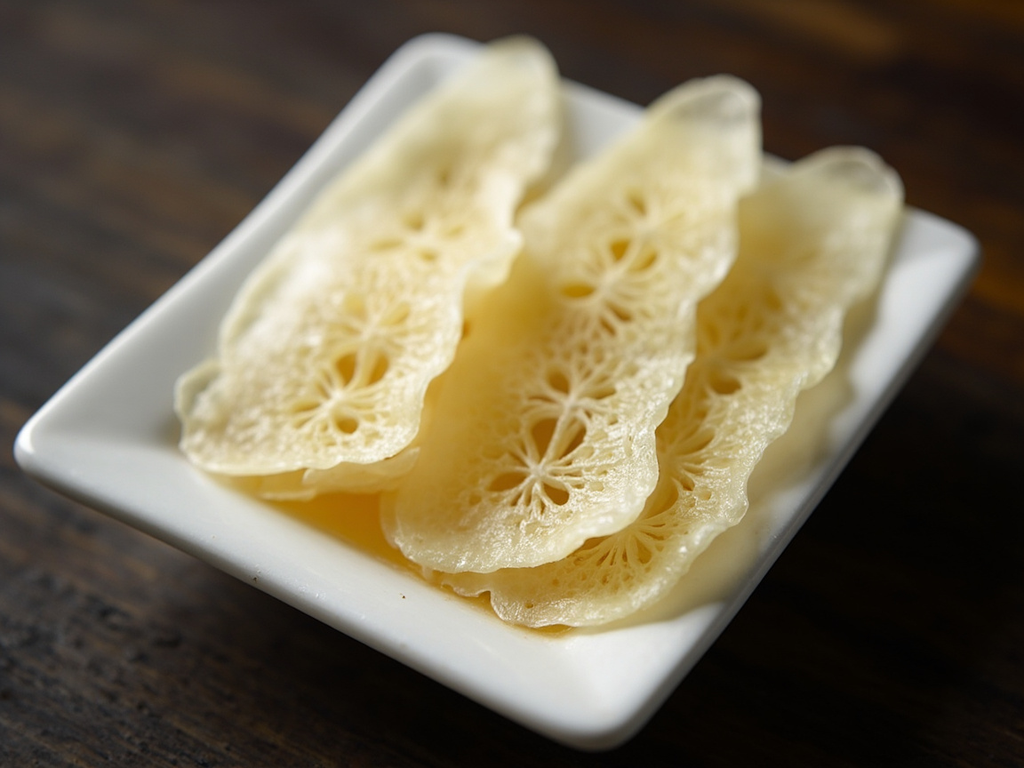
Thin slices of lotus root, blanched to stay white and crunchy, marinated in sweetened vinegar. Fresh, tangy, lightly sweet — the palate-cleansing bite. Each slice draws an openwork flower.
Look at this root pulled from the mud of my ponds: sliced, it opens into so many little windows, and from the mud rises this perfect white — this is what the lotus teaches. My monks, who touch neither flesh nor fish, bathe it in vinegar sweetened with a little syrup. Bite it fresh: the acidity awakens, and the flower you eat is my very emblem.
- •Lotus root (renkon) — one section (flower-vegetable)
- •Vinegar (su) — to cover (marinade, preservation)
- •Amazura syrup or mizuame — a dash (sweetens the acid)
- •Salt — a pinch (balance)
Su-renkon — Vinegared Lotus Root
Thin slices of lotus root, blanched to stay white and crunchy, marinated in sweetened vinegar. Fresh, tangy, lightly sweet — the palate-cleansing bite. Each slice draws an openwork flower.
Why this dish? Benzaiten often holds a white lotus, symbol of purity rising from muddy water. Its root, renkon, crunches under the tooth and reveals latticed windows when sliced. Prepared with mild vinegar, it is the humble everyday vegetable offering at altars, faithful to the Buddhist vegetarianism (shōjin) that surrounds the goddess.
Look at this root pulled from the mud of my ponds: sliced, it opens into so many little windows, and from the mud rises this perfect white — this is what the lotus teaches. My monks, who touch neither flesh nor fish, bathe it in vinegar sweetened with a little syrup. Bite it fresh: the acidity awakens, and the flower you eat is my very emblem.
Ingredients (period version)
- Lotus root (renkon) — one section (flower-vegetable)
- Vinegar (su) — to cover (marinade, preservation)
- Amazura syrup or mizuame — a dash (sweetens the acid)
- Salt — a pinch (balance)
Ingredients
- Fresh lotus root (or frozen) — 200 g (crunchy base)
- Rice vinegar — 4 tbsp (marinade)
- Sugar or mizuame — 2 tbsp (sweetness)
- Salt — 1/2 tsp (balance)
- Water + splash of vinegar — 1 bowl (anti-oxidation bath)
Method
- Peel the renkon and slice thinly (2–3 mm); immediately plunge the slices into vinegar water to keep them white.
- Blanch for 2 min in boiling water with a splash of vinegar, until just crunchy; drain.
- Warm vinegar, sugar, and salt until dissolved; let cool.
- Submerge the slices in the marinade for at least 1 h (better: overnight) in the fridge.
- Serve chilled, like little openwork flowers.
How it was made : Namasu — vegetables or fish in vinegar — is one of the oldest Japanese preparations, mentioned in court texts. Lotus root, grown in ponds, accompanies temple cuisine (shōjin ryōri). Vinegar preserved food before refrigeration.
The contemporary twist : Slip a hint of yuzu into the marinade and arrange the slices in a fan: an edible stained glass that catches light like shrine water.
Sources : Tradition of shōjin ryōri (Buddhist temple cuisine) · Engishiki (延喜式, 927) — seasonal vegetable offerings
Benzaiten · Charactorium