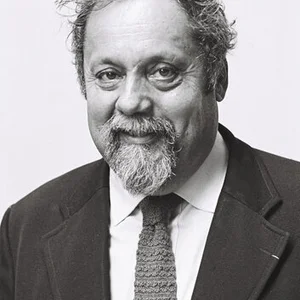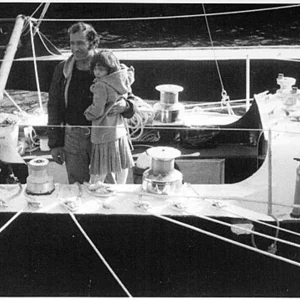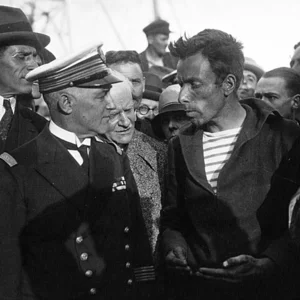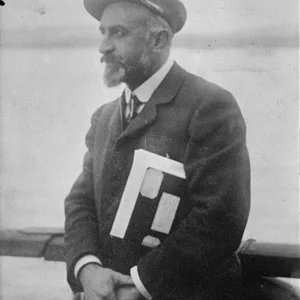

French physician and polar explorer (1867–1936), Jean-Baptiste Charcot led several scientific expeditions to Antarctica aboard the Pourquoi-Pas?. A pioneer in the exploration of the southern regions, he also contributed to oceanographic research.
Jean-Baptiste Charcot(1867 — 1936)
Jean-Baptiste Charcot
France
8 min read
Frequently asked questions
Key Facts
- 1867: Born in Neuilly-sur-Seine, son of neurologist Jean-Martin Charcot
- 1903–1905: First Antarctic expedition aboard the Français
- 1908–1910: Second Antarctic expedition aboard the Pourquoi-Pas?, mapping the coasts of Graham Land
- 1925–1936: Numerous oceanographic campaigns in the North Atlantic and Greenland
- 1936: Died at sea in the sinking of the Pourquoi-Pas? off the coast of Iceland
Works & Achievements
Account of the first French Antarctic expedition (1903–1905), published upon his return. Both scientific and literary in nature, the work introduced the general public to the southern regions and earned Charcot national renown.
Journal of the second expedition (1908–1910), considered his masterpiece. It describes the extreme conditions, geographical discoveries, and scientific collections made during this voyage, which consolidated France's international reputation in polar exploration.
A collective publication bringing together the scientific results of both expeditions: zoology, botany, geology, meteorology, and oceanography. These volumes remain standard references for specialist researchers.
A series of annual missions in the North Arctic that enabled the creation of reference hydrographic charts and the collection of valuable meteorological data for understanding North Atlantic currents.
Charcot personally oversaw the design of this 445-tonne vessel, a true floating laboratory equipped with the most modern scientific instruments of the era, considered the finest polar exploration ship of its time.
Anecdotes
Jean-Baptiste Charcot was the son of the famous neurologist Jean-Martin Charcot, founder of modern neurology. Yet despite a brilliant medical education, he abandoned hospital medicine to answer the call of the sea. His father, before dying in 1893, had come to understand that his son belonged to the oceans more than to the lecture halls.
The name of his most celebrated ship, the *Pourquoi-Pas ?* — meaning "Why Not?" — was no accident: it was the motto Charcot had chosen for himself in the face of every challenge life brought him. When asked whether it was reasonable to set out for Antarctica again despite the dangers, he would invariably reply: 'Why not?'
During his first Antarctic expedition (1903–1905) aboard the *Français*, the ship ran aground on a reef off the Antarctic Peninsula. Rather than abandon the mission, Charcot and his crew patched the vessel as best they could and continued their scientific observations for several more months, bringing back a remarkable wealth of data.
Charcot was an accomplished sportsman before he became an explorer: a champion rower and seasoned sailor, he had competed in international regattas. This mastery of body and sea allowed him to maintain a benevolent discipline over his crews, built on leading by example rather than wielding authority — earning him the unswerving loyalty of his sailors.
On 16 September 1936, the *Pourquoi-Pas ?* was caught in a violent storm off the coast of Iceland and sank. Charcot was 69 years old. Only one crew member survived. The commander stayed on board until the very end, true to the sailor's tradition of never abandoning his ship. His body was found on an Icelandic beach, in uniform.
Primary Sources
We left Le Havre on 15 August 1903, carrying with us the hope of a French presence in these still poorly known southern regions. Each day of observation, each sounding, each meteorological reading is another stone added to the edifice of science.
The pack ice has held us fast for three days. The men work without rest, taking soundings, photographing, cataloguing the fauna and flora of these frozen seas. The cold is intense but morale remains excellent; we know that every hour spent here enriches human knowledge.
The zoological, botanical, geological, and oceanographic collections brought back represent one of the most significant contributions ever made from these southern latitudes. The newly identified species number over a hundred.
These Arctic cruises made it possible to produce hydrographic charts of unprecedented precision, and to better understand the deep currents linking the great water masses of the North Atlantic.
Key Places
Birthplace of Jean-Baptiste Charcot on July 15, 1867, in the family home of an already celebrated father. It was in this bourgeois, intellectual setting that he received a careful education before turning his gaze toward the sea.
The main stage for Charcot's two great Antarctic expeditions (1903–1905 and 1908–1910). There he carried out major cartographic and scientific surveys, giving many locations French names that are still in use today.
A region of western Antarctica discovered and named by Charcot during his second expedition, in homage to his father Jean-Martin Charcot. The name still appears on official maps, a lasting testament to France's contribution to southern exploration.
Home port of the *Pourquoi-Pas ?* and the departure point for most of Charcot's expeditions. It was from this Norman harbour that scientific campaigns set sail for the Arctic or Antarctic.
Near the site where the *Pourquoi-Pas ?* was wrecked on September 16, 1936, during a violent storm in Borgarfjörður. Charcot's body was found on an Icelandic beach; he has rested in the Panthéon in Paris ever since.
The final resting place of Jean-Baptiste Charcot, whose remains were transferred here in 1937 in recognition of his contributions to science and to the glory of France. His tomb stands alongside those of other great figures of the Republic.
Typical Objects

An essential navigation instrument used to calculate latitude and longitude by observing celestial bodies. Charcot used it daily to establish the precise positions of his ship in often uncharted waters.

Equipment mounted aboard the *Pourquoi-Pas ?* to measure the depth of the seabed and collect sediment samples. Charcot used it extensively to produce the first maps of the Antarctic and Arctic ocean floors.

Thick wool suits and parkas lined with seal or bear fur, essential for survival at temperatures that could drop to -30 °C. Charcot personally ensured that every crew member was properly equipped.

A high-precision timepiece used to calculate longitude by comparing local time to the time at the reference meridian. The cornerstone of navigation, Charcot carried several on board to cross-check and correct any discrepancies.

Fine-mesh nets (dredges and plankton trawls) for capturing marine organisms at various depths. The zoological collections brought back by Charcot's expeditions led to the description of dozens of species new to science.

A mechanical record player that Charcot invariably took on expedition to keep morale high during the long winter layovers. The musical evenings on board were legendary and helped foster cohesion among the crew.

Visual documentation equipment used to capture polar landscapes, wildlife, and navigation conditions. The images brought back by Charcot's expeditions were widely published in the press and helped spark public interest in the polar regions.
School Curriculum
Vocabulary & Tags
Key Vocabulary
Daily Life
Morning
On expedition, Charcot rose before dawn to check the meteorological instruments and verify the ship's position with the sextant. He insisted on being the first informed of navigation conditions, and often stood night watches himself to relieve his officers through difficult passages.
Afternoon
Afternoons were devoted to scientific work: dredging and bathymetric sounding operations, collection of water and marine fauna samples, and magnetic measurements. Charcot supervised these operations and discussed results with the scientists on board, playing the dual role of commander and research coordinator.
Evening
Evenings aboard were a cherished moment of crew cohesion. Charcot liked to gather officers and scientists for readings aloud, impromptu concerts around the gramophone, or discussions about the day's discoveries. He would then write up his logbook and scientific reports before turning in for the night.
Food
On polar expeditions, food was carefully planned to combat the cold and prevent scurvy: tinned meat, ship's biscuits, chocolate, lard, and when hunting allowed, seal or penguin meat. Charcot paid particular attention to vitamin rations, having taken to heart the lessons of earlier expeditions that had suffered from nutritional deficiencies.
Clothing
At sea, Charcot wore the French Navy uniform when circumstances required it, but on expeditions preferred practical clothing: waterproof oilskins on deck, thick woollen sweaters, rubber boots, and in severe cold, polar furs purchased from Inuit communities. Elegance gave way to efficiency.
Housing
In Paris, Charcot lived in a bourgeois apartment that bore the prestige of his father's legacy. But his true home was the Pourquoi-Pas?: he had a modest yet functional cabin, adorned with nautical charts and a few family photographs, symbolizing a man divided between two worlds.
Historical Timeline
Period Vocabulary
Liens externes & ressources
Références
Œuvres
Le Français au Pôle Sud
1906
Le 'Pourquoi-Pas ?' dans l'Antarctique
1910
Rapports scientifiques des expéditions antarctiques françaises (16 volumes)
1911-1928
Croisières océanographiques en mer du Groenland
1920-1936
Construction et armement du Pourquoi-Pas ?
1908