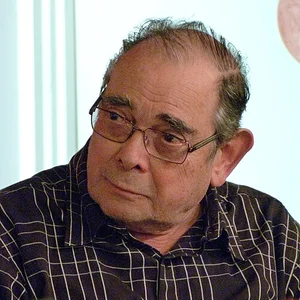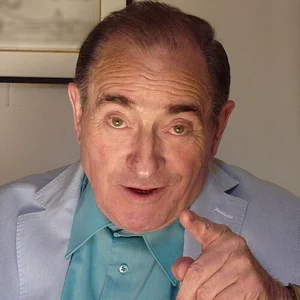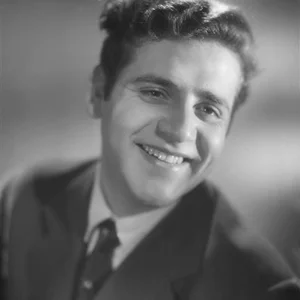

Jean Yanne (1933-2003) was a French comedian, actor, director, screenwriter and broadcaster. A figure of nonconformism and fierce irony, he left his mark on post-war French radio, cinema and satire.
Jean Yanne(1933 — 2003)
Jean Yanne
France
5 min read
Frequently asked questions
Famous Quotes
« Everybody's beautiful, everybody's nice»
Key Facts
- Born on 18 July 1933 in Paris and died on 23 May 2003 in Morsang-sur-Orge
- Best Actor Award at the 1972 Cannes Film Festival for “We Won't Grow Old Together” by Maurice Pialat
- Directed and starred in “Everybody's Beautiful, Everybody's Nice” (1972), a satire of radio and advertising
- Made satirical comedies such as “The Chinese in Paris” (1974)
- Rose to fame on the radio in the 1960s with his insolent and provocative humour
Works & Achievements
A dramatic role that earned him the Best Actor award at Cannes, revealing his acting talent beyond comedy.
The first film he directed, a biting satire of commercial radio and advertising, an enormous popular success.
A social comedy about the world of work and the bosses, in the nonconformist vein that characterizes him.
A provocative farce imagining a France occupied by China, a satire of cowardice and opportunism.
A burlesque parody of Roman antiquity, one of his greatest box-office successes.
A parody comedy about the French Revolution, extending his taste for historical send-ups.
Anecdotes
In 1972, Jean Yanne won the Best Actor award at the Cannes Film Festival for his role in *We Won't Grow Old Together* by Maurice Pialat. True to his rebellious spirit, he largely snubbed the ceremony, wary of the film industry's official honours.
That same year, 1972, he directed and starred in *Everybody He's Beautiful, Everybody He's Kind*, a ferocious satire of radio and advertising. The title, which became a popular catchphrase, sums up his irony toward media inanity and mushy consensus.
A radio host in the 1960s, notably on Europe 1, Jean Yanne cultivated an insolent humour that landed him in trouble with management. His freedom of tone, rare in an era of strict control over broadcasting, made him a figure of postwar nonconformism.
Passionate about cars and mechanics, Jean Yanne collected vintage automobiles and curious objects. He even made them the subject of shows and films, blending his private life with his taste for the absurd and the excessive.
In *The Chinese in Paris* (1974), he imagines a France occupied by China and mocks cowardice and opportunism. The film sparked controversy, with Yanne openly using farce to needle every form of political conformism.
Primary Sources
Best Actor Award given to Jean Yanne for “We Won't Grow Old Together” by Maurice Pialat.
A film written, directed and starring Jean Yanne, a satire of commercial radio and advertising.
A comedy by Jean Yanne blending Roman antiquity and the modern world in a burlesque parody.
Key Places
A town in the eastern suburbs of Paris where Jean Yanne was born in 1933. A working-class environment that would shape his outlook on French society.
The commercial radio station where Jean Yanne made his name as a host in the 1960s. There he forged his cheeky style and his reputation as a nonconformist.
The site of his crowning achievement in 1972 with the Best Actor award. The Croisette confirmed his standing as an actor recognized by the critics.
The capital at the heart of his career in radio, film, and theater. The setting for many shoots and for his professional life.
A town in the Essonne département where Jean Yanne died in 2003. The place where a life devoted to humor and entertainment came to an end.
Typical Objects

The central tool of his career as a host on peripheral radio stations like Europe 1. He turned it into the instrument of his insolent humor and his freedom of tone.

A director's instrument that he mastered for his satirical comedies. It allowed him to bring his ironic vision of French society to the screen.

A working text where he recorded dialogue and comic situations. His screenplays reflect his taste for puns and social satire.

The object of his personal passion for mechanics and old automobiles. He owned several of them and made it a recurring theme of his shows.

The medium on which his sketches and musical parodies were pressed. It allowed his humor to reach beyond radio and the stage.

A distinction received in 1972 for his dramatic role in a Maurice Pialat film. A symbol of the recognition of his acting talent beyond comedy.
School Curriculum
Vocabulary & Tags
Key Vocabulary
Daily Life
Morning
A media man through and through, Jean Yanne often started his day by reading the newspapers and writing sketches or dialogue. On mornings when he was filming or recording a show, he headed to the Paris studios early.
Afternoon
His afternoons were split between film sets, rehearsals, and production meetings. A demanding director, he oversaw the editing, music, and dialogue of his films.
Evening
Evenings were devoted to radio recordings, live shows, and dinners with the artistic crowd. He loved lively conversation and the art of the witty comeback.
Food
He shared in the classic French cuisine of his day, with a taste for fine food and convivial meals. Dinners among show-business people set the rhythm of his social life.
Clothing
He wore the urban clothing of his time — suits, shirts, and casual jackets depending on the occasion. His look stayed happily offhand, in keeping with his nonconformism.
Housing
He lived in the Paris region, between city dwellings and places where he stored his collection of vintage cars. His living environment blended his media work with his personal passions.
Historical Timeline
Period Vocabulary
Liens externes & ressources
Références
Œuvres
Nous ne vieillirons pas ensemble (Maurice Pialat)
1972
Moi y'en a vouloir des sous
1973
Les Chinois à Paris
1974
Deux heures moins le quart avant Jésus-Christ
1982
Liberté, Égalité, Choucroute
1985