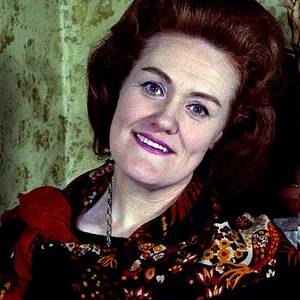

Joan Sutherland (1926-2010) was an Australian soprano regarded as one of the greatest lyric voices of the 20th century. Nicknamed “La Stupenda”, she was celebrated for her interpretations of the bel canto repertoire of Donizetti, Bellini, and Verdi.
Frequently asked questions
Key Facts
- Born on 7 November 1926 in Sydney, Australia
- Debut at Covent Garden (London) in 1952, where she built her international reputation
- International triumph in 1959 in Donizetti's Lucia di Lammermoor at Covent Garden
- Nicknamed “La Stupenda” by the Milanese audience at La Scala
- Died on 10 October 2010 in Switzerland
Works & Achievements
The February 1959 performance at the Royal Opera House, directed by Franco Zeffirelli, is considered one of the landmark events in the history of 20th-century opera. Joan Sutherland revealed an extraordinary voice that single-handedly rekindled worldwide interest in the bel canto repertoire.
This studio recording under the baton of Richard Bonynge, with Marilyn Horne in the role of Adalgisa, is universally regarded as an absolute discographic benchmark. It showcases Sutherland's technical mastery and expressive depth in the great Bellinian repertoire.
This recording with Marilyn Horne helped revive the *opera seria* of Rossini, a repertoire that had been neglected since the 19th century. It demonstrates Sutherland's ability to command the most complex ornaments and vocal runs in the Rossinian bel canto tradition.
Joan Sutherland portrayed Violetta on numerous occasions throughout her career, notably in this production for the Australian Opera. The role allowed her to unite dramatic power and vocal virtuosity in the most popular work in the Verdian repertoire.
Sutherland's portrayal of Valentine in this extremely rare Meyerbeer opera was hailed as an extraordinary vocal feat. She helped bring about the rediscovery of 19th-century French grand opera, which had fallen into obscurity for want of singers capable of taking it on.
This gala on 2 October 1990, before a jubilant Australian audience, brought down the curtain on forty years of an unparalleled international career. Joan Sutherland performed excerpts from her most iconic roles, accompanied for the last time by Richard Bonynge.
Anecdotes
In February 1959, Joan Sutherland performed the role of Lucia di Lammermoor in Donizetti's opera at Covent Garden, in a production directed by Franco Zeffirelli. Her performance was unanimously hailed as a historic event: the London press spoke of a “vocal miracle” and the audience gave her a standing ovation of more than twenty minutes. That evening marked the beginning of a meteoric international career and a worldwide revival of the bel canto repertoire.
It was the Italian press that coined the nickname “La Stupenda” after her debut at La Fenice in Venice. The word, meaning “the astonishing one,” captured what audiences felt about the range, purity, and power of her voice. Joan Sutherland herself found the nickname somewhat excessive and preferred to remain modest, often reminding people that daily hard work mattered more than natural talent.
Richard Bonynge, an Australian pianist whom she married in 1954, played a decisive role in her career: he was the first to tell her that her voice was that of a dramatic coloratura soprano, not a mezzo-soprano as she had believed. Against the advice of her London teachers, he guided her toward the bel canto repertoire of Donizetti and Bellini. This bold gamble transformed a promising singer into one of the greatest voices of the century.
Joan Sutherland grew up in Sydney listening on repeat to recordings of the great divas of the early twentieth century, particularly Amelita Galli-Curci and Luisa Tetrazzini. As a child, she would imitate these voices in front of a mirror in the family living room. Her mother, herself an amateur singer, gave her first lessons, proving that great international careers can take root far from European conservatories.
On 2 October 1990, Joan Sutherland took her final bow in a memorable gala at the Sydney Opera House, before a jubilant Australian audience. After forty years of international career, she chose to bring her journey to a close in Australia, where it had all begun. She was 63 years old at the time and was considered to be at the peak of her vocal artistry, which made her retirement all the more moving for her admirers.
Primary Sources
Richard's belief in my voice was the single most important factor in my career. Without his guidance toward the coloratura repertoire, I might never have found my true direction as a singer.
Miss Sutherland's Lucia was a revelation. The purity of her tone, the security of her technique, and the sheer beauty of her voice placed her last night among the immortals of the operatic stage.
I never considered daily vocal exercises a chore. The voice is a living instrument that demands regular upkeep, like an athlete in training — whatever your level or your reputation.
Joan Sutherland possessed something unique: a flawless technique combined with a natural musicality and a sense of phrasing that the great Italian sopranos of the nineteenth century would have envied.
Key Places
Joan Sutherland's birthplace, where she grew up, received her first singing lessons from her mother, and launched her professional career. She gave her farewell concert there in 1990 at the Sydney Opera House, symbolically bringing her artistic life full circle.
It was on this stage that Joan Sutherland made her professional debut in 1952 and achieved her defining triumph in 1959 in Lucia di Lammermoor. She performed there for many seasons, becoming one of the artists most closely identified with the institution.
It was in this legendary Venetian theatre that the Italian press gave her the nickname “La Stupenda”. Her Italian debut confirmed her international standing and her absolute mastery of the bel canto repertoire in its country of origin.
Joan Sutherland made her Met debut in 1961 in the role of Lucia, earning a memorable standing ovation. She returned regularly over two decades, helping to popularize bel canto opera in North America.
Joan Sutherland and Richard Bonynge made their home in this Swiss alpine village after her retirement from the stage in 1990. It was there that she spent her final years and passed away on 10 October 2010.
Typical Objects

Joan Sutherland studied her roles on scores covered in handwritten annotations indicating dynamics, breaths, and ornaments co-developed with Richard Bonynge. These scores bear witness to the meticulous work she devoted to every role, far beyond what the composer had written.

The costumes Sutherland wore in the great Romantic operas — crinoline gowns, corsets, and veils befitting the heroines of Donizetti or Bellini — were custom-made by the workshops of the world's leading opera houses. She attached great importance to them as a means of visually embodying her characters.

Joan Sutherland signed an exclusive contract with the British label Decca early in her career and recorded virtually her entire repertoire there. Her albums, sold worldwide, allowed millions of music lovers to discover bel canto and ensured the lasting legacy of her artistry.

Every working session with Richard Bonynge took place around a grand piano: it was used to refine intonation, ornaments, and phrasing, and to set the cadenzas the couple composed together to enrich period scores.

For Romantic opera roles, Joan Sutherland wore elaborate wigs crafted by the workshops of the great opera houses. These accessories were part of the complete transformation audiences had come to expect from her with each appearance.

Presented by Queen Elizabeth II, this honour officially recognised Joan Sutherland's importance in the cultural life of the United Kingdom and the English-speaking world, symbolising the acknowledgement of a lifetime devoted to opera.
School Curriculum
Vocabulary & Tags
Key Vocabulary
Daily Life
Morning
Joan Sutherland began her days with rigorous vocal warm-ups, often accompanied at the piano by Richard Bonynge. These exercises, practiced every morning without exception, maintained the flexibility and precision of her coloratura voice. She stressed the importance of a very gradual warm-up before tackling any repertoire work.
Afternoon
Afternoons were devoted to learning and polishing roles: working on ornaments, cadenzas, and variations with Bonynge, followed by opera rehearsals. On performance days, Joan Sutherland observed strict vocal rest for several hours before the show, avoiding any prolonged conversation to protect her vocal cords.
Evening
On performance evenings, the transformation into character began two hours before curtain: elaborate makeup, costume, wig, and a final vocal warm-up in the wings. After the show, often greeted by a standing ovation, she received admirers in her dressing room before joining the artistic team for a light supper.
Food
Like most professional opera singers, Joan Sutherland avoided foods that irritate the throat (strong alcohol, spices, dairy products before performances) and favored light meals on concert days. She placed great importance on hydration and regularly drank warm water to keep her vocal cords in good condition.
Clothing
On stage, Joan Sutherland wore lavishly reconstructed historical costumes typical of 19th-century Romantic opera: crinoline gowns, embroidered bodices, and elaborate hairstyles. In everyday life, she favored a simple, elegant style — far removed from the spectacular diva image she embodied each evening.
Housing
Joan Sutherland and Richard Bonynge long divided their lives between London, the base of their international careers, and Australia during tours with the Australian Opera. After her retirement in 1990, they settled permanently in Les Avants, Switzerland, in a house surrounded by alpine nature, far from the bustle of the world's great opera stages.