 flip
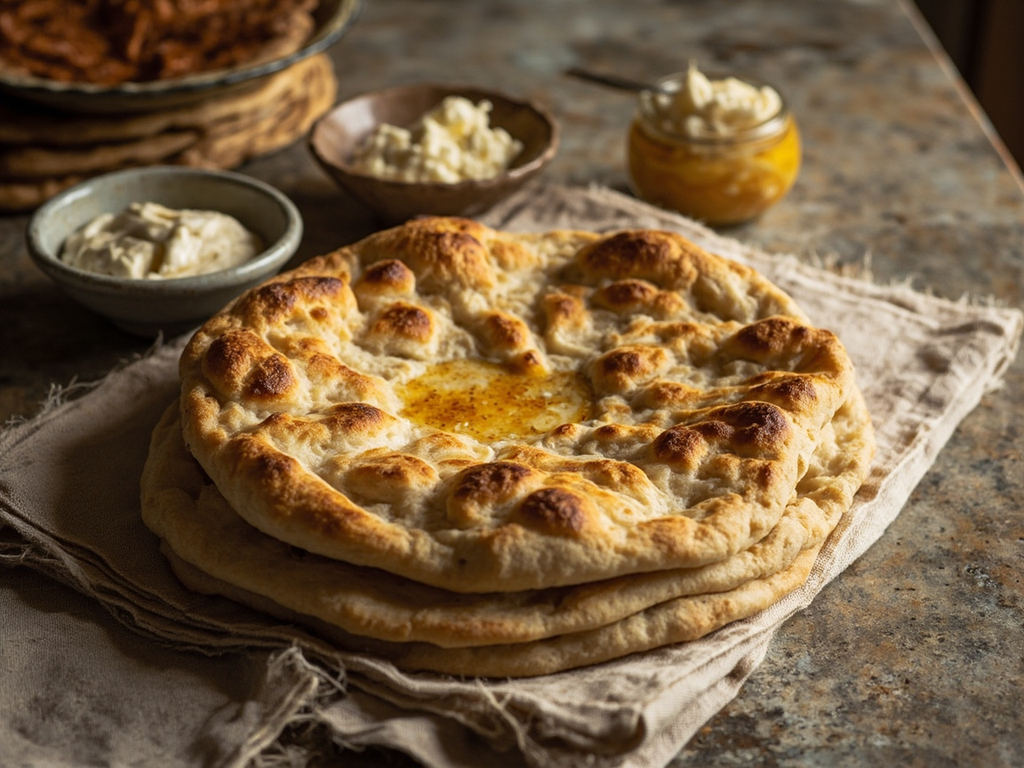
flipLèhem se'orim — Everyday Barley Flatbread
Lèhem se'orim — Everyday Barley Flatbread
Why this dish? Barley is the daily grain in the land of Uz, less noble than wheat but nourishing and reliable. Job, who says he never ate his morsel alone without giving some to the orphan (Job 31:17), first shared this bread: the everyday bread, broken and handed over.
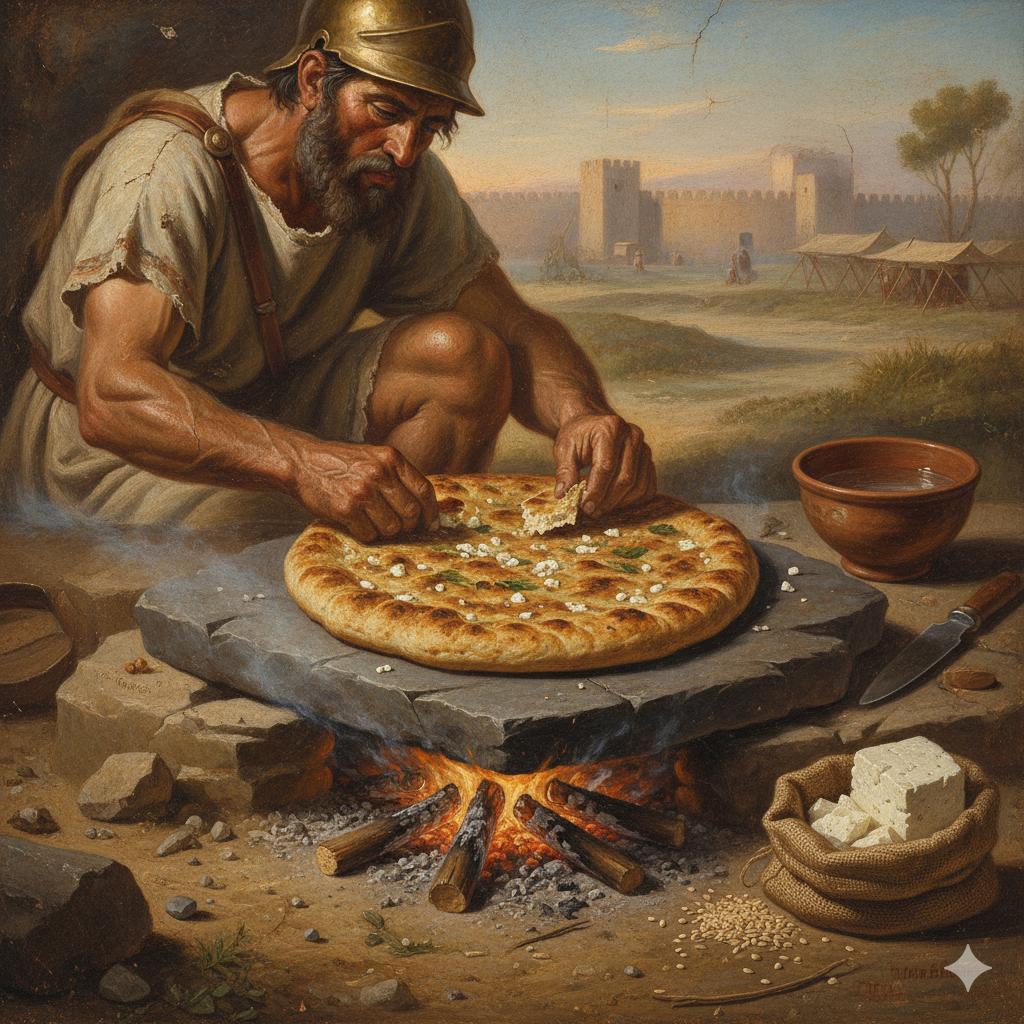
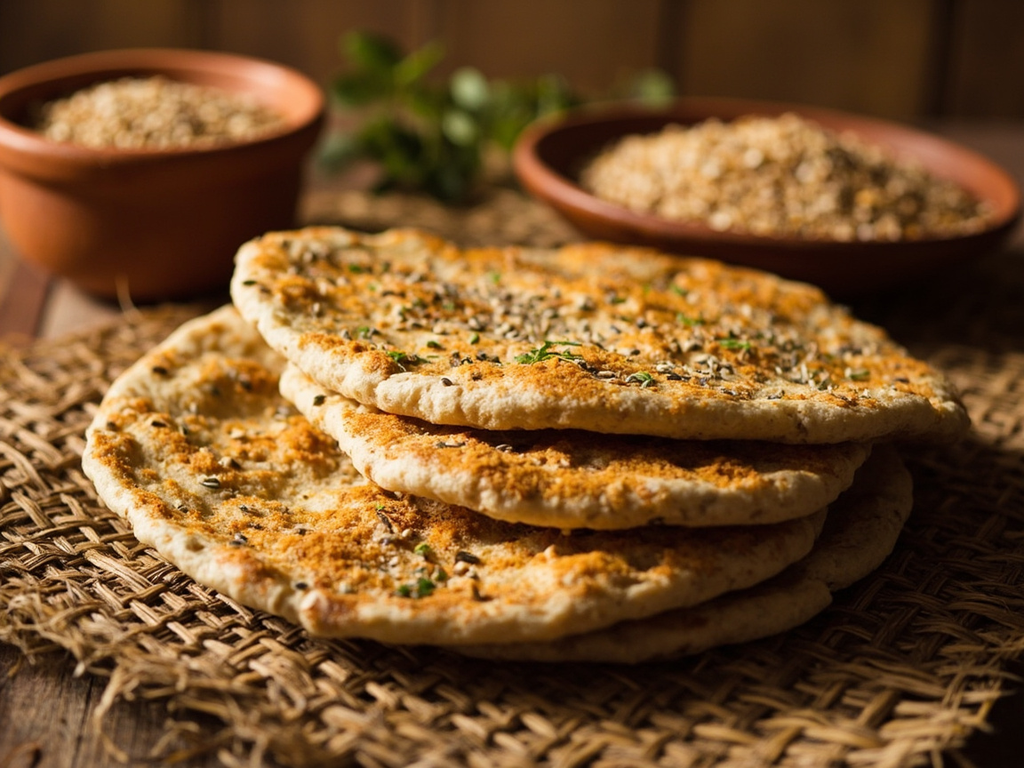
A thick barley flatbread, slightly sour from natural leaven, baked on a hot stone or against the wall of a clay oven. It is broken by hand and used as a spoon to scoop up curds and honey.
Listen, you who pass by: before ashes covered my head, my house never lacked bread. At daybreak, the maidservant mixed barley flour with the leaven kept from the day before, and let the dough rest under a cloth until it breathed. We flattened it under our palm, threw it onto the hot stone, and the aroma rose like a prayer. Break off a piece, dip it in curds: no satisfied man should forget the one who hungers at his door.
- •Barley flour ground on a millstone — two full measures (base of the bread)
- •Natural leaven (kept sour dough) — a handful (leavening and flavor)
- •Well water — as needed (binding)
- •Salt — a pinch (seasoning)
Lèhem se'orim — Everyday Barley Flatbread
A thick barley flatbread, slightly sour from natural leaven, baked on a hot stone or against the wall of a clay oven. It is broken by hand and used as a spoon to scoop up curds and honey.
Why this dish? Barley is the daily grain in the land of Uz, less noble than wheat but nourishing and reliable. Job, who says he never ate his morsel alone without giving some to the orphan (Job 31:17), first shared this bread: the everyday bread, broken and handed over.
Listen, you who pass by: before ashes covered my head, my house never lacked bread. At daybreak, the maidservant mixed barley flour with the leaven kept from the day before, and let the dough rest under a cloth until it breathed. We flattened it under our palm, threw it onto the hot stone, and the aroma rose like a prayer. Break off a piece, dip it in curds: no satisfied man should forget the one who hungers at his door.
Ingredients (period version)
- Barley flour ground on a millstone — two full measures (base of the bread)
- Natural leaven (kept sour dough) — a handful (leavening and flavor)
- Well water — as needed (binding)
- Salt — a pinch (seasoning)
Ingredients
- Barley flour — 300 g (base of the bread)
- Wheat flour (to help rising) — 100 g (structure)
- Active natural leaven — 80 g (leavening and flavor)
- Warm water — 230 ml (binding)
- Salt — 6 g (seasoning)
Method
- Mix the flours, leaven, salt, and warm water until you get a soft, slightly sticky dough.
- Cover with a cloth and let rise for 3 to 4 hours at room temperature, until puffed.
- Divide into 4 balls, flatten into thick discs 1.5 cm thick on a floured surface.
- Heat a cast-iron plate or stone until very hot. Cook each flatbread for 4 to 5 minutes per side until blistered and golden.
- Serve warm, to be broken by hand, with curds and a drizzle of honey.
How it was made : Barley grew where wheat struggled: it was the bread of the people and the livestock. It was ground daily on a hand mill, and the leaven was simply a piece of fermented dough set aside the day before. Baking was done on a heated stone, in the embers, or stuck to the wall of a clay oven (tannur).
The contemporary twist : Sprinkle the flatbread with a za'atar blend (hyssop, sumac, sesame) before baking: a nod to the herbs of the Levantine hills, perfect as an appetizer.
Sources : Book of Job, 31:17 · Nathan MacDonald, What Did the Ancient Israelites Eat? Diet in Biblical Times, 2008
Job · Charactorium