
Legendary king of Britain, Arthur is a central figure in Celtic mythology and medieval literature. Founder of the Round Table and lord of Camelot castle, he embodies the medieval chivalric ideal. His story, passed down through legends and tales of knighthood, blends possible historical fact with supernatural elements.
Frequently asked questions
Key Facts
- According to legend, Arthur receives the magical sword Excalibur from the Lady of the Lake
- Founds the Round Table at Camelot, where the greatest knights of the realm gather
- His friendship with the knight Lancelot creates tensions that lead to the downfall of his kingdom
- Secretly raised by the wizard Merlin, according to literary tradition
- His legendary death at the Battle of Camlann (dates vary depending on the source)
Works & Achievements
A legendary institution founded by King Arthur to gather the most valiant knights of the realm. The round table symbolizes equality among knights and embodies the medieval chivalric ideals of brotherhood and justice.
The legendary fortress and seat of Arthurian power, Camelot represents the center of Arthur's ideal kingdom. This castle symbolizes prosperity and chivalric order, though its exact historical location remains a matter of debate.
The legendary expansion of Arthurian power across insular and continental Britain. This political and military achievement, blending possible historical fact with legend, establishes Arthur as a great conqueror and unifier.
King Arthur's legendary magical sword, bestowed upon him by the Lady of the Lake. Excalibur symbolizes Arthur's rightful and supernatural power, and remains one of the most famous objects in Celtic and Arthurian mythology.
A spiritual and chivalric adventure launched by Arthur, in which his knights search for the sacred Grail. This quest embodies the medieval chivalric values of piety, courage, and redemption.
Arthur is presented as the founder and guardian of chivalric virtues: honor, loyalty, justice, and the protection of the weak. His reign sets an ideal model of governance and aristocratic morality.
The legendary final conflict in which Arthur faces Mordred, leading to the destruction of the Arthurian kingdom. This battle, marking Arthur's downfall and the end of the chivalric golden age, symbolizes the inevitable fall of great empires.
Anecdotes
The first written mention of a leader named Arthur appears in the 'Historia Brittonum', composed by the Welsh monk Nennius around 830. He is described not as a king, but as a 'dux bellorum', a war leader who supposedly led the Britons against Saxon invaders in the 5th or 6th century. This early source suggests there may be a historical core behind the legend.
It was the Norman cleric Wace who, in 1155, first introduced the Round Table in his 'Roman de Brut', a verse adaptation of Geoffrey of Monmouth's work. He explains that this round table prevented any quarrels over precedence among the knights, since all sat as equals. This idea of equality among nobles was revolutionary for the feudal era.
The French poet Chrétien de Troyes, at the end of the 12th century, originated several of the most famous elements of the legend: he invented the character of Lancelot, the adulterous relationship with Queen Guinevere, and introduced the quest for the Grail. His chivalric romances, written for the court of Champagne, shaped the image of Arthur for all of medieval European literature.
In 1191, the monks of Glastonbury Abbey in England announced they had discovered the tomb of Arthur and Guinevere, with a lead cross bearing the inscription 'Hic iacet sepultus inclitus rex Arturius'. Today, historians consider this discovery a hoax concocted by the monks to attract pilgrims and fund the reconstruction of their abbey after a fire.
The Arthurian legend experienced an extraordinary revival in France during the 19th century, thanks especially to the Romantic movement and interest in the Middle Ages. Poets, painters, and composers across Europe embraced it: the German composer Wagner created the opera 'Parsifal' in 1882, inspired by the quest for the Grail. This Romantic vogue profoundly influenced how chivalry is still taught in school curricula.
Primary Sources
Arthur fought against them [the Saxons] with the kings of the Britons, but he himself was the leader in the battles.
The battle of Badon, in which Arthur carried the cross of our Lord Jesus Christ on his shoulders, and the Britons were victorious.
Arthur, the wonderfully brave, strove to increase his personal honour rather than acknowledge the overlordship of the Roman king.
Et li rois Artus... fu en sa cort mout ricemant assis à mangier.
And thus the king Arthur went to the city of Avalon to be healed of his wounds.
Key Places
The legendary castle where King Arthur resides and home of the Round Table. This place symbolizes the center of Arthurian power and the ideal of medieval chivalry, though its historical location remains debated.
The mythical island where Arthur is said to have been taken after being wounded in his final battle, to be healed. Avalon represents the fairy realm and the Celtic otherworld in Arthurian legend.
A coastal fortress in Cornwall, presented in several legends as the birthplace of Arthur. This real historical castle is associated with the origins of the legendary king.
A town in Somerset, England, traditionally identified with Avalon. The archaeological site of Glastonbury Tor and its abbey have long been associated with Arthurian legend and the quest for the Holy Grail.
A region of Brittany in France, sometimes mentioned in Celtic traditions as a place connected to Arthurian legend and its Celtic origins.
Located in Normandy, this legendary site is sometimes associated with Arthurian tales and the mythical geography of legendary Britain in chivalric romances.
Typical Objects
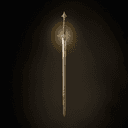
The legendary sword of King Arthur, forged by magic and said to be unbeatable. This symbol of royal power and legitimacy lies at the heart of Arthurian legend and represents the king's authority.

The iconic centerpiece of Camelot's great hall, this circular table with no head symbolizes the equality of the knights and the ideal of chivalric brotherhood so central to Arthurian legend.

A sacred cup tied to the legend of Christ, the Grail becomes in Arthurian romances the object of the Knights of the Round Table's quest, embodying spirituality and chivalric virtue.

The full suit of metal armor worn by medieval warriors is the hallmark of Arthur's knights, symbolizing their martial strength and high social standing.

The defining weapon of medieval combat, the sword is the fundamental instrument of war for the Knights of the Round Table and the symbol of their commitment to chivalry.

The emblem of sovereign power, King Arthur's crown symbolizes his authority over Britain and his role as the guarantor of chivalric order and justice.

A shield bearing royal arms, the heraldic shield is the distinctive emblem of the king and his knights, allowing them to be identified on the battlefield and in medieval tournaments.

The legendary fortress and seat of Arthurian power, Camelot represents the heart of the kingdom and the physical embodiment of the chivalric ideal and medieval civilization.
School Curriculum
Vocabulary & Tags
Key Vocabulary
Tags
Mythologie
Daily Life
Morning
Arthur begins his day with prayer and Mass in the chapel of Camelot, as befits any medieval Christian king. He then holds council with his barons and knights to discuss the affairs of the kingdom and chivalric quests. He also inspects the castle's fortifications and military preparations.
Afternoon
The king engages in chivalric pursuits such as sword training and horsemanship, essential for maintaining his warrior prestige. He receives ambassadors and petitioners in audience, settles disputes among his subjects, and organizes the adventures of his knights. He may also devote time to hunting, the noble pastime par excellence reserved for the aristocracy.
Evening
Arthur presides over the festive meal at the Round Table, where knights and courtiers gather to eat and share the news of the day. The evening continues with recitations of poetry, music played by minstrels, and tales of great chivalric deeds. He then retires to his private chambers to rest his weary body.
Food
The king consumes generous quantities of meat — game, poultry, and fish — a privilege of the medieval aristocracy — accompanied by white bread and imported wine. His diet also includes exotic spices, symbols of status and wealth. Meals follow the Christian calendar, with fasting days and days of abstinence observed with devotion.
Clothing
Arthur wears sumptuous garments: tunics of silk or fine linen dyed in vivid colors, cloaks lined with ermine, and belts adorned with precious stones and gold. He is crowned and bears the royal regalia — the sword Excalibur, the ring of authority — that mark his supreme status. His refined and majestic appearance reflects the prestige of royalty and the ideal of the perfect knight.
Housing
Arthur resides in the castle of Camelot, a fortified medieval stronghold with a keep, thick walls, and watchtowers ensuring its defense. The castle houses the great hall where the Round Table is held — a symbol of just governance — as well as the chapel, the lavishly decorated royal apartments, and the stables. The site combines military, administrative, and ceremonial functions, reflecting the king's central authority.
Historical Timeline
Period Vocabulary
Visual Style
Un style visuel combinant l'esthétique gothique médiévale et le mystère celtique, où les illustrations présentent des châteaux majestueux nimbés de brumes dorées, enrichies de motifs celtiques ornementaux et d'une atmosphère à la fois historique et surnaturelle, inspirées des manuscrits enluminés du Moyen Âge.
Sound Ambience
Une ambiance sonore immersive de château médiéval mêlant les bruits d'une cour royale prestigieuse, les échos de la forteresse de Camelot, et des éléments magiques subtils évoquant la légende arthurienne et l'univers merveilleux de la Table Ronde.
Liens externes & ressources
Références
Œuvres
La Table Ronde
légende médiévale (XIIe-XVe siècles)
Le château de Camelot
légende médiévale
La conquête de la Bretagne
Ve-VIe siècles (période supposée)
L'épée Excalibur
légende médiévale
La quête du Graal
légende médiévale (XIIe-XVe siècles)
L'établissement du code chevaleresque
légende médiévale
La bataille de Camlann
Ve-VIe siècles (période supposée)