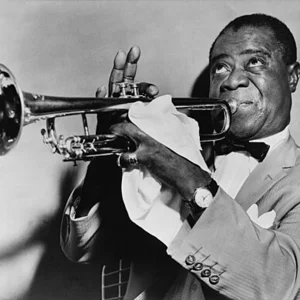

American jazz trumpeter and singer born in New Orleans, nicknamed “Satchmo.” A founding figure of jazz, he revolutionized the art form with his virtuoso trumpet playing and his “scat” singing. He became one of the most famous musicians of the 20th century.
Louis Armstrong(1901 — 1971)
Louis Armstrong
États-Unis
6 min read
Frequently asked questions
Famous Quotes
« If you have to ask what jazz is, you'll never know.»
« There are two kinds of music: good and bad. I play the good kind.»
Key Facts
- Born on August 4, 1901, in a poor neighborhood of New Orleans
- 1922: joins King Oliver's Creole Jazz Band in Chicago
- 1925-1928: his recordings with the Hot Five and Hot Seven revolutionize jazz
- 1964: his hit “Hello, Dolly!” knocks the Beatles off the top of the American charts
- Died on July 6, 1971, in New York, after a worldwide career
Works & Achievements
A series of recordings that placed the improvising soloist at the heart of jazz and changed the course of the music.
Its dazzling trumpet introduction is considered one of the high points in the history of jazz.
A recording that helped popularize “scat” singing, the art of vocal improvisation using nonsense syllables.
His version of this standard reveals his genius for transforming a popular song through his singing and his trumpet.
A famous album of duets in which his gravelly voice answers the crystal-clear voice of Ella Fitzgerald.
This hit reached number one in the United States, knocking the Beatles off the top spot.
A hopeful song that became one of the most famous tunes of the 20th century.
Anecdotes
On New Year's Eve 1912, in New Orleans, young Louis fired a pistol into the air to celebrate. Arrested, he was placed in a home for boys, the Colored Waif's Home. It was there that an instructor, Peter Davis, put a cornet into his hands: the incident that could have wrecked his life made a musician of him instead.
All his life, Armstrong claimed he was born on July 4, 1900, America's Independence Day. It was only after his death that his baptismal record was found: he had actually been born on August 4, 1901. Yet the myth suited the man so well that it is sometimes still repeated.
According to a famous story, while recording “Heebie Jeebies” in 1926, Armstrong supposedly dropped his lyric sheet. Rather than stop, he began singing made-up syllables: “scat” was born. True or not, this vocal improvisation became one of his trademarks.
In 1964, at the height of Beatlemania, Armstrong was 62 when his song “Hello, Dolly!” reached number one on the American charts. He thereby knocked the Beatles off the top spot, just as they were at the peak of their fame.
In 1957, during the Little Rock crisis, when Black students were blocked from entering a high school, Armstrong—usually cautious about politics—erupted. He canceled an official tour on behalf of the United States and declared that the government could “go to hell.” For an artist so famous, it was a courageous gesture.
Primary Sources
The way they are treating my people in the South, the government can go to hell.
Red beans and ricely yours, Louis Armstrong.
Every time I close my eyes blowing that trumpet of mine, I look right in the heart of good old New Orleans. It has given me something to live for.
If you have to ask what jazz is, you'll never know.
Key Places
Armstrong's birthplace and the cradle of jazz, where he grew up in poverty to the sound of brass bands and cabarets.
Home for boys where young Louis was placed after his arrest and where he learned to play the cornet.
This is where he joined King Oliver in 1922 and recorded his Hot Five, truly launching his career.
African American neighborhood of New York, the heart of the music scene where Armstrong performed and recorded.
Modest house where he lived with his wife Lucille from 1943 and where he died in 1971; today it is a museum.
During his tours as a jazz ambassador, he gave a memorable concert here in 1956 before an immense crowd.
Typical Objects

Armstrong's signature instrument, from which he drew powerful high notes and a sound recognizable among all others.
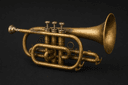
The first instrument he learned at the boys' home; close to the trumpet, he played it in his early days before switching to the latter.

On stage, he always held a large white handkerchief to mop the sweat from his brow; it became one of his trademarks.

His recordings from the 1920s came out on these fragile shellac discs, which spread jazz around the world.

A true enthusiast, Armstrong brought his tape recorders along on tour and decorated the tape boxes with collages he made himself.
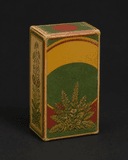
Armstrong was devoted to this herbal laxative, which he recommended to everyone and even printed on his greeting cards.

Always impeccably dressed, he performed in an elegant suit or tuxedo, the very image of the star musician.
School Curriculum
Vocabulary & Tags
Key Vocabulary
Tags
Daily Life
Morning
Since he played late into the night, Armstrong often woke up in the late morning. At home, he loved typing letters on his typewriter and replaying his recordings on his tape recorders.
Afternoon
Afternoons were devoted to rehearsals, traveling from one city to another, studio recording sessions, and interviews with the press.
Evening
The evening was the heart of his life: concerts in halls and clubs, sometimes several performances in a single night, before an audience often in a frenzy.
Food
True to his New Orleans roots, he loved red beans and rice, so much so that he signed his letters “Red beans and ricely yours.” Mindful of his figure, he also followed diets and swore by his herbal laxative.
Clothing
Always elegant, he wore well-tailored suits and a tuxedo on stage. His large white handkerchief, which he waved while singing, was part of his persona.
Housing
Despite fame and money, Armstrong and his wife Lucille chose a modest house in the working-class neighborhood of Corona, in Queens, where they lived until his death.