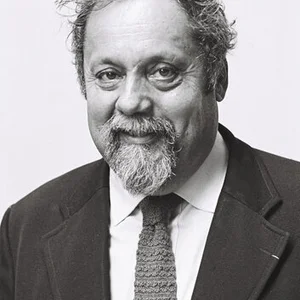

American geneticist specializing in maize, a pioneer of plant cytogenetics in the 20th century. A close collaborator of Barbara McClintock, he studied cytoplasmic inheritance and the chromosomes of maize.
Marcus Rhoades
Marcus Morton Rhoades
6 min read
Frequently asked questions
Key Facts
- Born in 1903 in Indiana (United States), died in 1991.
- Described cytoplasmic male sterility in maize in 1933, a trait transmitted through the cytoplasm rather than the chromosomes.
- Worked closely with Barbara McClintock in the study of maize cytogenetics.
- Professor at Columbia University and then at Indiana University, training several generations of geneticists.
- Elected to the National Academy of Sciences for his work on non-Mendelian inheritance.
Works & Achievements
Demonstration of a gene capable of reactivating another silent gene, an early sign of the mobile genetic elements later revealed by McClintock.
Demonstration that male sterility is transmitted through the maternal cytoplasm rather than the chromosomes, the basis of cytoplasmic male sterility.
Detailed analyses that made maize a benchmark model organism for plant cytogenetics.
A major paper establishing that a nuclear gene can induce a difference transmitted through the cytoplasm.
Review articles and book chapters that trained several generations of geneticists and shaped the field.
Mentoring of students and collaborations that extended the legacy of Cornell's maize genetics group.
Anecdotes
In the early 1930s, the young Rhoades was part of a group of students at Cornell University that became legendary in genetics: working at the same time around Professor Rollins Emerson were Barbara McClintock, George Beadle, and Charles Burnham, all future giants of science. Their shared field of study? Plain old cornfields.
Rhoades observed corn kernels speckled with colored dots and realized that one gene, which he named “Dotted” (Dt), could awaken another gene that had stayed silent. It was an early clue to the “jumping genes,” those mobile fragments of DNA that his friend Barbara McClintock would go on to reveal and that would earn her the Nobel Prize.
He studied a strange form of corn sterility that was passed down only through the mother, not through the pollen. This discovery of “cytoplasmic” heredity (carried outside the nucleus) later proved very useful to farmers for producing hybrid seeds without detasseling the plants by hand.
Rhoades and Barbara McClintock were friends and scientific partners for decades: they wrote each other long letters, exchanged corn kernels, and discussed chromosomes. Their correspondence remains a precious testimony to the birth of modern cytogenetics.
To read the secrets of heredity, Rhoades spent hours hunched over his microscope observing the chromosomes of corn cells, which he stained to make them visible. Corn, with its large chromosomes and kernels of varied colors, was in his eyes the ideal organism for seeing genetics “live.”
Primary Sources
A study showing how the number of copies of a gene influences the intensity of colour in the outer layer of the maize kernel.
Here Rhoades describes a hereditary difference passed on through the cytoplasm rather than the chromosomes, laying the foundation for the study of cytoplasmic inheritance in maize.
Rhoades demonstrates that the mutability of the a1 allele, responsible for pigment spots on the kernel, depends on the presence of the Dt (Dotted) gene.
A landmark synthesis on the behaviour of maize chromosomes during meiosis, the cell division that produces reproductive cells.
Key Places
Small Midwestern town where Marcus Rhoades was born in 1903, in the heart of America's great corn-farming region.
Where he earned his doctorate within Rollins Emerson's renowned maize genetics group, alongside McClintock and Beadle.
Prestigious institute where Rhoades pursued his research in plant genetics over the course of his career.
University where Rhoades taught and carried out genetics research before moving to the Midwest.
Institution where Rhoades held a professorship, right in corn country, ideal for his field experiments.
University where Rhoades completed his long career as a professor of botany and where he died in 1991.
Liens externes & ressources
Références
Œuvres
Découverte du gène Dt (Dotted) et de la mutabilité de l'allèle a1
1938
Travaux fondateurs sur l'hérédité cytoplasmique du maïs
1933-1943
Études sur la méiose et le comportement des chromosomes du maïs
années 1940-1950
« Genic induction of an inherited cytoplasmic difference » (PNAS)
1943
Synthèses de référence sur la génétique du maïs
années 1950-1960
Formation de chercheurs et direction de laboratoire
tout au long de sa carrière