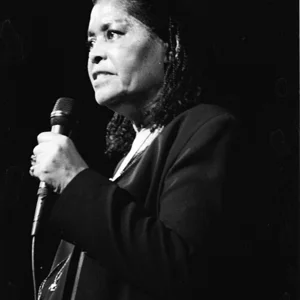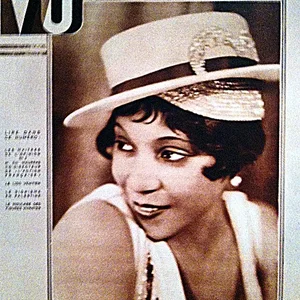

Marguerite Monnot (1903-1961) was a French composer, classically trained pianist who became one of the great musical forces of French song. She wrote many hits for Édith Piaf as well as the musical "Irma la Douce."
Marguerite Monnot(1903 — 1961)
Marguerite Monnot
France
6 min read
Frequently asked questions
Key Facts
- Born in 1903 in Décines-Charpieu, trained early in classical piano (student of Nadia Boulanger and Alfred Cortot).
- Composed "Mon légionnaire" and "Mon amant de Saint-Jean" in the 1930s.
- Entered a long collaboration with Édith Piaf: "L'Hymne à l'amour" (1950), "Milord" (1959), "Hymne à l'amour."
- Composed the music for the musical "Irma la Douce" (1956), a great success adapted to film in 1963.
- Died in 1961 in Paris, shortly before Édith Piaf.
Works & Achievements
First song composed by Marguerite Monnot for Édith Piaf. This success laid the foundations of their decisive collaboration and revealed Monnot's compositional talent.
One of Monnot's most famous compositions, which became an international anthem of French song. The simple yet memorable melody traveled around the world.
Masterpiece by Marguerite Monnot and artistic testament of her collaboration with Édith Piaf. This powerful ballad embodies the strength of her musical vision.
Full musical comedy created by Monnot at the Moulin-Rouge. This ambitious work proves that Monnot could conceive an entire sophisticated musical score.
Melancholic waltz composed for Édith Piaf. The song illustrates Monnot's mastery of orchestral arrangement and her sense of musical storytelling.
Romantic song composed by Monnot, one of her most lyrical melodies. This composition shows Monnot's ability to create universal love songs.
Anecdotes
Marguerite Monnot met Édith Piaf in 1935 and dedicated a large part of her career to her. She composed over a hundred songs for the famous singer, becoming one of the key figures of 20th-century French song, though remaining less known to the public than her collaborator.
Although trained in classical music at the Paris Conservatory, Marguerite Monnot chose to compose for music hall and popular song. This career choice was bold for a woman of her generation, but it allowed her to revolutionize French song by bringing musical sophistication to it.
The musical 'Irma la Douce', composed by Monnot in 1956, achieved extraordinary international success. The work was adapted into a film in 1963 with Shirley MacLaine and Jack Lemmon, reaching an audience far beyond the Parisian theater world.
Marguerite Monnot preferred to work in the shadows, leaving Édith Piaf in the spotlight facing the limelight and fame. This voluntary discretion explains why many are unaware of her decisive role in creating some of the greatest successes of French song.
At the end of her life, Marguerite Monnot saw Édith Piaf pass away in 1963, two years after her own death in 1961. The collaboration between these two major figures transformed the French musical landscape and influenced generations of artists.
Primary Sources
My mission is to give a musical framework to Édith's voice. I do not compose for the notes, I compose for the soul. It is a privilege to work with an artist who possesses such emotional depth.
Marguerite Monnot created a light and graceful score, where each song fits naturally into the flow of the action. It is a complete success of the French musical comedy genre.
Marguerite's music created an authentic Parisian atmosphere. She understood the essence of Paris and knew how to translate it into simple but memorable notes and melodies.
The rehearsals show a close collaboration where Monnot refines each arrangement according to Piaf's breathing and interpretation. Their musical discussions reveal a remarkable mutual understanding.
Key Places
Birthplace of Marguerite Monnot on June 4, 1903. Although born in the Paris suburbs, she would become one of the greatest composers of the French capital.
Where Marguerite Monnot studied piano and composition in the 1920s. This institution provided her with a solid classical music education that influenced her compositional approach.
The site of the decisive meeting between Marguerite Monnot and Édith Piaf in 1935. It was in this cabaret that the collaboration that would transform French chanson began.
Iconic cabaret where *Irma la Douce* premiered in 1956. The Moulin-Rouge was the heart of Parisian music hall and hosted the greatest musical productions of the era.
The Parisian neighborhood that was the hub of the music-hall and cabaret world. It was in this vibrant district that most of Monnot's works were created and performed.
Studio where Marguerite Monnot recorded compositions with Édith Piaf. These Parisian studios represented the most advanced music technology of the 1940s–1950s.
Typical Objects

Central instrument of the composer's trade. Marguerite Monnot worked long hours at the piano to create her melodies and harmonies, testing each musical variation before presenting it to her collaborators.

The sheets of music covered in notes, corrections, and musical annotations constitute the physical trace of Monnot's daily creative work. Her annotations reveal her meticulous process and adjustments to adapt the music to Piaf's voice.

Monnot jotted down her musical ideas in notebooks she carried everywhere. These notebooks reveal her creative process and attention to detail, from initial scribbles to developed sketches.

Studio recordings of her compositions with Édith Piaf on vinyl records represent the dissemination of her art to the public. These recordings preserved Monnot's major works for eternity.

Marguerite Monnot wore the refined outfits typical of the 1940s–1950s. These velvet or silk dresses reflect the luxury and sophistication of the Parisian music-hall world where she worked.

The microphone was essential for recording voices and orchestrations in Parisian studios during the 1940s–1950s. It captured Piaf's voice and Monnot's arrangements for history.

The iconic cabaret where *Irma la Douce* premiered in 1956. The spectacular music-hall lighting symbolizes the context in which Monnot's most ambitious works were created.
School Curriculum
Vocabulary & Tags
Key Vocabulary
Tags
Daily Life
Morning
Marguerite Monnot started her days around 9 a.m. with black coffee and a cigarette, a Parisian tradition. She had a light breakfast before heading to the piano for a few hours of composition and arrangement.
Afternoon
Afternoons were dedicated to meetings with artists and producers, auditions, and rehearsals. Monnot attended fittings and discussed musical details with the directors of music-hall shows.
Evening
In the evening, Marguerite Monnot often attended rehearsals or performances in Parisian cabarets. She listened carefully to interpretations of her compositions, taking notes for adjustments.
Food
Monnot's diet reflected the sophisticated Parisian life of the 1930s–1950s. She enjoyed light meals of fruits, cheeses, and quality breads, with a glass of white wine at main meals.
Clothing
Marguerite Monnot wore elegant and discreet outfits, characteristic of the cultured Parisian woman. Black or dark gray dresses, adorned with gold or pearl brooches, always accompanied by a shawl or jacket.
Housing
Monnot lived in a classic Parisian apartment in the 8th or 9th arrondissement, the neighborhood of artists and musicians. The apartment featured a grand piano as its centerpiece, surrounded by scores and artistic souvenirs.
Historical Timeline
Period Vocabulary
Visual Style
Le style visuel conjugue l'élégance Art Déco avec le glamour parisien des années 1930-1950. Les couleurs sont chaudes et sophistiquées, dominées par l'or, le noir et des teintes de rose poudré, reflétant l'atmosphère luxueuse du music-hall.
Sound Ambience
L'atmosphère sonore du music-hall parisien des années 1930-1950, dominée par le piano et l'orchestration raffinée de Marguerite Monnot, entrelacée avec la voix inimitable d'Édith Piaf. Les sons évoquent l'intimité des cabarets parisiens et la sophistication musicale de cette époque.