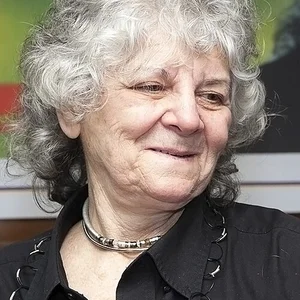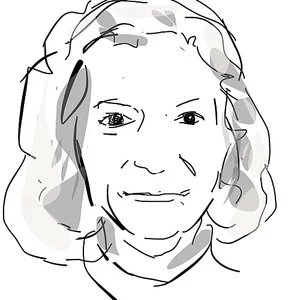

Marthe Gautier (1925-2022) was a French pediatrician and researcher. Her cell culture work was decisive in the 1958-1959 discovery of the chromosomal anomaly that causes Down syndrome. Long downplayed, her contribution reignited the debate over the recognition of women in science.
Marthe Gautier(1925 — 2022)
Marthe Gautier
République démocratique du Congo
6 min read
Frequently asked questions
Key Facts
- Born on 10 September 1925 in Montenils (Seine-et-Marne) into a farming family
- A pediatrician, she trained in cell culture during a stay in the United States (1955-1956)
- In 1958, she carried out the cell cultures that made it possible to observe an extra chromosome behind Down syndrome
- The discovery was published in 1959, but credit went for a long time mainly to Jérôme Lejeune
- She died on 30 April 2022, having become a figurehead in the fight for the recognition of women scientists
Works & Achievements
Back from the United States, she sets up almost single-handedly and with very few resources a laboratory capable of culturing human cells, an essential condition for the discovery.
First communication presenting the culture method applied to human chromosomes, paving the way for the decisive result.
Founding article identifying trisomy 21: the first human disease linked to an abnormality in the number of chromosomes, a major event in medicine.
After the chromosomes, she devotes herself to research on the liver and its diseases, pursuing a long scientific career far from the spotlight.
Published testimony in which she gives her version of the facts, reigniting the debate over the recognition of her role.
A distinction that belatedly enshrines the importance of her scientific contribution and makes her a symbol of the struggle for the recognition of women in science.
Anecdotes
In 1955, Marthe Gautier received a scholarship to spend a year in the United States, at Harvard, where she learned a still-rare technique: growing human cells in the laboratory. Back in Paris in 1956, she found that no cell-culture laboratory existed in France, and she set one up almost single-handedly, with very few resources, in Professor Turpin's department.
At the time, it had been believed since 1923 that human beings had 48 chromosomes. It was only in 1956 that two researchers proved that the real number was 46. Marthe Gautier was therefore working just as science had corrected a thirty-year-old error, and it was in this context that, in 1958, she counted 47 chromosomes in the cells of children with Down syndrome.
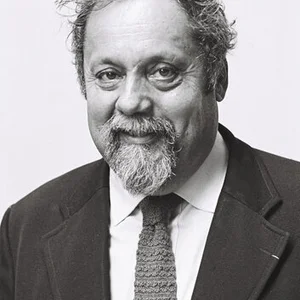
Marthe Gautier did not have a microscope equipped with a camera to capture her discovery. The precious slides were entrusted to a young researcher, Jérôme Lejeune, to be photographed elsewhere. When the historic paper appeared in 1959, Lejeune's name came first, and Gautier's, misspelled “Gauthier,” came second: the beginning of a long battle for recognition.
In 2014, at the age of 88, Marthe Gautier was due to receive a medal at a major genetics conference in Bordeaux. A bailiff was sent to record her presentation, and the ceremony was disrupted. This widely publicized episode reignited the national debate about the place of women in the history of science.
Primary Sources
The analysis establishes the presence of 47 chromosomes instead of 46 in children affected by mongolism, the supernumerary chromosome being a small acrocentric chromosome.
In it she recounts how she carried out the cell cultures and counted the chromosomes, and how the decisive photographs were taken outside her laboratory, explaining the imbalance in the attribution of the discovery.
The committee acknowledges the major scientific role played by Marthe Gautier in the cell culture work that led to the identification of the chromosomal abnormality, while calling for caution regarding the exact reconstruction of the facts.
Key Places
Rural village where Marthe Gautier was born in 1925 into a family of farmers. It was from here that she left to study medicine in Paris.
City where she studied medicine and became a hospital resident, specializing in pediatric cardiology. She would carry out her entire research career here.
Site of her research stay in 1955-1956. There she learned how to culture human cells, a technique that did not yet exist in France.
In Professor Raymond Turpin's department, Marthe Gautier set up her cell culture laboratory. It was here that she counted 47 chromosomes in 1958.
City of the 2014 genetics conference where a medal was to be awarded to her. The controversial ceremony gave national resonance to the question of her recognition.
Typical Objects

An instrument that magnifies cells in order to observe and count the chromosomes within their nucleus. It is the central tool of cytogenetics.

A sterile container in which human cells are fed so they can multiply. Mastering this technique was the great skill that Marthe Gautier brought back from the United States.

A small glass plate on which the chromosomes of a dividing cell are spread out for examination. It was these slides that carried the proof of the discovery.

A photographic device coupled to the microscope to capture the image of the chromosomes. Lacking one of her own, Marthe Gautier had to entrust her slides to a colleague, which weighed heavily on the attribution of the discovery.

An ordered image of all of a person's chromosomes, arranged in pairs. It is on a karyotype that the extra chromosome 21 of trisomy becomes visible.

A machine that spins tubes very fast to separate the cells from the liquid. It is essential for preparing samples before observation.
School Curriculum
Vocabulary & Tags
Key Vocabulary
Daily Life
Morning
The morning of a research pediatrician in the 1950s often begins at the hospital, at the bedside of sick children, in a white coat. Marthe Gautier examines her young patients before heading to her laboratory.
Afternoon
The afternoon is spent in the cell culture laboratory, maintaining the cultures, preparing slides, and patiently observing cells under the microscope. Counting tiny chromosomes required hours of concentration and great precision.
Evening
In the evening, she reads international scientific journals, often in English, to keep up with recent discoveries in genetics. It is also the time to record her results and prepare her presentations.
Food
In postwar France, food remained simple and the hospital canteen fed the staff. Meals consisted of traditional dishes: soups, vegetables, meat when it could be found, and bread.
Clothing
At work, the white coat of the physician and researcher was the uniform. In town, Marthe Gautier wore the understated, elegant outfits of an active woman of the mid-20th century.
Housing
She lives in a Parisian apartment, like many doctors of the time, close to the hospitals. Modern comforts (heating, telephone) were gradually becoming widespread during those years.
Historical Timeline
Period Vocabulary
Liens externes & ressources
Références
Œuvres
Création du premier laboratoire français de culture cellulaire humaine
1956-1958
« Les chromosomes humains en culture de tissus » (note préliminaire, Académie des sciences)
janvier 1959
« Étude des chromosomes somatiques de neuf enfants mongoliens »
1959
Carrière de recherche à l'Inserm en hépatologie
années 1960-1970
« Cinquantenaire de la trisomie 21. Retour sur une découverte »
2009
Officier de la Légion d'honneur
2014