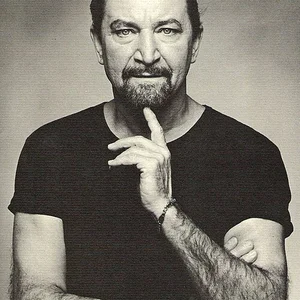

Maurice Béjart was a Franco-Swiss dancer and choreographer, a major figure in 20th-century contemporary dance. Founder of the Ballet of the 20th Century and later the Béjart Ballet Lausanne, he brought dance to a wide audience with spectacular and accessible performances.
Maurice Béjart(1927 — 2007)
Maurice Béjart
Suisse, France
6 min read
Frequently asked questions
Famous Quotes
« Dance is the most exact, the most rigorous, the most mathematical of the arts.»
Key Facts
- Born in 1927 in Marseille under the name Maurice-Jean Berger.
- Created a celebrated version of The Rite of Spring in 1959.
- Founded the Ballet of the 20th Century in Brussels in 1960.
- Choreographed his famous Boléro to the music of Ravel (1961).
- Moved his company to Lausanne in 1987 (Béjart Ballet Lausanne); died in 2007.
Works & Achievements
A ballet set to the *musique concrète* of Schaeffer and Henry, revealing Béjart's modern language.
Choreography set to Stravinsky that established Béjart and launched the Ballet of the 20th Century.
Set to Ravel's music, one of the most famous choreographies of the 20th century, danced atop a red table.
A monumental ballet performed in arenas and stadiums to bring together thousands of spectators.
A grand choreographic fresco set to Berlioz's music, carrying a message of peace.
A tribute to the legendary dancer Vaslav Nijinsky, blending dance, music and theatre.
A ballet that stages, with humour and tension, the rivalry between young dancers.
A creation in tribute to Jorge Donn and Freddie Mercury, set to the music of Queen and Mozart.
Anecdotes
In 1959, Maurice Béjart created 'The Rite of Spring' to Stravinsky's music at the Théâtre de la Monnaie in Brussels. Its success was so great that the venue, better known for opera, became the cradle of his company, the Ballet of the 20th Century. There Béjart established a sensual, collective form of dance that broke with academic classical ballet.
In 1964, Béjart choreographed Beethoven's 'Ninth Symphony' in an unusual setting: not an opera house, but the Cirque Royal in Brussels, followed by large stadiums and sports arenas. He wanted to bring dance down into the arena to reach thousands of spectators at once, many of whom had never seen a ballet.
His 'Boléro', set to Ravel's music, features a single dancer—male or female—on a large round red table, surrounded by a circle of dancers. Created in 1961, the choreography became one of the most famous of the 20th century and has been danced by women (Duška Sifnios, Maya Plisetskaya) as well as men (Jorge Donn).
Béjart shared a long collaboration with the Argentine dancer Jorge Donn, who became his male muse and the face of his company. Donn's performance of the 'Boléro' was immortalized in Claude Lelouch's 1981 film 'Les Uns et les Autres', bringing the choreography to a wide audience.
In 1987, after a disagreement with the Belgian authorities, Béjart left Brussels and moved his company to Lausanne, Switzerland, where it took the name Béjart Ballet Lausanne. He stayed there until his death in 2007, turning this Swiss city into an international capital of dance.
Primary Sources
Dance is above all the language of the body, the only language that is common to all of mankind.
I want dance to cease being an art reserved for an elite and to become once again a celebration in which everyone takes part.
On a great red table, a melody: this is desire, and all around, the rhythm: these are the others who little by little let themselves be won over.
Key Places
Birthplace of Maurice Béjart, where he was born in 1927 under the name Maurice-Jean Berger.
Belgian national opera house where Béjart founded the Ballet of the 20th Century in 1960 and created his major works for nearly thirty years.
Dance school founded by Béjart in 1970 to train young dancers in a complete approach to movement, theatre, and music.
City where Béjart relocated his company in 1987, renaming it the Béjart Ballet Lausanne, and where he died in 2007.
City where the young Béjart trained in classical dance during the 1940s before developing his own style.
Typical Objects

Soft slippers or demi-pointes let the dancer glide, jump and turn while still feeling the floor. **Béjart** often favoured dancers barefoot or in soft slippers for a more grounded, earthy kind of dance.

A close-fitting garment of stretch fabric that hugs the dancer's body and makes every muscular movement visible. **Béjart** turned it into an emblematic costume of his masculine, sensual style of dance.

A large circular red table on which the soloist of *Boléro* performs, surrounded by a ring of dancers seated on stools. It has become the visual symbol of **Béjart**'s most famous choreography.

**Béjart** choreographed to scores by **Stravinsky**, **Beethoven**, **Ravel** or **Wagner**, making music the starting point of every creation. The music gave the whole ballet its structure.

A long horizontal bar fixed to a studio wall, used every day for warming up and technical exercises. It is the basic tool of the training that **Béjart** taught at his school, *Mudra*.

Sometimes designed with couturiers such as **Gianni Versace**, **Béjart**'s costumes blended restraint and theatricality to serve the movement. They contributed to the spectacular aesthetic of his ballets.
School Curriculum
Vocabulary & Tags
Key Vocabulary
Daily Life
Morning
A choreographer like Béjart often began his morning at the studio, with the daily class: barre exercises, warm-up and technical work with the dancers. This was the time to observe the company and prepare the body for the effort ahead.
Afternoon
The afternoon was devoted to rehearsals and creation: Béjart guided the dancers, invented movements, and adjusted the sequences to fit the music. He also ran his school and watched over the training of the young dancers.
Evening
Performance evenings were the heart of his profession: shows in theatres, at the circus or in stadiums, followed by discussions with the artists. On other evenings, he read, listened to music and reflected on his future creations.
Food
Like any dancer and performer, Béjart had to preserve his energy; the dancers in his company followed a balanced diet to sustain intense physical effort. Meals were often eaten quickly between rehearsals.
Clothing
In the studio, Béjart and his dancers wore soft, comfortable outfits: tights, leotards, sweaters and ballet shoes. Around town, Béjart cultivated an understated and recognizable look, often dressed in black.
Housing
Béjart lived wherever his company worked: for a long time in Brussels, then in Lausanne from 1987 onward. His life was organized around theatres and dance studios, rather than around a fixed home.
Historical Timeline
Period Vocabulary
Liens externes & ressources
Références
Œuvres
Symphonie pour un homme seul
1955
Le Sacre du printemps
1959
Neuvième Symphonie (Beethoven)
1964
Roméo et Juliette
1966
Nijinski, clown de Dieu
1971
Le Concours
1985