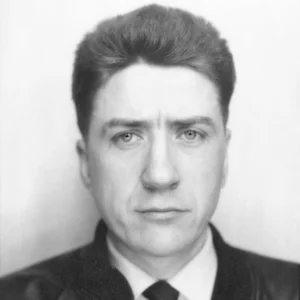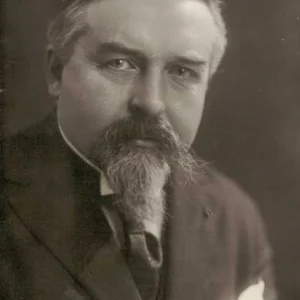

French painter, printmaker, and art theorist (1870-1943), central figure of the Nabis group. Author of the famous formula defining modern painting as "a flat surface covered with colors assembled in a certain order."
Maurice Denis(1870 — 1943)
Maurice Denis
France
8 min read
Frequently asked questions
Famous Quotes
« Remember that a picture, before being a battle horse, a nude woman, or some anecdote, is essentially a flat surface covered with colors assembled in a certain order.»
Key Facts
- 1870: born in Granville
- 1888: co-founds the Nabis group with Sérusier, Bonnard, and Vuillard
- 1890: publishes his theoretical formula on the flatness of the picture in the journal Art et Critique
- 1919: founds the Ateliers d'art sacré with Georges Desvallières
- 1943: dies in Paris after being struck by a truck
Works & Achievements
One of Denis's first iconic works, depicting women in a sun-drenched garden. The simplified forms rendered in flat areas of vivid color perfectly illustrate his formula for neo-traditionalism.
A large decorative panel held at the Musée d'Orsay, depicting nine muse-like women in a sacred grove. A masterpiece of the Nabi period, it combines poetic symbolism with assured decorative composition.
A group portrait of the Nabis gathered around one of Cézanne's still lifes, symbolizing their debt to the master from Aix-en-Provence. Now housed in the Musée d'Orsay, the painting captures the group's cohesion at its peak.
A decorative series telling the story of the miraculous conversion of the huntsman Saint Hubert, who beheld a cross between the antlers of a stag. This cycle showcases Denis's gift for religious narrative in images.
A set of large compositions adorning the main hall of the newly built theatre. Denis's most monumental work, it is a synthesis of his decorative art and his symbolist vision.
An expansive ensemble of religious paintings covering the dome of this church in the 12th arrondissement. One of the major achievements of his late period, created in service of the renewal of French sacred art.
Anecdotes
In 1890, at just twenty years old, Maurice Denis published a short article in the journal Art et Critique that would revolutionize the conception of painting. His formula — “a painting is essentially a flat surface covered with colors assembled in a certain order” — laid the foundations of modern art by asserting that form takes precedence over the represented subject. This sentence would be cited by generations of artists and critics as the starting point of abstract painting.
In 1888, Paul Sérusier returned from Pont-Aven with a small wooden panel painted in vivid, synthetic colors, executed under Gauguin’s guidance. Denis and his friends from the Académie Julian were dazzled and solemnly named the work “The Talisman.” From this enthusiasm was born the Nabis group — a Hebrew word meaning “prophets” — which would go on to transform French art at the turn of the 19th and 20th centuries.
A devout Catholic since childhood, Maurice Denis dedicated a large part of his energy to renewing French religious art. In 1919, he co-founded the Ateliers d’Art Sacré with painter Georges Desvallières, a school training artists capable of decorating the many churches that needed to be rebuilt after the First World War. For Denis, beauty and the Catholic faith were absolutely inseparable.
In 1914, Denis purchased the Prieuré de Saint-Germain-en-Laye, a former 17th-century convent. He set up his large studio there, raised his large family, and led a life that was at once that of a prolific artist and a devoted father. After his death, the site became the Musée Départemental Maurice Denis, which still preserves his works and original furnishings to this day.
Maurice Denis died on November 13, 1943 in Paris, struck by a German military truck as he was crossing the street. This brutal end shocked his contemporaries: the man who had lived through two world wars and devoted his life to art and faith disappeared by accident, at the age of 73, in the midst of the German Occupation.
Primary Sources
Remember that a picture, before being a battle horse, a nude woman, or some anecdote, is essentially a flat surface covered with colours assembled in a certain order.
Great painting does not imitate nature: it interprets it. Lines, colours and forms have a life of their own, independent of the objects they represent. It is this plastic order that produces emotion, not the subject itself.
Sacred art is not a special art reserved for religious subjects. It is art in its entirety oriented towards its highest end: to express, through plastic means, the truths of faith and divine beauty.
I seek in painting the same peace as in prayer. These two acts seem to me of the same order: a way of ordering the world, of introducing into it a harmony that is not of this world.
Key Places
Coastal town on the English Channel where Maurice Denis was born on November 25, 1870. The luminous landscapes of his Norman childhood nurtured his sensitivity to soft colors and nuanced greens found throughout his early works.
Private painting school on the Left Bank attended by Denis from 1885 onwards. It was there that he met his future Nabi companions — Sérusier, Bonnard, Vuillard — and received Sérusier's "Talisman" in 1888.
A 17th-century former convent that Denis purchased in 1914 and converted into his main studio. He spent most of his working life there; it is now the Musée Départemental Maurice Denis.
Inaugurated in April 1913, this Parisian theater is adorned with large mural compositions painted by Denis, a synthesis of his decorative art and his Symbolist vision of the world.
Denis made his first major journey here in 1906, discovering the frescoes of Giotto and Fra Angelico. This defining experience deepened his conviction that art and Catholic faith are inseparable.
Typical Objects

An essential tool for any painter, the palette allowed Denis to mix the vivid, synthetic colors characteristic of the Nabi style. He favored pure hues applied in flat, unblended areas.

Denis was a master of lithography, a printing technique using stone that allowed him to reproduce and distribute his works in series. He produced numerous prints, posters, and illustrations for Symbolist journals such as *La Revue Blanche*.

A large preparatory drawing on cardboard used as a template for creating a church stained glass window. Denis designed numerous cartoons for chapels, weaving together his decorative artistry and his Catholic faith.

A small religious painting on wood rooted in the Eastern Orthodox tradition. Denis drew inspiration from the hieratic, symbolic style of icons to reinvigorate his religious art, seeking to recapture the devotion of the early Christians.

As much a theorist as a painter, Denis filled his notebooks with reflections on art, color, and faith — writings that would be published in two volumes of "Théories" (1912 and 1922).

A large painted surface intended to adorn the walls of a theater, villa, or church. Denis excelled in this monumental format, combining rhythmic decorative composition with symbolic narrative.
School Curriculum
Vocabulary & Tags
Key Vocabulary
Daily Life
Morning
Denis begins his day with Mass, a daily practice that has structured his life since childhood. Back at the Priory, he enters his large studio flooded with north light, prepares his palette, and gets to work on his compositions in progress.
Afternoon
The afternoon is devoted to painting: large mural decorations, easel paintings, or preparatory drawings for stained-glass windows. Denis sometimes receives his Nabi friends Vuillard or Bonnard, as well as Church patrons who come to discuss upcoming chapel projects.
Evening
In the evening, Denis reads, writes in his theory notebooks, or corresponds with his students at the Ateliers d'Art Sacré. He dines with his family in the grand hall of the Priory, surrounded by his canvases and his collection of religious art.
Food
Denis leads a modest, bourgeois life in keeping with his Catholic convictions. The table is simple: bread, vegetables from the Priory garden, meat, and cheese. Wine is present in moderation, in keeping with the customs of the French middle class of the era.
Clothing
Denis dresses like a cultivated bourgeois of the *Belle Époque*: dark jacket, white shirt, and tie. In the studio, he puts on a grey or blue painter's smock to protect his clothes from paint stains.
Housing
Denis lives in the Priory of Saint-Germain-en-Laye, a vast 17th-century architectural complex surrounded by parkland. He has fitted out a studio on the upper floor, rooms adorned with his own works, and bedrooms for his large family.
Historical Timeline
Period Vocabulary
Liens externes & ressources
Références
Œuvres
Taches de soleil sur la terrasse
1890
Les Muses
1893
La Légende de saint Hubert
1897
Décorations murales du Théâtre des Champs-Élysées
1912-1913