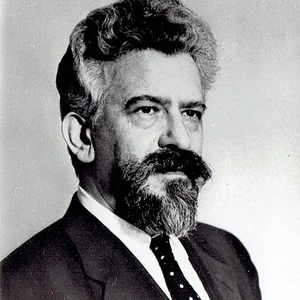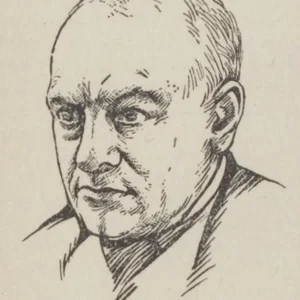

German philosopher and a major figure of phenomenology. He founded an ethics of values (material ethics) and contributed to the rise of philosophical anthropology and the sociology of knowledge.
Max Scheler(1874 — 1928)
Max Scheler
Allemagne
6 min read
Frequently asked questions
Key Facts
- Born in 1874 in Munich, died in 1928 in Frankfurt am Main
- Published 'Formalism in Ethics and Non-Formal Ethics of Values' (1913-1916), a critique of Kantian ethics
- Author of 'The Nature of Sympathy' (1913) and of 'Ressentiment'
- In 'The Human Place in the Cosmos' (1928) he laid the foundations of philosophical anthropology
- A central figure of the phenomenological movement alongside Husserl
Works & Achievements
A famous analysis, in the wake of Nietzsche, of how repressed bitterness distorts moral values. A text still widely read in philosophy and sociology.
His major work, which grounds morality in an objective hierarchy of values, in opposition to Kant's formalism. A pillar of phenomenological ethics.
A phenomenological study of shared feelings, love, and empathy. Here Scheler shows how we gain direct access to the emotional life of others.
A collection of patriotic texts written at the start of the conflict, which Scheler later disavowed. A testament to the involvement of intellectuals in the Great War.
A major work of his Catholic period, devoted to religion and the spiritual renewal of the postwar years. A high point of his philosophy of the spirit.
A founding work of the sociology of knowledge, examining how society shapes the forms of knowledge. Here Scheler distinguishes between technical, cultural, and spiritual knowledge.
A short, testamentary text that founds modern philosophical anthropology. Here Scheler defines the human being through the spirit, capable of saying “no” to its drives.
Anecdotes
Max Scheler had a reputation as a seducer and a bohemian that scandalized the German university world. In 1910, a sensational divorce and lawsuits forced him to give up his chair at Munich: for several years, he lived as an independent philosopher, giving lectures to earn a living.
During the First World War, Scheler was at first an enthusiastic patriot and wrote texts exalting the “genius of war.” But he gradually changed his mind and became, in the final years of the conflict, an advocate of reconciliation and peace among peoples.
Raised in a Jewish family by his mother, Scheler converted to Catholicism in his youth, becoming one of the great Catholic thinkers of his time. Then, toward the end of his life, he drifted away from the Church and abandoned theism for a more pantheistic vision of God, which dismayed his Catholic admirers.
Scheler was nicknamed the “Catholic Nietzsche,” so brilliantly did his intelligence shine in conversation. The philosopher José Ortega y Gasset described him after his death as “the first man of the philosophical paradise,” praising his ability to see new ideas wherever he looked.
Scheler died suddenly of a heart attack in 1928, at only 54 years old, shortly after accepting a prestigious post at the University of Frankfurt. He left behind countless unfinished projects, for he thought and spoke faster than he could write.
Primary Sources
All possible moral values are grounded in the self-evidence of the hierarchical order that prevails among the value modalities themselves.
To understand another person's emotional life is not to reason by analogy from oneself: it is to grasp the other's feeling immediately, within its expression.
Ressentiment is a lasting poisoning of the soul, born from the systematic repression of certain affective impulses and emotions.
Man is the being who can say no, the ascetic of life, capable of opposing the most powerful drives through the force of the spirit.
Key Places
Scheler's hometown and the first great center of his teaching, in the heart of Catholic Bavaria. It was there that he joined the phenomenological circle before losing his professorship.
The university where Scheler studied and defended his thesis under the philosopher Rudolf Eucken. There he cut his teeth as a young scholar.
Scheler obtained a professorship here in 1919 at the new university of the Weimar Republic. There he developed philosophical anthropology and the sociology of knowledge.
The Swiss city where Scheler was sent on a diplomatic mission during the First World War. These travels nourished his reflection on peace between peoples.
Scheler had just accepted a prestigious professorship here when he died suddenly in 1928. The city became his final home.
Typical Objects

Scheler accumulated thousands of pages of handwritten notes, overflowing with ideas he never had time to shape into finished works. A large part of his output was published after his death from these papers.

The philosopher's everyday tool for filling his notebooks with reflections on values and sympathy. Handwriting was still the norm in the German university of the early twentieth century.

The raised platform from which the German professor delivered his lectures. Scheler, a spellbinding orator, electrified his audiences far more through the spoken word than through his writing.

Like many intellectuals of his time, Scheler was a heavy smoker, the cigar accompanying his endless philosophical conversations in cafés.

The founding book of phenomenology, which shaped all of Scheler's thinking. In it he found the method for describing emotional phenomena and values.

The yearbook of phenomenology edited by Husserl, where Scheler published his major texts on ethics. These scholarly journals spread the debates among German philosophers.
School Curriculum
Vocabulary & Tags
Key Vocabulary
Daily Life
Morning
Scheler, a disorderly night owl, was hardly an early riser. His mornings were often spent reading and scribbling notes, his mind teeming with ideas faster than he could get them down on paper.
Afternoon
The afternoon was devoted to lectures at the university, where his dazzling eloquence drew packed halls. He improvised brilliantly, following the thread of his thought before captivated students.
Evening
In the evening, Scheler loved to talk for hours in cafés and salons, a cigar in hand. These passionate conversations, in which he unfurled his oratorical genius, were for him genuine working sessions.
Food
He shared the middle-class diet of the Germany of his time: bread, cold cuts, dishes of meat and potatoes. The cafés, where he spent so much time, supplied coffee, pastries, and tobacco.
Clothing
Scheler wore the dark three-piece suit of the German academic: jacket, waistcoat, stiff collar, and tie. This austere attire contrasted with his turbulent, bohemian private life.
Housing
He lived in middle-class apartments in Germany's major cities — Munich, Cologne, and later Frankfurt. His often unstable life and his changes of post made him move on several occasions.
Historical Timeline
Period Vocabulary
Liens externes & ressources
Références
Œuvres
L'Homme du ressentiment (Das Ressentiment im Aufbau der Moralen)
1912
Le formalisme en éthique et l'éthique matériale des valeurs
1913-1916
Nature et formes de la sympathie
1913
Le génie de la guerre et la guerre allemande
1915
De l'éternel dans l'homme (Vom Ewigen im Menschen)
1921
Les formes du savoir et la société
1926
La situation de l'homme dans le monde
1928