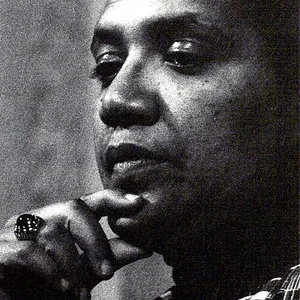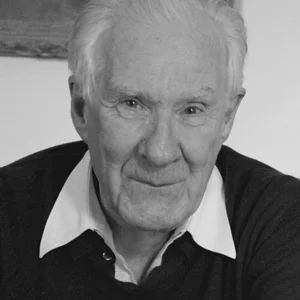

Alain Badiou, born in 1937, is a French philosopher and one of the major figures of contemporary thought. A critical heir to Marxism and Maoism, he developed a philosophy of the event and of truth grounded in mathematics.
Alain Badiou(1937 — ?)
Alain Badiou
France
6 min read
Frequently asked questions
Famous Quotes
« To love what we will never believe twice.»
Key Facts
- Born on January 17, 1937, in Rabat (Morocco)
- Publishes his major work in 1988, *Being and Event*, which grounds ontology in set theory
- Teaches at the École normale supérieure and leads a current of radical communist thought
- Extends his system with *Logics of Worlds* (2006), the second volume of *Being and Event*
- Author of the essay *Saint Paul: The Foundation of Universalism* (1997)
Works & Achievements
The first great synthesis of his thought, bringing together philosophy, politics, and psychoanalysis. It announces the themes of his entire body of work.
His major work, which grounds ontology in the mathematical theory of sets. In it he develops his concepts of event and truth.
A short, programmatic text in which he defends the idea that philosophy is always possible. In it he sets out his four conditions: science, art, politics, and love.
A critique of the humanitarian moralities of his time and a proposal for an ethics founded on fidelity to truths. One of his most widely read books.
The sequel to Being and Event, devoted to the way truths appear in the concrete world. It completes his great philosophical system.
A highly successful political pamphlet analyzing contemporary France. In it he extends his reflection on the communist hypothesis.
An accessible interview in which Badiou defends love as an experience of truth in the face of the logic of consumption. One of his most popular texts among the general public.
Anecdotes
Alain Badiou was born in 1937 in Rabat, Morocco, then a French protectorate. His father, Raymond Badiou, was a mathematician, a Resistance fighter, and the socialist mayor of Toulouse at the Liberation: a legacy of political courage that would shape his entire life.
A brilliant student, Badiou entered the prestigious École normale supérieure on the rue d'Ulm in 1956. There he crossed paths with the greatest thinkers of the era, including his mentor Louis Althusser, who reread Marxism in the light of science.
May 1968 transformed his thinking: Badiou became a committed Maoist militant and founded far-left political groups. For years, he sold militant newspapers outside factory gates, convinced that philosophy must change the real world.
Badiou liked to repeat that philosophy rests on four 'conditions': science, art, politics, and love. For him, falling in love is a genuine 'event' that transforms a life, just as much as a scientific discovery.
Rare for a philosopher, Badiou also wrote novels and plays, notably comedies featuring a recurring character named Ahmed. He wanted to show that ideas can be passed on through laughter as much as through learned treatises.
Primary Sources
The thesis I defend entails no ontological renunciation: mathematics is the history of being qua being.
I propose to call condition of philosophy that whose composition makes its exercise possible: science, art, politics, and love.
A truth is that force of subjectivation which, in fidelity to an event, perseveres.
Philosophy is not one discipline among others: it is the act of thinking what, in a given time, constitutes an exception.
Key Places
Birthplace of Alain Badiou in 1937, then under French protectorate. He spent his early childhood here before the family moved to France.
City where Badiou grew up and where his father was the socialist mayor at the Liberation. A family setting deeply shaped by politics and the Resistance.
He entered here as a student in 1956 and returned as a professor in 1999. A central place of both his training and his teaching.
An experimental university born after May 68 where Badiou taught philosophy for nearly thirty years. A hotbed of political and theoretical ideas.
The center of his intellectual life, where he published, ran his seminars, and took part in the great French philosophical and political debates.
Typical Objects

An indispensable tool for his lectures and seminars, where Badiou writes out equations and diagrams. On it he shows how mathematics serves as the foundation for his philosophy of being.

The mathematical theory of sets, especially that of Cantor and Cohen, lies at the heart of his thought. Badiou makes it the language of ontology, the science of what exists.

In the 1970s, Badiou handed out political newspapers at factory gates. The object embodies his concrete revolutionary commitment.

Badiou writes comedies, including the cycle devoted to the character of Ahmed. Theatre allows him to convey philosophy through laughter and the stage.

The public seminar, inherited from the French philosophical tradition, is his favoured place of thought. For decades, hundreds of listeners came to hear him improvise his ideas.
School Curriculum
Vocabulary & Tags
Key Vocabulary
Daily Life
Morning
Like many academics, Badiou devotes his mornings to writing and reading, studying mathematical treatises as well as poetry or Plato. Intellectual work sets the rhythm of each day.
Afternoon
The afternoon is often reserved for teaching: university lectures, preparing seminars, and discussions with students and colleagues. He enjoys testing his ideas in public.
Evening
In the evening, he writes, reworks his manuscripts, or prepares his political and theatrical interventions. Part of his adult life was also devoted to activist meetings.
Food
Badiou leads the life of a twentieth-century Parisian intellectual, with no particular diet. Meals are above all moments of conversation and debate among friends and colleagues.
Clothing
He dresses in a plain, classic manner, in a suit and jacket, much like the university professors of his generation. Nothing extravagant: the focus goes to ideas.
Housing
He lives mainly in Paris and its surrounding region, in the urban setting characteristic of French academic life. His home is above all a workplace surrounded by books.
Historical Timeline
Period Vocabulary
Liens externes & ressources
Références
Œuvres
Théorie du sujet
1982
L'Être et l'Événement
1988
Manifeste pour la philosophie
1989
L'Éthique. Essai sur la conscience du mal
1993
Logiques des mondes
2006
De quoi Sarkozy est-il le nom ?
2007
Éloge de l'amour
2009