 Flip the card
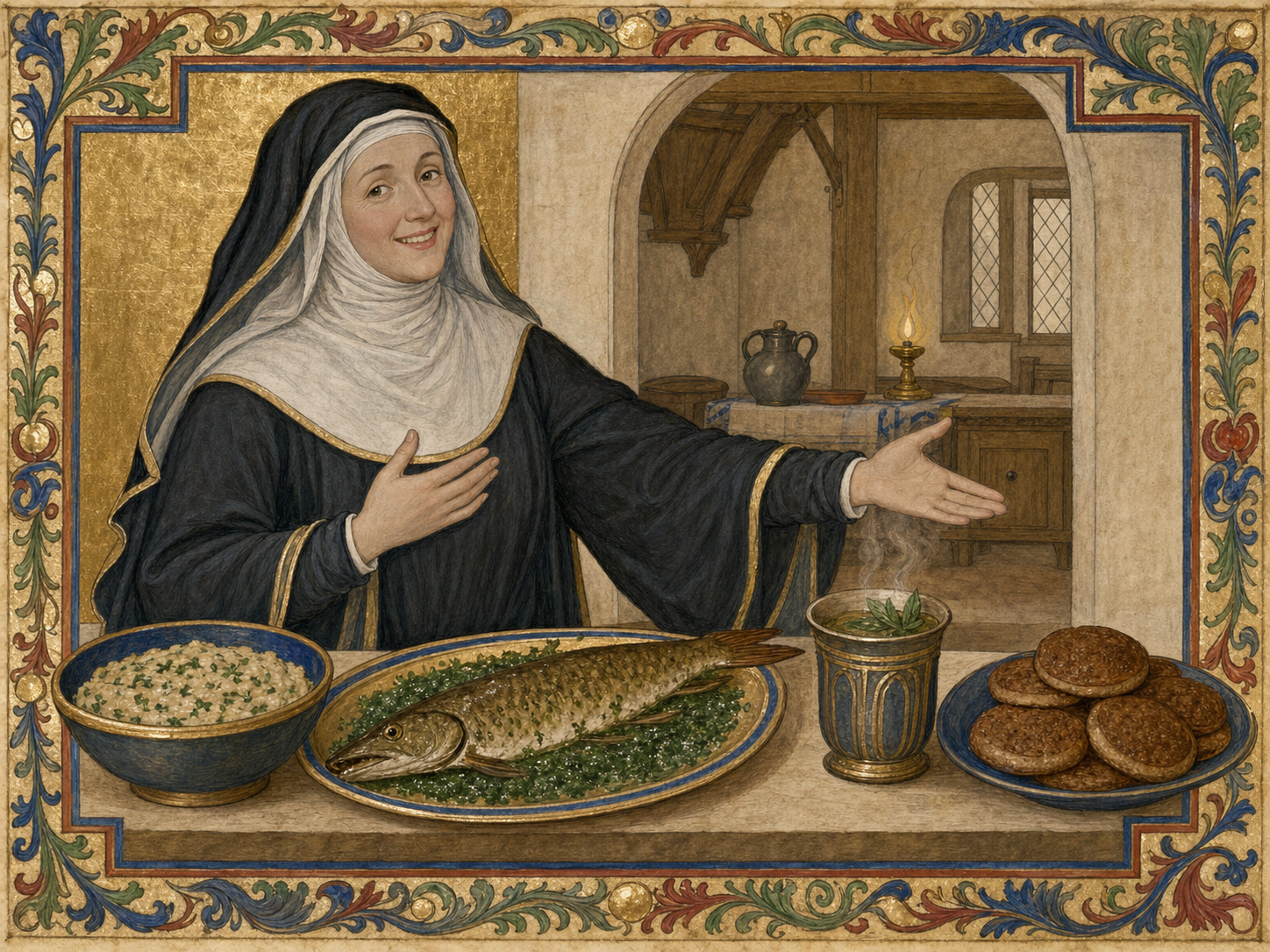
Mechthild of Magdeburg at the table
1207 — 1282
On the menu
The Refectory (prandium and cena)
A Beguine living by convent rhythm, Mathilde shared the table governed by the Rule of Saint Benedict: two cooked meals on ordinary days (the midday prandium and the evening cena), each consisting of two pulmenta—stewed dishes of grains, vegetables, or fish—a libra of dark bread, and sometimes a 'pittance' (pietantia), a small treat added on feast days. They ate in silence, listening to holy reading, with water and small beer as drink, wine reserved for the sick and solemnities. Frugality was not deprivation but discipline of the soul.
Signature : Honey from the Cloister Beehives
In Rhenish and Saxon convents, bees provided both wax for candles and honey—the only true sugar of the Middle Ages. It bound gingerbread, sweetened remedies, and made the feast-day pittance a permitted joy. For Mathilde, honey links the work of hands to the light of the altar.
click to flip back
Mechthild of Magdeburg at the table
1207 — 1282
5 period recipes
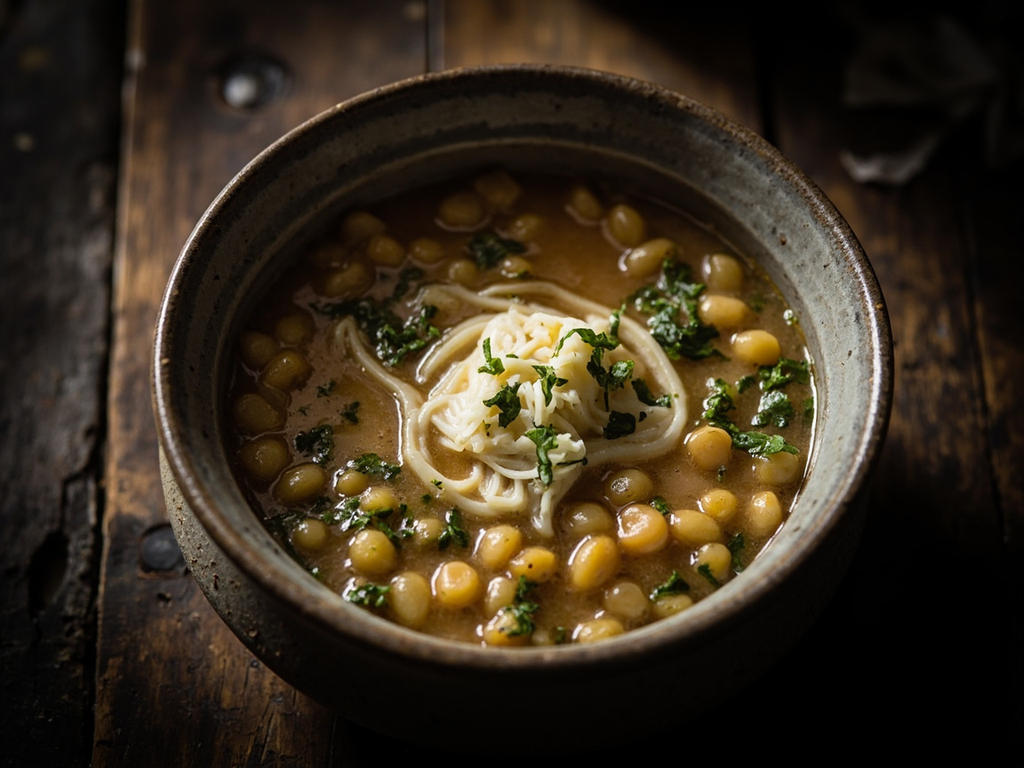 Everyday
Herbed Barley Pottage (Gerstenmus)
Pulmentum (cooked dish of the refectory)
🍄 🧂· 1 h
View the recipe
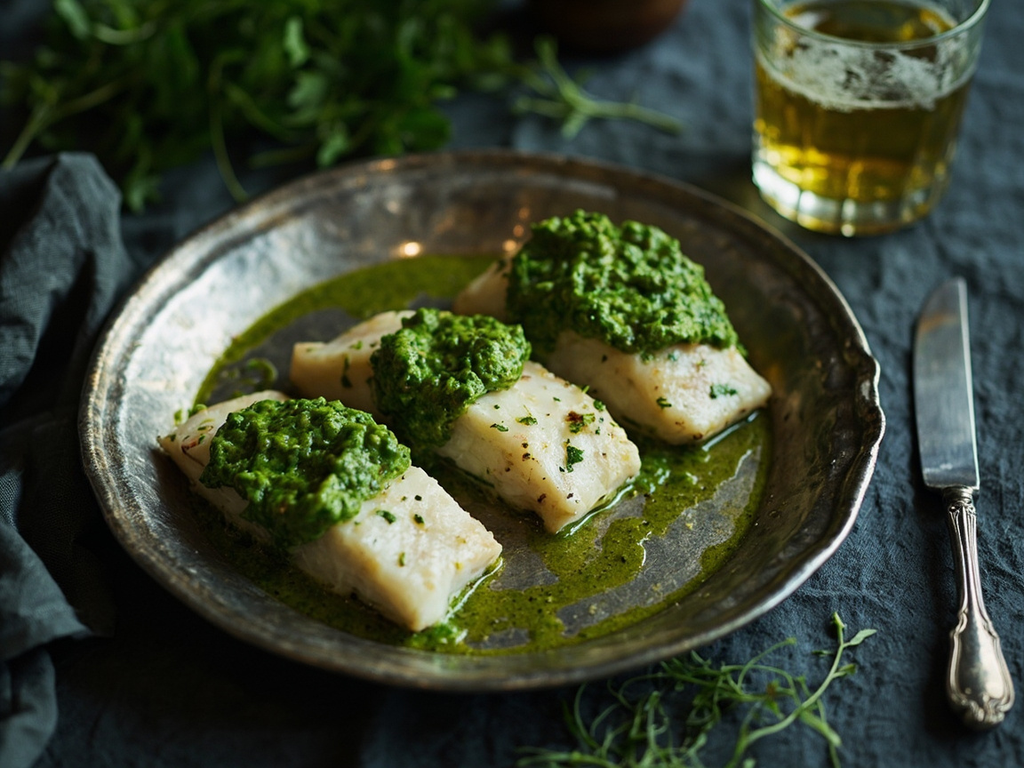 Festive
Pike in Green Sauce (Hecht in grüner Soße)
Pittance for Meatless Days (fish dish)
🍋 🧂· 40 min
View the recipe
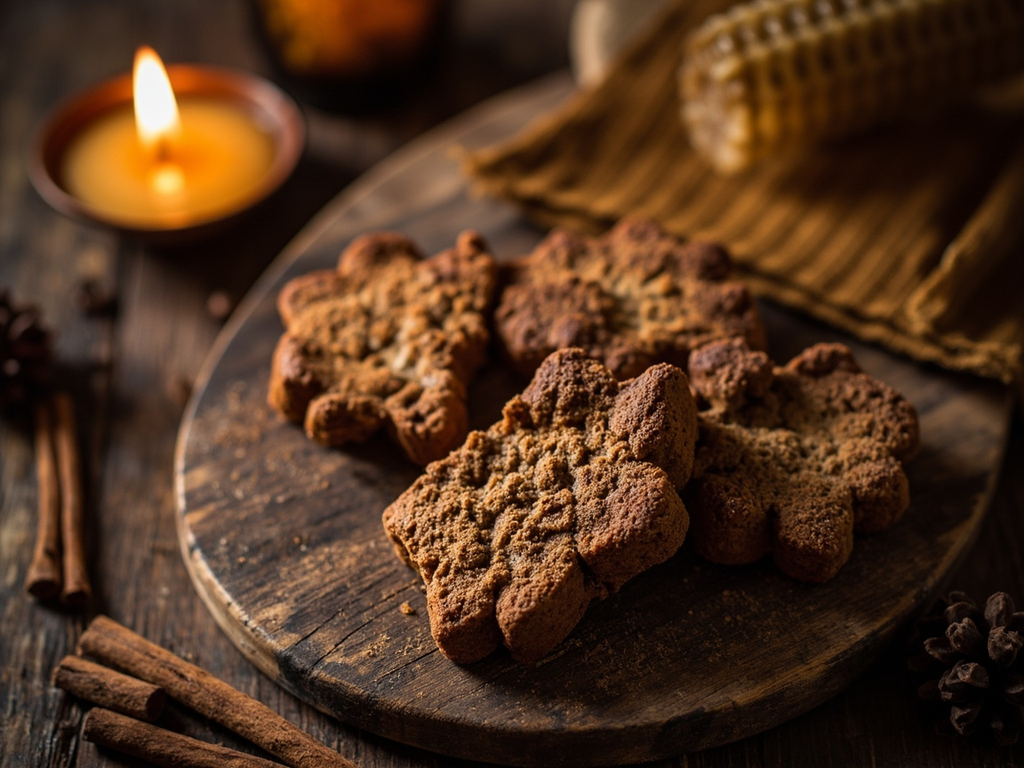 Preserving
Honey Pfefferkuchen (Keeping Gingerbread)
Pietantia for Storage (feast-day sweet)
🍯 🌶️· 45 min (+ resting)
View the recipe
 Remedy
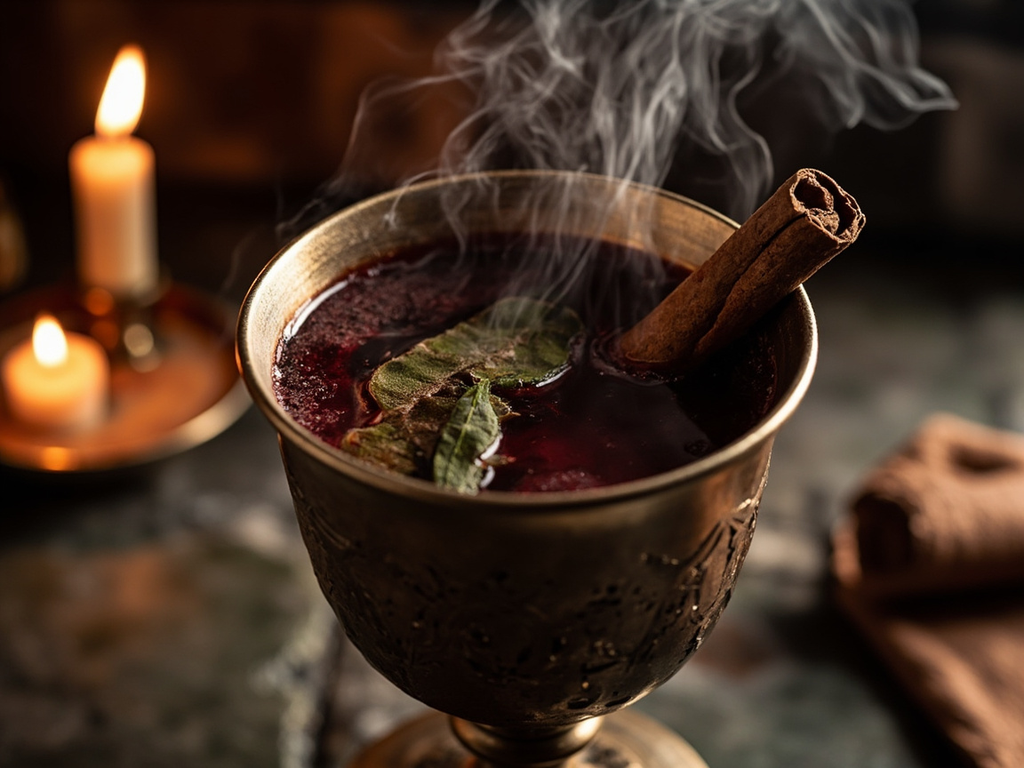
Sage and Honey Mulled Wine (Salbeiwein) for the Sick
Infirmary Remedy (comforting potion)
☕ 🍯· 15 min
View the recipe
 Offering
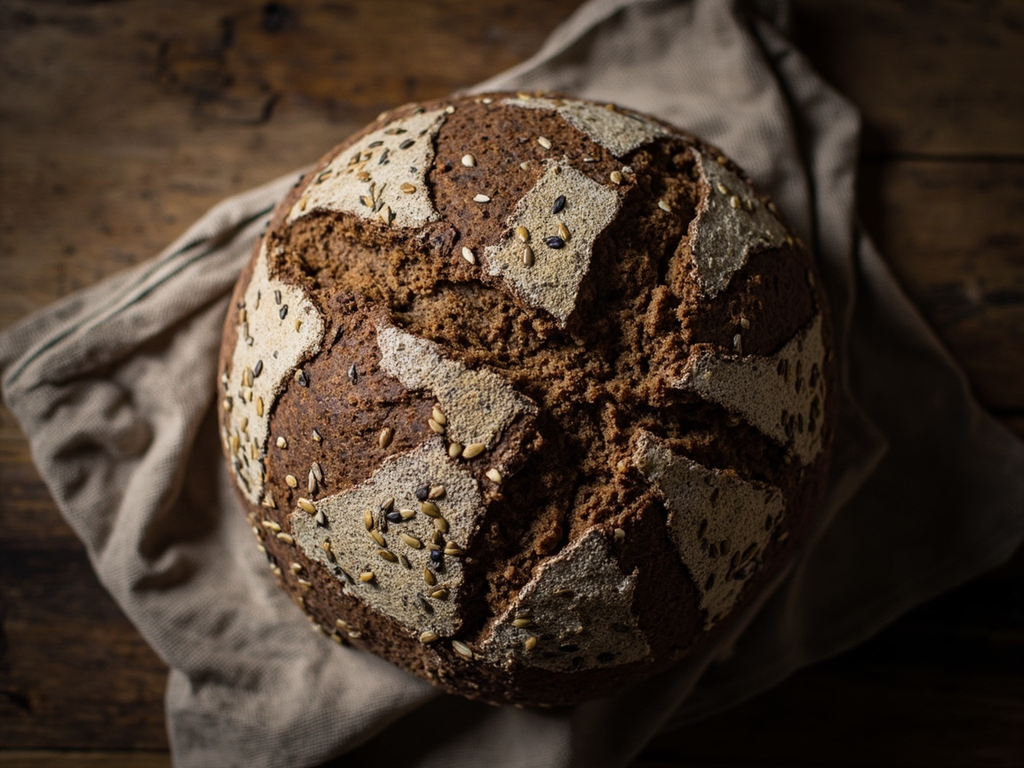
Seelbrot — Soul Bread with Caraway
Alms Bread (offering to the poor and the dead)
🫙· 1 h (+ 6 h rising)
View the recipe