 flip
flipHoney Pfefferkuchen (Keeping Gingerbread)
Honey Pfefferkuchen (Keeping Gingerbread)
Why this dish? Honey gingerbread, a specialty of German convents, kept for weeks: it was baked before major liturgical feasts to sweeten Advent or Easter on Mathilde's table, where honey from the hives was the only sweetness.
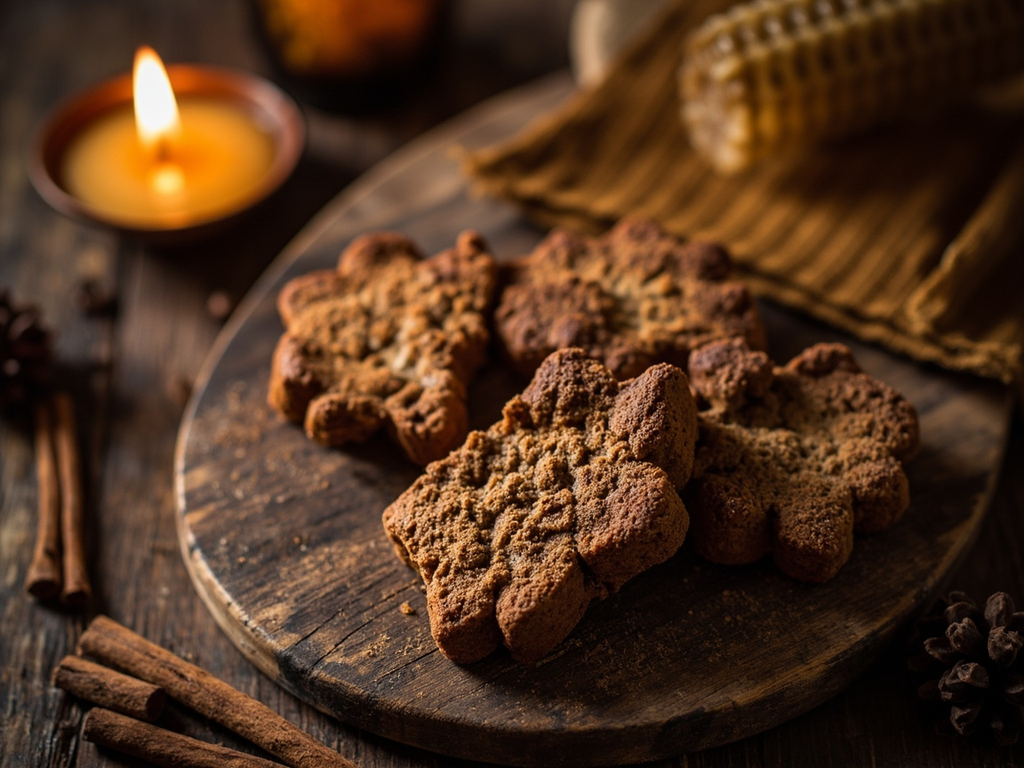
A honey and rye bread long-spiced with ginger, cinnamon, cloves, and pepper, which hardens and improves with aging. The quintessential keeping cake, made to last through the weeks of fasting until the feast.
We kneaded it well before the feast, for this bread needs time as the soul needs patience. I warmed the honey until it flowed, I poured in the rye and all the spices brought from afar by merchants, and I let the dough rest for days in a cool place. The longer it waited, the sweeter and deeper it became—see there a parable: what ripens in shadow and silence yields the sweetest honey. With each piece, remember that sweetness is a grace, not a right.
- •Honey — a good pot (sweetener and preservative)
- •Rye flour — enough for a stiff dough (structure)
- •Ginger, cinnamon, clove, pepper — pinches (keeping spices)
- •Candied peel (if available) — a few (fragrance)
Honey Pfefferkuchen (Keeping Gingerbread)
A honey and rye bread long-spiced with ginger, cinnamon, cloves, and pepper, which hardens and improves with aging. The quintessential keeping cake, made to last through the weeks of fasting until the feast.
Why this dish? Honey gingerbread, a specialty of German convents, kept for weeks: it was baked before major liturgical feasts to sweeten Advent or Easter on Mathilde's table, where honey from the hives was the only sweetness.
We kneaded it well before the feast, for this bread needs time as the soul needs patience. I warmed the honey until it flowed, I poured in the rye and all the spices brought from afar by merchants, and I let the dough rest for days in a cool place. The longer it waited, the sweeter and deeper it became—see there a parable: what ripens in shadow and silence yields the sweetest honey. With each piece, remember that sweetness is a grace, not a right.
Ingredients (period version)
- Honey — a good pot (sweetener and preservative)
- Rye flour — enough for a stiff dough (structure)
- Ginger, cinnamon, clove, pepper — pinches (keeping spices)
- Candied peel (if available) — a few (fragrance)
Ingredients
- Honey — 250 g (sweetener and preservative)
- Rye flour — 300 g (structure)
- Ground ginger, cinnamon, clove, pepper mix — 2 tsp total (keeping spices)
- Baking soda — 1 tsp (leavening (modern adaptation))
- Chopped candied orange peel — 50 g (optional) (fragrance)
- Warm milk or water — 5 cl if dough is too dry (adjustment)
Method
- Warm the honey without boiling until runny.
- Mix rye flour, spices, and baking soda.
- Pour in the warm honey and mix to a stiff dough; add candied peel (and a little liquid if needed).
- Ideally, let the dough rest 1–2 days in a cool place (traditional step).
- Roll out to 1.5 cm, cut shapes, and bake at 170°C for 15–18 minutes.
- Cool completely and let mature for a few days in a box with a quarter apple.
How it was made : Pfefferkuchen (literally 'pepper cake,' from the medieval generic term for spices) was a monastic and urban specialty of northern Europe. Without chemical leavening, it rose little and kept thanks to hygroscopic honey and drying; it was often rested long before and after baking to soften and aromatize.
The contemporary twist : Cut into hearts and glazed with a honey stroke, like the Lebkuchen of German Christmas markets, direct descendants of these convent gingerbreads.
Sources : Hildegard of Bingen, Physica (medicinal use of spices) · Daz Buoch von guoter Spise (honey sweets)
Mechthild of Magdeburg · Charactorium