 flip
flipSage and Honey Mulled Wine (Salbeiwein) for the Sick
Sage and Honey Mulled Wine (Salbeiwein) for the Sick
Why this dish? Wine was reserved for the sick under the Rule, and Beguines like nuns cared for the suffering: a warm wine sweetened with honey and infused with sage—herb of salvation in monastic medicine—was the drink brought to the bedsides of the weak.
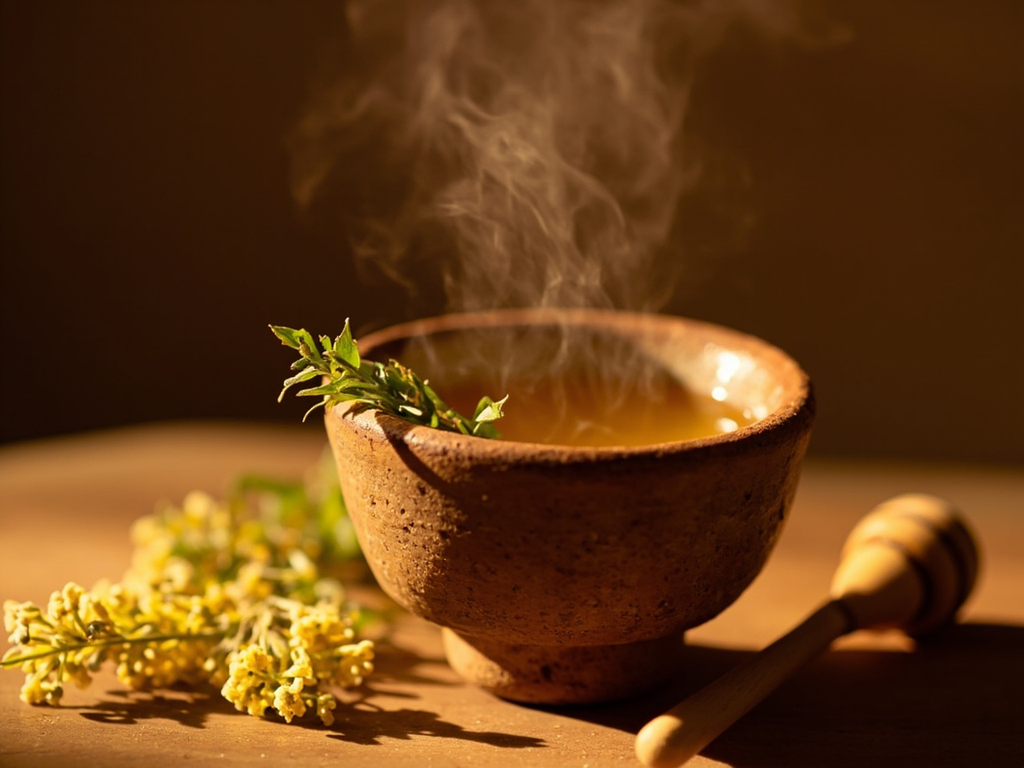
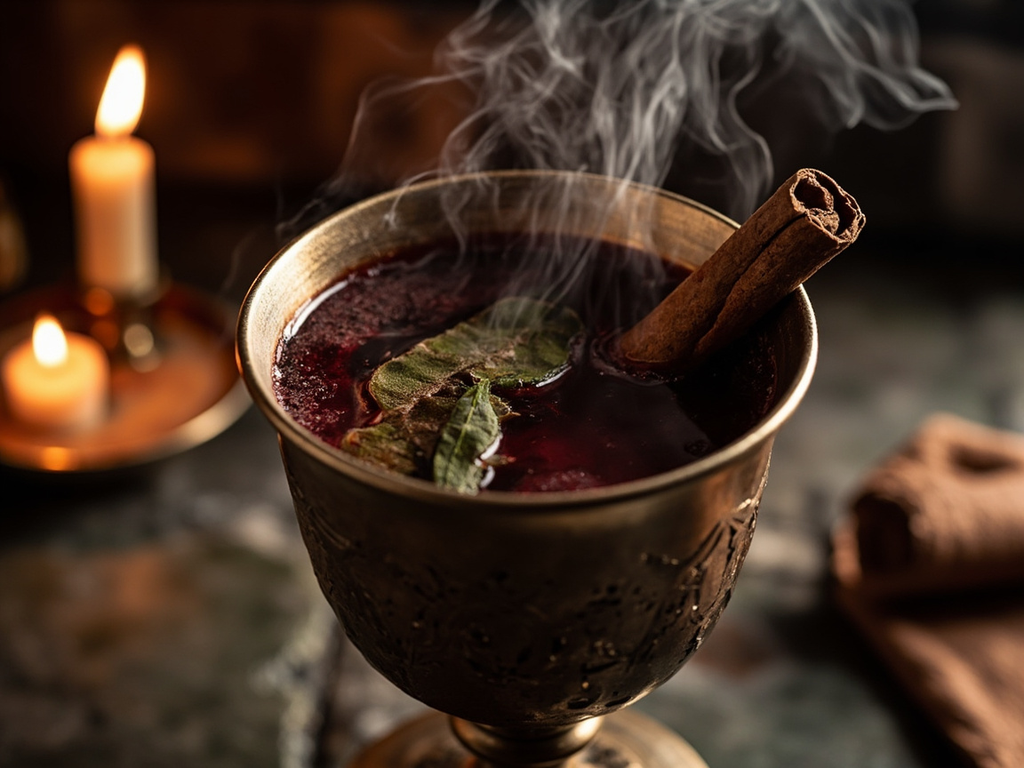
A little wine warmed, scented with sage and a few spices, sweetened with honey. An infirmary drink, halfway between comfort and remedy, for days of fever and fatigue.
When a sister lay languid with fever, I warmed a little wine—for the Rule allows it to the weak—and I threw in sage, that herb the ancients called salvatrix, the savior. A trickle of honey to soften the bitter, a pinch of spice to warm the blood, and I brought it to her lips while praying softly. Do not think caring for the body is a lowly thing: Our Lord touched the sick with His hand. Drink it slowly, and let the warmth be your consolation.
- •Wine — a cup (warming base)
- •Fresh sage — a few leaves (medicinal herb)
- •Honey — a spoonful (sweetness)
- •Ginger or cinnamon — a pinch (spiced warmth)
Sage and Honey Mulled Wine (Salbeiwein) for the Sick
A little wine warmed, scented with sage and a few spices, sweetened with honey. An infirmary drink, halfway between comfort and remedy, for days of fever and fatigue.
Why this dish? Wine was reserved for the sick under the Rule, and Beguines like nuns cared for the suffering: a warm wine sweetened with honey and infused with sage—herb of salvation in monastic medicine—was the drink brought to the bedsides of the weak.
When a sister lay languid with fever, I warmed a little wine—for the Rule allows it to the weak—and I threw in sage, that herb the ancients called salvatrix, the savior. A trickle of honey to soften the bitter, a pinch of spice to warm the blood, and I brought it to her lips while praying softly. Do not think caring for the body is a lowly thing: Our Lord touched the sick with His hand. Drink it slowly, and let the warmth be your consolation.
Ingredients (period version)
- Wine — a cup (warming base)
- Fresh sage — a few leaves (medicinal herb)
- Honey — a spoonful (sweetness)
- Ginger or cinnamon — a pinch (spiced warmth)
Ingredients
- Light red wine — 25 cl (warming base (non-alcoholic: grape juice))
- Fresh sage — 6 leaves (medicinal herb)
- Honey — 1–2 tbsp (sweetness)
- Fresh ginger slices or cinnamon stick — 2 slices / 1 stick (spiced warmth)
Method
- Pour the wine (or grape juice) into a small saucepan.
- Add sage and ginger or cinnamon.
- Heat gently without boiling for 5–8 minutes to infuse.
- Remove from heat, strain, and stir in honey off the heat to preserve its virtues.
- Serve warm in a cup, to be drunk slowly.
How it was made : Monastic medicine, heir to Hildegard of Bingen and the School of Salerno, considered sage (salvia, 'the savior') a sovereign herb against fevers and weakness. Spiced, honeyed warm wine served as a vehicle for simples; it was reserved for the infirm, in accordance with the Rule that granted wine only to the sick and the elderly.
The contemporary twist : A non-alcoholic version with grape juice and sage infusion, served steaming in a cup like a winter tisane—a medieval grog revisited.
Sources : Rule of Saint Benedict, ch. 36 and 40 (care of the sick, wine for the weak) · Hildegard of Bingen, Causae et curae (virtues of sage)
Mechthild of Magdeburg · Charactorium