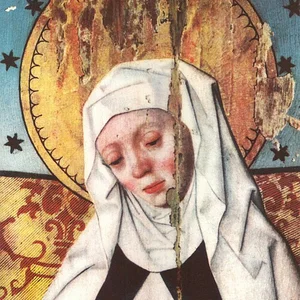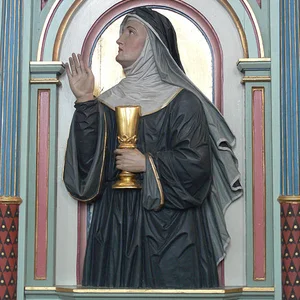

A Rhenish mystic and German beguine, Mechthild of Magdeburg is the author of The Flowing Light of the Godhead, one of the first great mystical texts written in the vernacular. A major spiritual figure of the 13th century, she describes the union of the soul with God in poetic language of rare intensity.
Mechthild of Magdeburg(1207 — 1282)
Mechthild of Magdeburg
Allemagne
7 min read
Frequently asked questions
Famous Quotes
« I cannot dance, Lord, unless you lead me. If you want me to leap for joy, you must sing for me yourself.»
« The soul that loves God finds rest in God alone.»
Key Facts
- Around 1230: she joins a beguine community in Magdeburg and leads a life of piety and contemplation.
- Between 1250 and 1270: she writes Das fließende Licht der Gottheit (The Flowing Light of the Godhead) in Middle Low German — the language of the people — rather than Latin.
- Her bold work draws criticism from clergy; she herself denounces clerical corruption in her writings.
- Around 1270: having gone blind and grown frail, she enters the Cistercian convent of Helfta, one of the great centers of female intellectual life at the time.
- She dies around 1282 at Helfta, leaving behind a body of work that would have a lasting influence on Rhenish mysticism, including on Meister Eckhart.
Works & Achievements
A major mystical work written in Middle High German, blending prose and poetry to describe her visionary experiences and mystical union with God. This foundational text of Rhenish mysticism profoundly shaped medieval spirituality in the vernacular.
A collection of spiritual visions documented throughout her life, recounting experiences of ecstasy and divine communion. These revelations established Mechthild as a recognized spiritual authority within the medieval Church.
The development and transmission of a mystical approach grounded in divine love and personal experience of the sacred, deeply influencing the spiritual theology of the late Middle Ages and inspiring other mystics.
Epistolary exchanges with other religious figures and members of the clergy, spreading her mystical teachings and contributing to the theological debates of her time.
Her role as an inspirational figure and spiritual guide at the Cistercian convent of Helfta, where she helped establish a major center of female mysticism and spiritual teaching in Germany.
Anecdotes
Mechthild of Magdeburg wrote The Flowing Light of the Godhead, an extraordinary mystical work in which she described her spiritual visions with a poetic intensity rare for the time. Written in Low German and Latin, the book was so revolutionary in its approach to personal religious experience that the Inquisition nearly condemned it as heretical after her death.
At the age of 23, Mechthild left a comfortable life at court to become a beguine in Magdeburg, turning her back on her family's wealth and prestige. This bold decision reflected her intense desire to serve God, and it impressed the pope and the religious authorities of her day.
In her writings, Mechthild recounted that she had received direct visions from God since childhood — mystical experiences she documented with great care. These intimate accounts of her spiritual life made her an exceptional figure among women writers of the Middle Ages, at a time when very few dared to write about their innermost thoughts.
Pope Gregory IX himself approved Mechthild's spiritual teachings, acknowledging the authenticity of her mystical visions. This papal endorsement was invaluable, as it shielded her writings from charges of heresy — a very real danger for women mystics of her era.
Primary Sources
I saw a light descend upon me and I felt my soul expand in the ineffable sweetness of the divine presence. It was then that the Lord spoke to me and said: You are my beloved bride.
Love without measure flows through me like a river overflowing its banks. My soul unites with God in the secret of my heart, and I cannot express in human words this ineffable bliss.
The blessed Mechthild, a woman of great holiness and deep contemplation, led a life of penance at the convent of Helfta. Her wondrous visions and spiritual ecstasies edified all who knew her.
Key Places
Mechthild's birthplace in 1207. Magdeburg was an important religious and cultural center of the Holy Roman Empire, where she received her early education.
The main center of Mechthild's spiritual and literary activity from 1261 onward. This Cistercian convent in Saxony was the heart of her mystical life and the place where she composed her major works.
The convent where Mechthild spent her formative years of religious training before joining Helfta. It was here that she developed her mystical vocation.
The region of the Holy Roman Empire where Mechthild spent most of her religious life and wrote her major mystical works, becoming a prominent spiritual figure.
Typical Objects

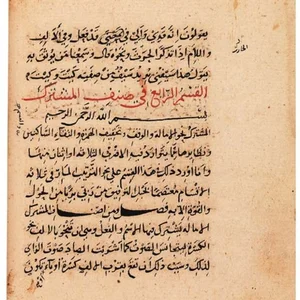
A richly hand-illustrated religious work, typical of the Middle Ages. Mechthild of Magdeburg composed her mystical visions in manuscript texts that circulated among religious communities.

A white or grey veil worn by beguines, semi-religious women's communities of the Middle Ages. Mechthild belonged to a beguine community — women dedicated to spiritual life without taking formal monastic vows.

A string of beads used to count prayers, a central instrument of medieval devotion. An everyday object of prayer associated with Mechthild of Magdeburg's intense spiritual life.

A candleholder used in churches and monasteries for ritual illumination. A symbol of medieval religious life and of the atmosphere of the places of worship where Mechthild spent her days.

A medieval writing instrument used with ink. An object closely tied to Mechthild, who set down her mystical experiences and visionary revelations in writing.

A precious small chest containing the relics of saints, venerated throughout the Middle Ages. A devotional object characteristic of the medieval spirituality that deeply shaped Mechthild's inner life.

A representation of the crucified Christ, an ever-present object of spiritual meditation in medieval religious interiors. The central focus of Mechthild's contemplative life.

A liturgical book containing the canonical hours of the day, used by the religious for prayer. An essential document in the daily life of the religious communities to which Mechthild belonged.
School Curriculum
Vocabulary & Tags
Key Vocabulary
Tags
Daily Life
Morning
Mechthild rises before dawn to attend the religious offices of Matins and Lauds at the church of Helfta convent in Saxony, where she has lived since joining the Benedictines. After communal prayers, she devotes herself to spiritual reading and the copying of manuscripts or the writing of her mystical visions — essential occupations for a beguine and mystic of the 13th century.
Afternoon
The afternoon is spent in the scriptorium workshop, where she participates in transcribing religious texts or continues drafting her divine revelations. Mechthild may also take on communal duties within the convent — cooking, laundry, or gardening — according to the monastery's schedule of responsibilities.
Evening
Vespers mark the beginning of the evening with communal prayers. Mechthild takes a frugal meal in the convent refectory, where a brother reads aloud from spiritual texts. She then withdraws to her cell for private prayer and mystical meditation before Compline, the last office of the day before the night's rest.
Food
Mechthild's monastic diet consists mainly of dark bread, vegetables from the convent gardens, cheese, and fish on meatless days. Meals are very plain and governed by the Benedictine Rule, with water and low-alcohol beer as the main drinks; wine is reserved for special occasions or for the sick.
Clothing
Mechthild wears the habit of the Benedictine nuns: a black or grey heavy wool robe, a white veil covering the hair, and a scapular. Her simple, unadorned garments reflect the monastic vows of poverty and humility, typical of female religious communities in the Middle Ages.
Housing
Mechthild lives in Helfta convent, founded in the 12th century in Saxony (present-day Germany), a prosperous community of reformed Benedictine nuns. She occupies a small personal cell containing a bed, a writing desk, and a few religious objects, in keeping with the monastery's strict communal life.
Historical Timeline
Period Vocabulary
Visual Style
Un style inspiré des manuscrits enluminés gothiques du XIIIe siècle, associant la richesse des ornements médiévaux à une atmosphère mystique et spirituelle, avec des jeux de lumière dorée évoquant les visions divines de Mathilde de Magdebourg.
Sound Ambience
Ambiance sonore d'un monastère médiéval allemand du 13e siècle : chants grégoriens, sons d'écriture contemplative, cloches monastiques et silence recueilli, incarnant la vie spirituelle et mystique de Mathilde de Magdebourg.
Liens externes & ressources
Références
Œuvres
Le Fluide de la Divinité (Das fliessende Licht der Gottheit)
1250-1270
Visions et révélations mystiques
1240-1280
Enseignement de la mystique affective
1250-1282
Correspondance spirituelle
1260-1280
Direction spirituelle du couvent de Helfta
1258-1282