 flip
flipMelitouta — Honey and Sesame Cake as an Offering
Melitouta — Honey and Sesame Cake as an Offering
Why this dish? The dead and the chthonic powers — to which the Gorgons belong — were appeased with honey cakes placed on stone. The melitouta is the gesture a prudent mortal would offer to cross Medusa's territory without becoming a statue.
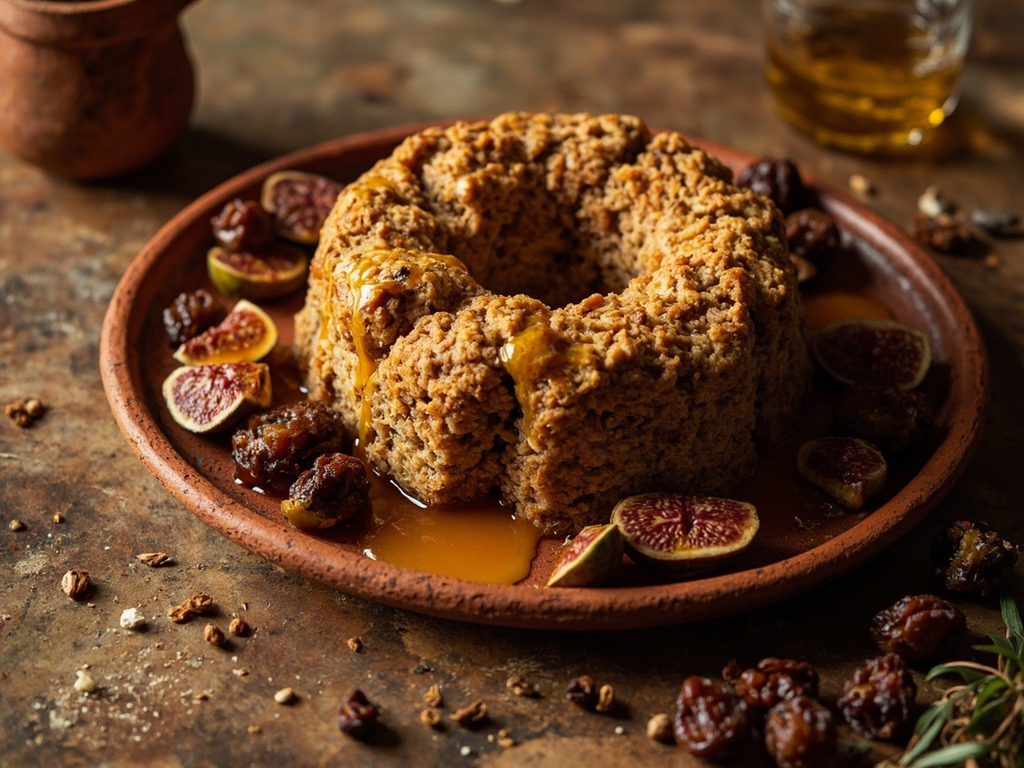
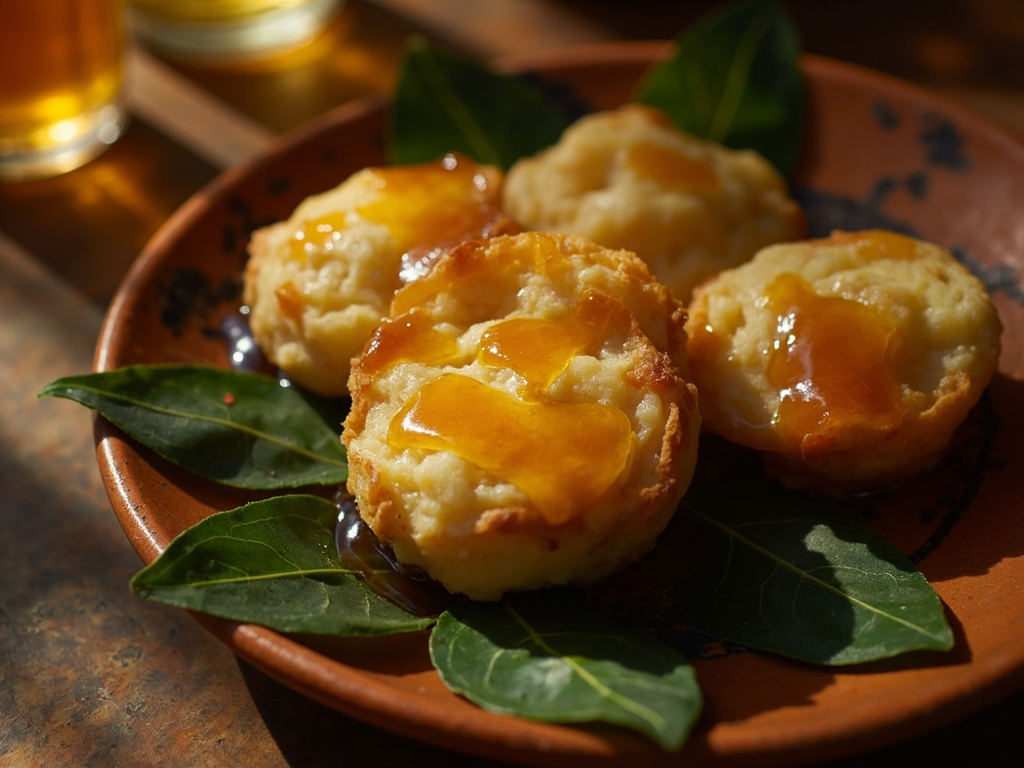
A small cake of flour kneaded with honey and sesame, baked until golden. Sweet, fragrant, it served both as a banquet dessert and as an offering set out for gods and the dead.
Inspired by ancient offerings — not the reproduction of a sacred rite. If you want to pass near me without ending up turned to stone, prudent mortal, do not bring a sword: bring honey. Knead it with flour, roll it in sesame, bake it golden, and place it on the bare stone without a wrong word. Sweets soften even those whom men have cursed. Avert your eyes, lay down your cake, and go — that is how you honor what you fear.
- •Wheat flour — a measure (base)
- •Honey — generous (sweet binder)
- •Sesame seeds — a handful (signature / coating)
- •Olive oil — a little (fat)
Melitouta — Honey and Sesame Cake as an Offering
A small cake of flour kneaded with honey and sesame, baked until golden. Sweet, fragrant, it served both as a banquet dessert and as an offering set out for gods and the dead.
Why this dish? The dead and the chthonic powers — to which the Gorgons belong — were appeased with honey cakes placed on stone. The melitouta is the gesture a prudent mortal would offer to cross Medusa's territory without becoming a statue.
Inspired by ancient offerings — not the reproduction of a sacred rite. If you want to pass near me without ending up turned to stone, prudent mortal, do not bring a sword: bring honey. Knead it with flour, roll it in sesame, bake it golden, and place it on the bare stone without a wrong word. Sweets soften even those whom men have cursed. Avert your eyes, lay down your cake, and go — that is how you honor what you fear.
Ingredients (period version)
- Wheat flour — a measure (base)
- Honey — generous (sweet binder)
- Sesame seeds — a handful (signature / coating)
- Olive oil — a little (fat)
Ingredients
- Wheat flour — 200 g (base)
- Honey (thyme or blossom) — 120 g (sweet binder)
- Sesame seeds — 60 g (signature / coating)
- Olive oil — 2 tbsp (fat)
- Water — a little if needed (binder)
Method
- Lightly toast the sesame seeds in a dry pan, then set aside.
- Mix the flour, oil, and half the honey, adding a little water to form a firm dough.
- Shape into small balls or flat cakes, roll them in the sesame seeds.
- Bake at 180°C for about 15 minutes until golden.
- Upon removal, glaze with the remaining warmed honey to fix the sesame seeds.
How it was made : The Greeks regularly offered honey cakes (pelanos, popana, melitouta) to the gods and the dead, honey being the universal sweetener before cane sugar. Sesame, cultivated in the eastern Mediterranean, accompanied festivals and weddings.
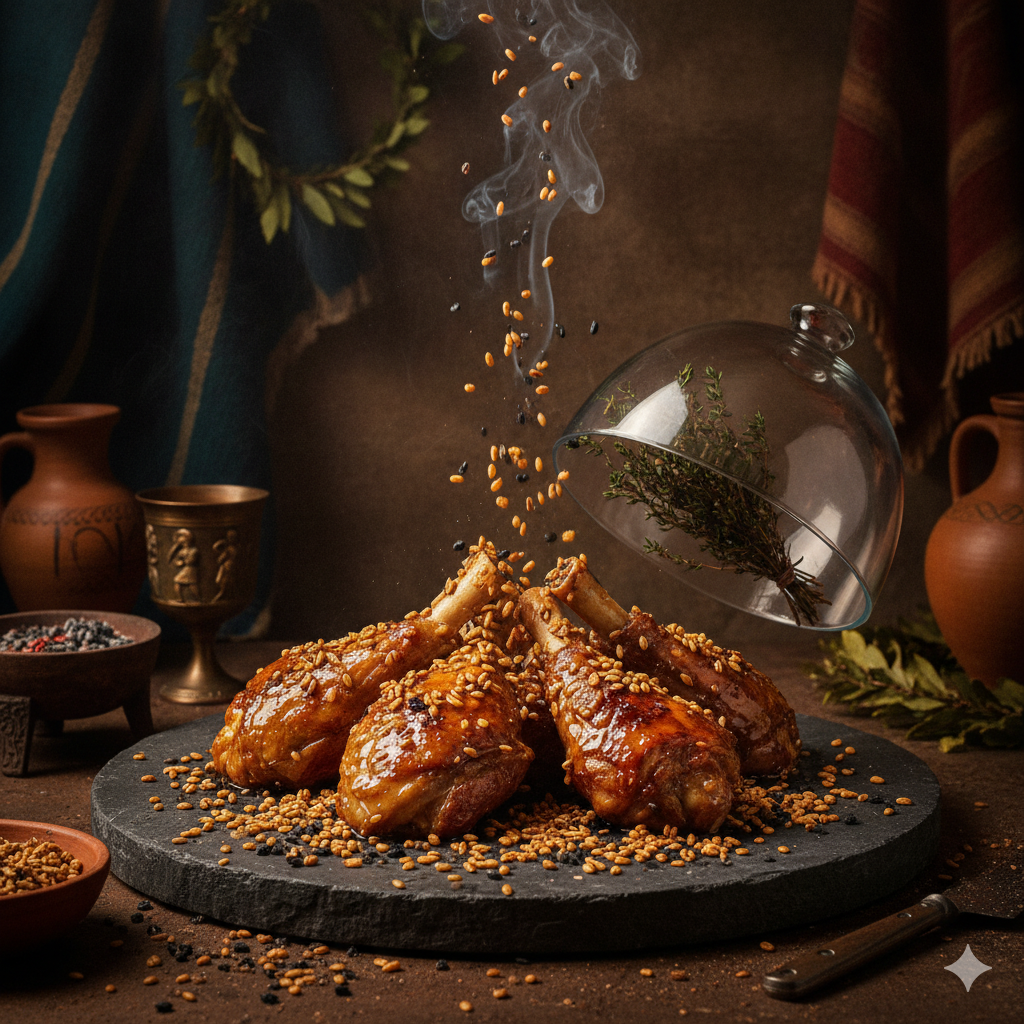
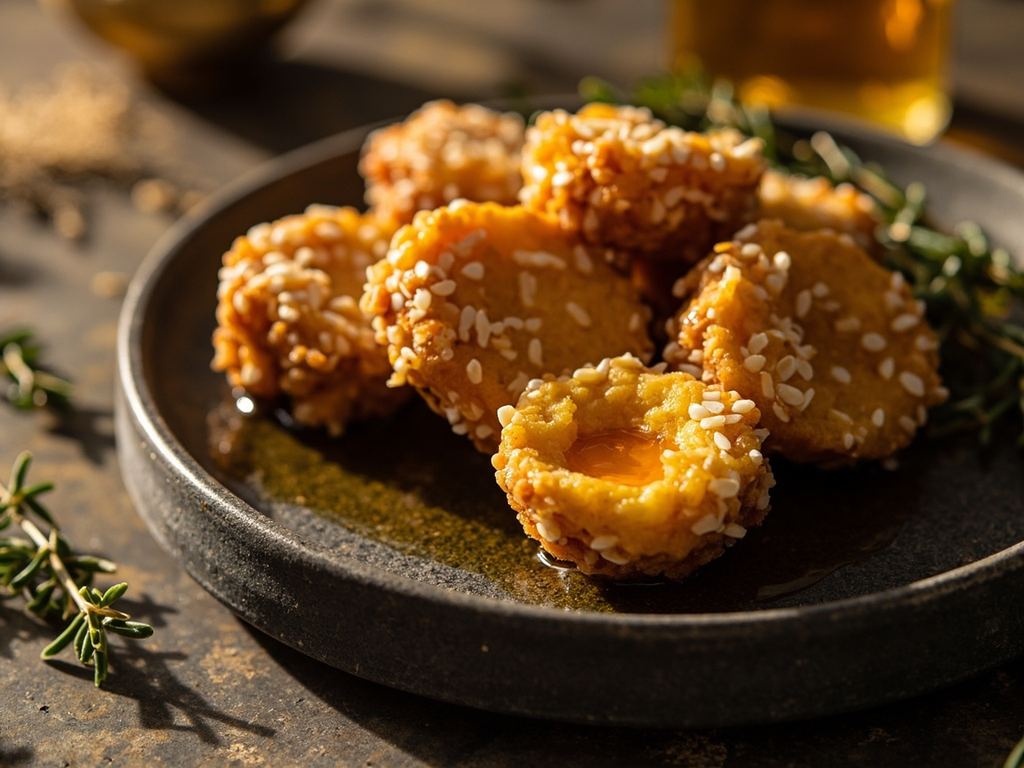
The contemporary twist : Present as golden bites on a black stone plate, "offering to the Gorgon" style, drizzled with flowing honey.
Sources : Andrew Dalby & Sally Grainger, The Classical Cookbook · Pollux, Onomasticon (names of Greek cakes)
Medusa · Charactorium