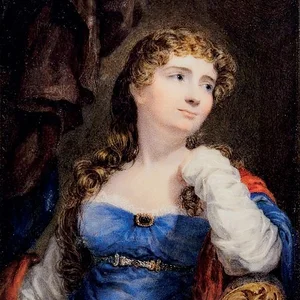

Princess, poet, and Fulani scholar of the Sokoto Caliphate (present-day Nigeria), daughter of reformer Usman dan Fodio. She wrote in Arabic, Fulfulde, and Hausa, and founded a network of traveling female teachers to educate rural women. A major figure of West African Islam in the 19th century.
Frequently asked questions
Famous Quotes
« "Seek knowledge, for it is a duty upon every Muslim man and woman." (words attributed by tradition, inspired by the teachings of Usman dan Fodio)»
« "Educate women, for they will educate nations." (maxim associated with her educational movement in Fulani oral tradition)»
Key Facts
- Born in 1793 in Degel (present-day Nigeria), daughter of Usman dan Fodio, founder of the Sokoto Caliphate
- Mastered four languages: Arabic, Fulfulde, Hausa, and Tamajaq — her writings are largely preserved and documented
- Founded the 'jaji' system: a network of trained traveling female teachers to educate women in rural areas
- Left more than 60 written works (poems, religious texts, elegies) — an exceptional body of work for an African woman of the 19th century
- Died in 1864 in Sokoto, revered as a major spiritual and intellectual figure of West African Islam
Works & Achievements
An oral poem in Fulfulde composed upon the death of her father, the founding figure of the Sokoto Caliphate. One of her earliest major attested works, transmitted by the jaji and regarded as a reference text of West African Islamic poetry.
A didactic poem in Hausa intended to be sung by rural women to help them memorize the names and virtues of the Prophet's companions. A landmark example of her pedagogical method of teaching through music and oral tradition.
A text in Arabic addressed to the young boys and girls of the caliphate, introducing them to the basic obligations of Islam. It reflects her commitment to educating all members of society, regardless of gender.
A mourning poem composed upon the death of her brother Sultan Muhammad Bello, who was also her closest intellectual partner. The text illustrates her role as the living memory of the dan Fodio dynasty.
The creation of a structured network of itinerant educators (jaji) trained by Asma'u to teach rural women throughout the caliphate. This unprecedented educational initiative in West Africa remains her most enduring contribution to the history of education.
A body of texts in Arabic and Fulfulde expounding the Sufi doctrine of the Qadiriyya order, to which her family belonged. Written to guide the faithful in their spiritual practice, they also served as teaching materials.
Anecdotes
Nana Asma'u mastered four languages: Arabic, Fulfulde, Hausa, and Tamasheq. At a time when access to education was reserved for men, she composed poetry in each of these languages, demonstrating that faith and knowledge had no gender boundaries.
She founded a network of itinerant female teachers known as jaji (within the yan taru movement), trained to travel from village to village educating rural women. Each jaji wore a distinctive hat woven from straw, which served as her mark of recognition and authority.
After the death of her father Usman dan Fodio in 1817, Nana Asma'u wrote a lengthy elegy in Fulfulde to mourn his passing. This poem, passed down orally from generation to generation, is still recited today in certain communities of northern Nigeria.
Her brother Muhammad Bello, Sultan of Sokoto, regularly consulted her on theological and legal matters. She composed didactic poems for him summarizing the Sufi principles of the Qadiriyya order, helping new converts memorize the foundational teachings.
Nana Asma'u produced more than sixty documented works, including commemorative poems, pedagogical texts, and historical narratives. Some of these texts were set to music to aid memorization by illiterate women, thereby inventing an original form of popular education.
Primary Sources
An oral poem in Fulfulde composed by Nana Asma'u upon her father's death in 1817, transmitted by the jaji and partially transcribed. It opens with an invocation of divine grace and mourns the passing of the community's spiritual guide.
In his historical chronicle of the Sokoto Caliphate, Muhammad Bello repeatedly cites his sister Asma'u's scholarship and pedagogical role as a cornerstone of Islamic knowledge transmission within the caliphate.
A didactic poem in Hausa composed by Nana Asma'u, intended to be sung by rural women to teach them the names and virtues of the Prophet Muhammad's companions. Transmitted orally and later transcribed in the 20th century.
Testimonies collected from descendants of the Sokoto jaji, recounting how Asma'u trained her educators: 'She would first teach us a poem, then send us out to teach it to the women of the countryside, village by village.'
Key Places
Capital of the caliphate founded by Usman dan Fodio and the main place of residence of Nana Asma'u. It was here that she wrote her poems, trained her jajis, and served as an advisor to successive sultans.
Birthplace of Nana Asma'u and cradle of Usman dan Fodio's Islamic reform movement. Located in what is now Sokoto State, this is where the dan Fodio family lived before the jihad of 1804.
Twin city of the Sokoto Caliphate and seat of its western emirate, governed by Asma'u's uncle. The yan taru educators also traveled throughout this region to teach women in the surrounding countryside.
A major commercial and intellectual city incorporated into the Sokoto Caliphate in 1807. Asma'u maintained correspondence with Kano's scholars, and her educational influence extended throughout the region.
Typical Objects

A wooden board on which Quranic verses are written in plant-based ink to be memorized and then erased. A central tool in Islamic education, Asma'u used it for teaching and made it the primary instrument of the jaji in villages.

The distinctive headwear worn by the itinerant educators trained by Asma'u. This hat served as a mark of belonging to the yan taru network and as an emblem of these women's pedagogical authority in rural communities.

Sheets of paper made locally or imported via trans-Saharan trade routes, on which Asma'u composed her poems in Arabic and Fulfulde. Precious and rare, these manuscripts were carefully preserved in the family library at Sokoto.

Black ink made from fermented gall nuts, used for writing Islamic texts. Asma'u and her disciples used it to transcribe the didactic poems intended to be taught to the women of the caliphate.

A 99-bead rosary used to recite the names of God in the Qadiriyya Sufi practice to which Asma'u belonged. She referenced it in her poems as a tool for meditation and spiritual discipline.

A locally woven mat used as a prayer rug, found in every household of the caliphate. Asma'u taught rural women to structure their day around the five daily prayers, and this object symbolized the grounding of faith in everyday life.
School Curriculum
Vocabulary & Tags
Key Vocabulary
Tags
Daily Life
Morning
Nana Asma'u rose before dawn for the fajr prayer, recited communally in the courtyard of the Sokoto residence. She then devoted the morning to writing and poetic composition, taking advantage of the cool and quiet to work on her texts in Arabic, Fulfulde, or Hausa.
Afternoon
The afternoon was dedicated to teaching: she received the jajis she was training, passing on poems for them to memorize and methods for educating rural women. She also consulted manuscripts from the family library and corresponded in writing with scholars across the caliphate.
Evening
In the evening, after the maghrib prayer, Asma'u took part in the intellectual and theological discussions that animated the Sokoto court. She sometimes recited her compositions before members of the royal family, including her brother Sultan Muhammad Bello, who greatly admired their spiritual depth.
Food
The diet in Sokoto was based primarily on millet and sorghum, eaten as porridge (fura) or flatbreads, accompanied by dried legumes, cow's milk (nono), and mutton during religious celebrations. The main meal was taken after the midday prayer, shared with family in respectful silence.
Clothing
Asma'u wore long indigo-dyed cotton robes, covered by a large embroidered veil that draped over her head and shoulders in keeping with her family's Sufi practice. Her garments were made locally by Fulani and Hausa weavers, featuring the geometric embroidery characteristic of the Sahel region.
Housing
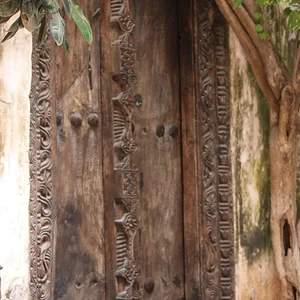
She lived in the palatial residence of Sokoto, a complex of buildings made from banco (raw earth mixed with straw) arranged around interior courtyards. The rooms were decorated with geometric patterns carved into the plaster, the floors covered with woven mats, and small windows provided natural ventilation against the Sahel heat.
Historical Timeline
Period Vocabulary
Visual Style
Style inspiré des enluminures de manuscrits islamiques ouest-africains : teintes terracotta, indigo profond et or chaud, architecture en banco, lumière du Sahel.
Sound Ambience
Ambiance sonore d'une cour palatiale de Sokoto au XIXe siècle : récitations coraniques féminines en chœur, rythmes de calebasse, appel à la prière et vents du harmattan.
Liens externes & ressources
Références
Œuvres
Élégie pour Usman dan Fodio
1817
Wakar Gewaye (Chant sur les compagnons du Prophète)
vers 1820-1830
Bedi'ul Fityan (Début de la jeunesse)
vers 1825
Élégie pour Muhammad Bello
1837
Fondation du réseau yan taru
vers 1820
Poèmes soufis de la Qadiriyya
vers 1820-1860