 flip
flipTriumphant Return Layer Cake
Triumphant Return Layer Cake
Why this dish? In January 1890, Nellie Bly returned to New York after her 72-day trip around the world, cheered by crowds. To celebrate such a feat, Gilded Age America set the festive table with its king: the grand layer cake, white and frosted, the pride of housewives.
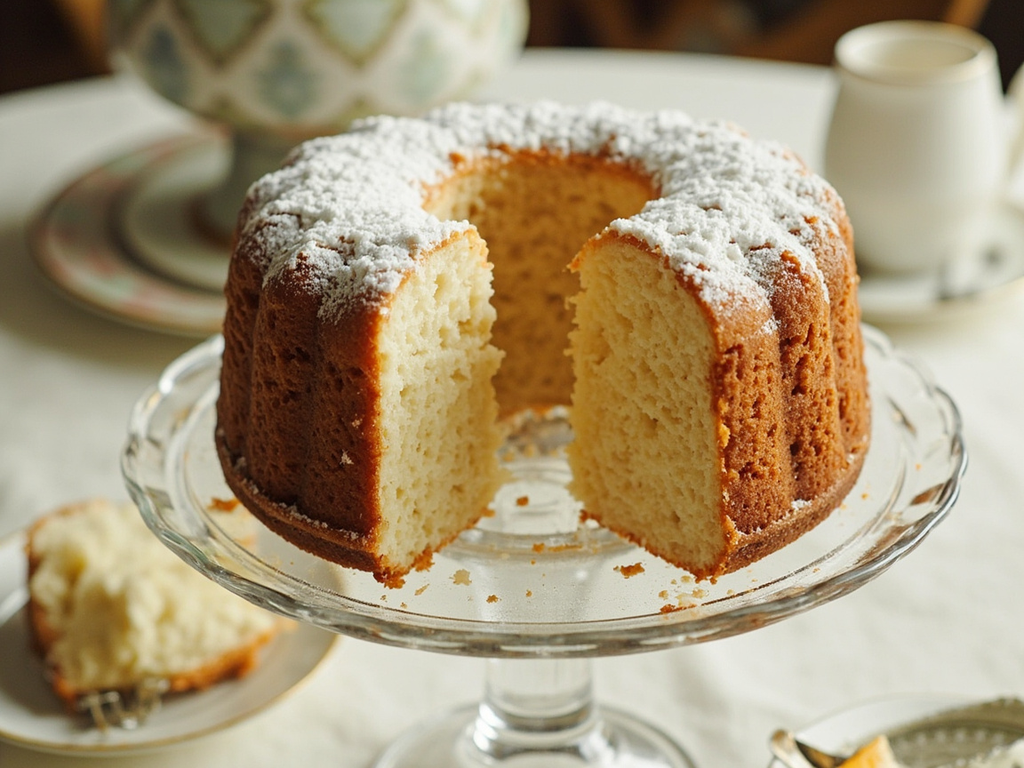
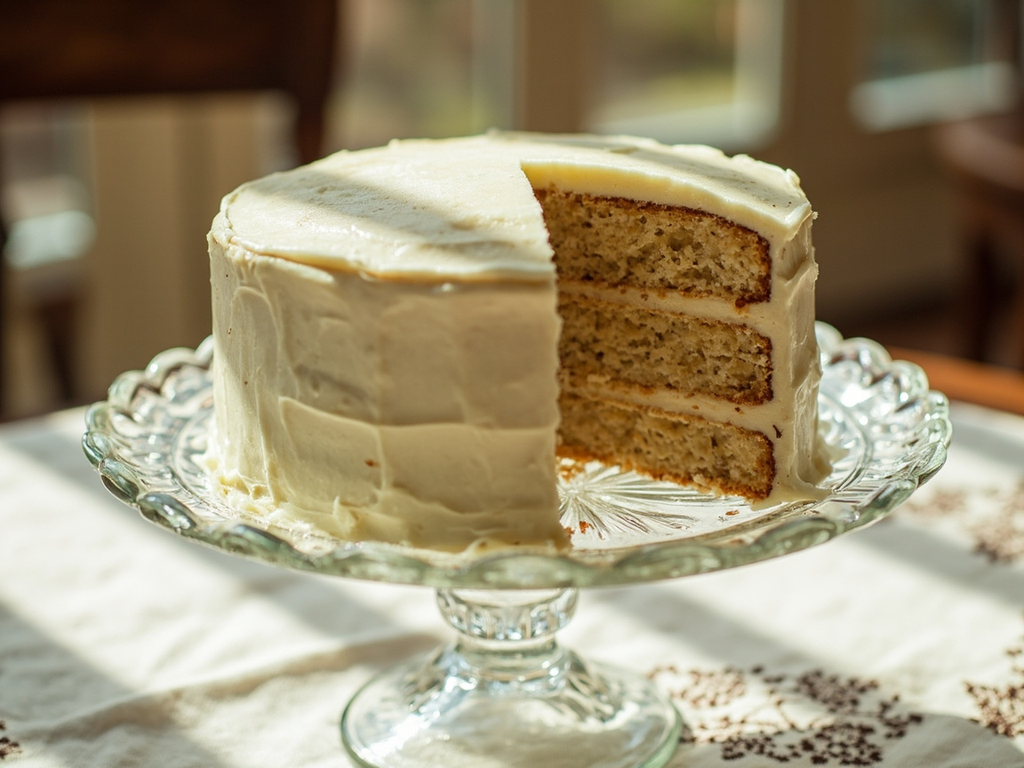
A white, fluffy cake built in two or three layers bound by a sweet frosting that hardens into a shiny crust. It is the dessert for great occasions, presented whole at the center of the table.
When the ship brought me back and the crowd cheered my name on the dock, I swear I would have treated myself to the finest cake in the whole city! Back home, for big days, we'd build these white layer cakes, beaten by hand until our arms ached. The secret was the frosting: sugar beaten with egg white, spread quickly before it set. We'd place it in the middle of the table, standing straight like a monument — and believe me, it never lasted long.
- •Wheat flour — several cups (structure of the cake)
- •Butter — one cup (tenderness and richness)
- •Sugar — two cups (sweetness)
- •Eggs — four (binder and lightness)
- •Milk — one cup (softness of the batter)
- •Baking powder (saleratus / baking powder) — two spoonfuls (leavening)
- •Confectioners' sugar and egg white — for the frosting (shiny crust)
Triumphant Return Layer Cake
A white, fluffy cake built in two or three layers bound by a sweet frosting that hardens into a shiny crust. It is the dessert for great occasions, presented whole at the center of the table.
Why this dish? In January 1890, Nellie Bly returned to New York after her 72-day trip around the world, cheered by crowds. To celebrate such a feat, Gilded Age America set the festive table with its king: the grand layer cake, white and frosted, the pride of housewives.
When the ship brought me back and the crowd cheered my name on the dock, I swear I would have treated myself to the finest cake in the whole city! Back home, for big days, we'd build these white layer cakes, beaten by hand until our arms ached. The secret was the frosting: sugar beaten with egg white, spread quickly before it set. We'd place it in the middle of the table, standing straight like a monument — and believe me, it never lasted long.
Ingredients (period version)
- Wheat flour — several cups (structure of the cake)
- Butter — one cup (tenderness and richness)
- Sugar — two cups (sweetness)
- Eggs — four (binder and lightness)
- Milk — one cup (softness of the batter)
- Baking powder (saleratus / baking powder) — two spoonfuls (leavening)
- Confectioners' sugar and egg white — for the frosting (shiny crust)
Ingredients
- Flour — 300 g (structure)
- Softened butter — 200 g (tenderness)
- Sugar — 300 g (sweetness)
- Eggs — 4 (binder)
- Milk — 200 ml (softness)
- Baking powder — 2 tsp (leavening)
- Lemon extract or orange blossom water — 1 tsp (period flavoring)
- Confectioners' sugar (250 g) + 1 egg white + lemon juice — for the frosting (shiny royal icing)
Method
- Cream the butter and sugar, add eggs one at a time.
- Alternately fold in flour and baking powder with the milk, add flavoring; obtain a smooth batter.
- Divide between two round pans and bake at 175 °C for about 25 to 30 minutes; let cool.
- Prepare the frosting by beating the egg white with confectioners' sugar and a splash of lemon juice until smooth and shiny.
- Spread frosting between the two layers, stack, then cover the top and sides. Let set before serving.
How it was made : The layer cake was a pride of 19th-century American home baking, popularized by the spread of baking powder and round cake pans. Without electric mixers, butter and eggs were beaten by hand for long minutes — hence the cake's reputation as a 'special occasion' treat.
The contemporary twist : Stick 72 small candles (or a sugar '72') to celebrate the round-the-world record, and cut the cake like unfolding an itinerary.
Sources : Fannie Farmer, The Boston Cooking-School Cook Book (1896) · Estelle Woods Wilcox, Buckeye Cookery and Practical Housekeeping (1877)
Nellie Bly · Charactorium